
A Roofing Job Packet That Survives a Warranty Dispute

On this page
Short Answer
A roofing job packet for a warranty dispute is the single, organized file that proves — months or years after the crew left — exactly what you sold, what you installed, who made it, who installed it, how it was installed, and what was wrong with the roof when the problem appeared. A warranty dispute is won or lost on records, not memory. The packet that survives is the one assembled at the time of the job, not reconstructed in a panic when a homeowner calls angry or a manufacturer's claim form lands on the desk. If you can hand a manufacturer's warranty department, an attorney, or a homeowner a clean, dated, photo-backed file that tracks the roof from contract to final inspection, most disputes end quietly in your favor. If you can't, you are arguing your word against theirs.
The core of a defensible packet is eight buckets of evidence: the signed contract and scope, the product and lot documentation (what shingles, underlayment, and accessories, in what color and lot, with the supplier invoice), the manufacturer warranty registration (the single most-skipped step that voids more "lifetime" warranties than any defect), dated installation photos at every stage from deck to ridge, the permit and inspection record, the workmanship/labor warranty you issued the homeowner, the completion and payment record (final invoice, lien waiver, sign-off), and the post-job communication log. Each bucket exists to answer one question a warranty adjuster will ask. Miss a bucket and you've handed the other side an opening.
Warranties themselves split into two kinds that get confused constantly, and the packet has to defend both. The manufacturer warranty covers the material — a defective shingle — and is governed by the manufacturer's terms, your registration, and proof the product was installed to their published instructions. The workmanship warranty is yours — it covers the install — and is governed by whatever you wrote on your own warranty certificate. Most leaks in the first several years are workmanship, not material, which means most disputes land on you, which means your install photos and your written labor-warranty terms are the documents that matter most. The federal FTC guidance on warranties is the plain-language baseline for what a warranty has to say and do, and it's worth reading before you write your own certificate.
Build the packet as you go, store one copy in your job software and one durable copy off-site, and never throw it away — keep job files for the life of the longest warranty you offered plus your state's statute of repose, which can run a decade or more. The IRS Publication 530 guidance on home records is a good reminder of how long these documents matter to the homeowner too. Below is the exact bucket-by-bucket packet, the photo shot list, copy-paste checklists, a workmanship-warranty template, and the dispute-response playbook for when a claim actually comes in.
Sources checked: June 20, 2026.
Why Warranty Disputes Are Won in the File, Not the Phone Call
When a homeowner calls two years after a roof goes on and says "my roof is leaking and you need to fix it for free," the call itself decides nothing. What decides the outcome is whether you can open a file and answer, in order: Was this our job? What did we install? Did we install it right? Is the failure material (manufacturer's problem), workmanship (our problem), or neither (storm, age, abuse, a different trade)? And did we do the one administrative thing — registration — that keeps the manufacturer's warranty alive?
Every one of those answers lives in a document, or it doesn't exist. Memory is not evidence. The roofer who "remembers using synthetic underlayment" loses to the roofer who has the supplier invoice showing the exact product and the deck photo showing it installed. A warranty dispute is a small lawsuit even when no lawyer is involved: the party with the better-documented record wins, and the party guessing from memory pays. That is the whole reason to build a packet.
There is a second, quieter reason. A complete packet does not only win disputes — it prevents most of them. When a homeowner can see, in a tidy file you handed them at closeout, the product names, the photos of their own roof going on, a clearly written warranty with its terms and exclusions, and the registration confirmation, they trust the work. Trust kills disputes before they form. The angriest warranty calls almost always come from homeowners who were handed nothing at the end of the job and have spent two years assuming the worst about a roof they never got to understand.
And a third reason, specific to the office: the packet protects you from your own crew turnover. The installer who knew exactly how that valley was flashed is gone. The salesperson who made the verbal promise is at a competitor. The packet is the institutional memory that outlives the people. When the dispute lands, you are not calling former employees — you are opening a file.
The Two Warranties You Are Actually Defending
Before you can build the packet, you have to be precise about what you're defending, because the two warranties behind every roof have different owners, different terms, and different failure modes — and homeowners blur them together constantly.
| Manufacturer (material) warranty | Workmanship (labor) warranty | |
|---|---|---|
| Who issues it | The shingle/membrane manufacturer | Your roofing company |
| What it covers | Defects in the product itself | Defects in your installation |
| Typical term | "Lifetime" / 25–50 yr, prorated after an initial period | 1–25 yr depending on what you wrote |
| Who pays a valid claim | Manufacturer (often materials only, not labor) | You |
| What keeps it alive | Registration + install per published instructions | Honoring your own written terms |
| Most common dispute | "It's a defect" when it's really install or age | "It's your install" when it's really age, storm, or abuse |
| Key documents | Product invoice, registration confirmation, install photos | Your warranty certificate, install photos, comm log |
The single most important fact in this table: in the first several years after a roof goes on, most failures are workmanship, not material. Shingles rarely arrive defective and fail in year two; flashing details, fastener placement, ventilation, and penetration sealing fail in year two. That means most early disputes are your warranty, defended by your photos and your written terms. The manufacturer warranty becomes the battleground later, in years eight through thirty, when a product genuinely starts to granulate or blister and the question becomes "is this a covered defect, and did you keep the warranty alive?"
The practical consequence: you need the packet to do two different jobs. For the early years, it has to prove your install was correct, which means photos and inspection records. For the later years, it has to prove the warranty was registered and the product was installed per the manufacturer's instructions, which means registration confirmations and, again, photos. The National Roofing Contractors Association is the trade body that publishes installation guidance and is worth citing in your own documentation as the standard you build to.
Why "lifetime" doesn't mean what homeowners think
"Lifetime warranty" is the phrase that starts more disputes than any other, because homeowners hear "free roof forever" and the actual terms say something far narrower. Most "lifetime" shingle warranties are prorated: full material replacement value only for an initial window (often the first decade or so), then declining coverage that pays a shrinking fraction of material cost — and frequently no labor at all — for the rest of the term. The FTC's warranty guidance explains why the fine print, not the headline, governs. Your packet should include a plain-language summary of what the manufacturer warranty actually covers, in writing, handed to the homeowner at closeout, so that "lifetime" never becomes a verbal promise you're accused of breaking. Document the real terms and you neutralize the most common dispute before it starts.
The Eight Buckets of a Dispute-Proof Packet
Here is the packet itself. Build it as eight buckets, each answering a specific question a warranty department or attorney will ask. Assemble all eight during the job; the packet is "done" when the job is done, not when a dispute appears.
Bucket 1 — The signed contract and scope of work
This is the foundation: it proves there was a job, what you agreed to do, and what you did not agree to do. A warranty dispute often turns on scope — the homeowner says you were supposed to replace the decking; the contract says you quoted shingles over existing sound decking. The contract settles it.
The contract bucket must contain: the fully signed agreement with date and both signatures; the itemized scope (tear-off layers, decking, underlayment type, shingle product and color, flashing, ventilation, penetrations, accessories); explicit exclusions ("decking replacement billed at $X per sheet if rot is found"); the price and payment schedule; and any change orders, each signed and dated. A change order that isn't signed is a future argument. The SBA's business guidance and general contracting best practice both point the same direction: get scope and changes in writing, every time.
Bucket 2 — Product and lot documentation
This bucket proves what you installed — the exact products, in the exact colors, from the exact supplier. When a manufacturer's warranty department asks "what shingle, what lot," this is the answer. When a homeowner claims you used a cheaper product than quoted, this is the rebuttal.
Include: the supplier/distributor invoice listing every product by name and quantity; the shingle product line and color; the underlayment product (synthetic vs. felt — this matters for warranty terms); the ice-and-water shield product and coverage; the ventilation products; the fastener type and length; and where possible a photo of the product wrappers or bundle labels on site, which captures lot/batch information manufacturers ask for in defect claims. The Building America Solution Center's asphalt shingle guidance is a clean reference for what a code-and-warranty-compliant assembly actually includes, and is worth keeping in the office as your build standard.
Bucket 3 — Manufacturer warranty registration
This is the bucket that voids more warranties than any defect ever will. Most enhanced and "system" manufacturer warranties require registration within a set window after installation (often 30, 60, or 90 days, and sometimes requiring a certified-contractor status). Skip it, and the homeowner is left with only the basic limited warranty — and when they discover that during a dispute, the dispute becomes about you failing to register, which is squarely your fault.
Include: the registration confirmation number or email; the date registered; the warranty tier registered (basic vs. enhanced/system); and a copy of the warranty certificate the manufacturer issued. If you offer enhanced system warranties as a selling point, registration is not optional paperwork — it's the deliverable the customer paid for. Make registration a hard gate in your closeout checklist so a job cannot be marked complete until it's done.
Bucket 4 — Dated installation photos (the heart of the packet)
Photos are the single most powerful evidence in a workmanship dispute because they show the install before it was covered up. Once shingles are on, no one can prove how the deck, underlayment, valley, or flashing was done — except your photos. The shot list in the next section is the core of this bucket. Every photo must carry a date (most phones embed it; confirm it) and ideally a location. A photo of the deck repair, the ice-and-water shield in the valleys, the step flashing at the wall, and the boot at every penetration is worth more than any sworn statement.
Bucket 5 — Permit and inspection record
The permit proves the job was done legally and to code; the passed inspection proves a third party verified it. In a dispute, a passed municipal inspection is independent corroboration that your install met the building code in force. Include: the pulled permit number and jurisdiction; the inspection sign-off(s); and any inspector notes. The International Code Council publishes the model codes most jurisdictions adopt; referencing the code edition you built to strengthens the file. Where a job was legitimately permit-exempt, document why (the jurisdiction's threshold) so the absence of a permit isn't later read as a violation.
Bucket 6 — Your written workmanship warranty
This is the document that defines your obligation. If you never put your labor warranty in writing, a dispute is decided by whatever the homeowner claims you promised. Put it in writing and the terms are the terms. The template later in this guide gives you a starting point. Include the term length, exactly what's covered (your installation) and excluded (storm, abuse, other trades, normal wear, acts outside your work), the claim procedure, and whether it's transferable. The FTC warranty rules govern how a written warranty must be presented to a consumer; follow them so your own warranty doesn't become a liability.
Bucket 7 — Completion and payment record
This bucket proves the job finished and money changed hands on agreed terms — which matters because a homeowner who hasn't paid sometimes manufactures a "warranty" complaint as leverage, and a homeowner who has paid and signed off has acknowledged the work was acceptable. Include: the final invoice; proof of payment; the signed completion/satisfaction certificate; the final lien waiver; and the date of substantial completion (which starts your warranty clock and your state's statute-of-repose clock). The CFPB's guidance on working with contractors describes the closeout documents homeowners are told to demand — give them proactively and you look like the professional you are.
Bucket 8 — Post-job communication log
Disputes are full of "you said / I said." A dated log of every call, text, email, and visit after the job — including the homeowner's own statements — collapses most of them. If the homeowner emailed in year one saying "the roof looks great, thank you," that email is gold in a year-three dispute. If they reported a leak and you responded within 48 hours and fixed it under warranty, the log proves you honored your obligation. Keep it dated, factual, and complete.
The Installation Photo Shot List (copy-paste)
Photos are the heart of the packet. Vague "we took some pictures" loses disputes; a disciplined shot list wins them. Print this, give it to every crew lead, and make the photo set a closeout requirement. Each shot answers a specific question a warranty adjuster asks.
ROOFING INSTALL PHOTO SHOT LIST  (date-stamp every photo)

BEFORE / TEAR-OFF
[ ] Full roof from ground, each elevation (4 photos)         -> proves starting condition
[ ] House number / address visible somewhere                  -> proves it's THIS house
[ ] Existing roof close-ups showing pre-existing damage/age   -> baseline condition
[ ] Decking fully exposed after tear-off                      -> proves what we built on

DECK & REPAIRS
[ ] Any rotted/damaged decking found                          -> documents the problem
[ ] Same area after replacement (with new sheathing visible)  -> documents the fix (change order)
[ ] Drip edge installed at eaves and rakes                    -> code + warranty detail

UNDERLAYMENT
[ ] Ice-and-water shield at eaves (coverage past warm wall)   -> code + leak prevention
[ ] Ice-and-water shield in ALL valleys                       -> #1 leak point
[ ] Synthetic/felt underlayment across field                  -> proves product used

FLASHING & PENETRATIONS  (the workmanship battleground)
[ ] Step flashing at every wall-to-roof intersection          -> #1 workmanship dispute
[ ] Counter/headwall flashing                                 -> leak point
[ ] Pipe boots at EVERY penetration (close-up each)           -> common failure
[ ] Chimney flashing / cricket if present                     -> high-value detail
[ ] Skylight flashing if present                              -> high-value detail

VENTILATION
[ ] Ridge vent or other exhaust installed                     -> warranty + code
[ ] Intake ventilation (soffit/edge)                          -> balanced ventilation = warranty-compliant

FIELD & FINISH
[ ] Starter course at eaves and rakes                         -> manufacturer requirement
[ ] Field shingles mid-install (fastener pattern visible)     -> proves nailing
[ ] Hip/ridge cap shingles                                    -> finish detail
[ ] Full roof, each elevation, COMPLETED (4 photos)           -> proves finished work

PRODUCT PROOF
[ ] Bundle wrappers / labels showing product + lot            -> manufacturer claim data
[ ] Underlayment roll label                                   -> product proof

CLEANUP
[ ] Yard/gutters cleaned, magnet-swept                        -> defends nail-damage claims
The flashing-and-penetration block is the one to obsess over. Walk into any roofer's old job files and the disputes cluster on three details: a pipe boot that cracked, a wall flashing that wasn't woven into the courses, and a valley that wasn't lined. If your photos show those three done right, you win the early-years workmanship disputes that make up the bulk of warranty claims. If they're missing, you're guessing.
A Closeout Checklist That Builds the Packet Automatically
The packet only survives if it gets built every time, not only on the jobs someone remembered. The way to guarantee that is to make packet assembly part of the job-closeout gate: a job cannot be marked "complete" — and the final invoice cannot be sent — until the packet is done. Here is the gate.
JOB CLOSEOUT / WARRANTY-PACKET GATE
(job is NOT complete until every box is checked)

CONTRACT & SCOPE
[ ] Signed contract on file (both signatures, dated)
[ ] All change orders signed and attached
[ ] Final scope matches what was installed

PRODUCT
[ ] Supplier invoice attached (all products listed)
[ ] Product names + colors recorded in job record
[ ] Bundle-label photo captured

MANUFACTURER WARRANTY
[ ] Warranty REGISTERED (confirmation # recorded)   <-- HARD GATE
[ ] Registered tier matches what was sold
[ ] Warranty certificate saved to packet

PHOTOS
[ ] Full before set (all elevations)
[ ] Deck / underlayment / valley shots
[ ] Flashing + every penetration shot
[ ] Ventilation shots
[ ] Full after set (all elevations)
[ ] All photos date-stamped and in the job folder

PERMIT & INSPECTION
[ ] Permit number recorded (or exemption documented)
[ ] Final inspection passed / sign-off saved

YOUR WARRANTY
[ ] Workmanship warranty certificate issued to homeowner
[ ] Copy in packet, terms match your standard

COMPLETION & PAYMENT
[ ] Final invoice issued
[ ] Payment received / financing closed
[ ] Completion / satisfaction certificate signed
[ ] Lien waiver issued
[ ] Substantial-completion date recorded (starts the clock)

HANDOFF
[ ] Homeowner copy of full packet delivered (PDF or printed)
[ ] Packet stored in job software + off-site backup
[ ] Warranty-claim contact + procedure given to homeowner
The hard gate is registration. Make it impossible to close a job without a registration confirmation number in the field, and you eliminate the single most expensive warranty failure mode — the voided manufacturer warranty nobody noticed until a claim arrived.
A Workmanship Warranty Certificate Template (copy-paste)
If your labor warranty lives only in your salesperson's verbal promises, you will lose disputes about its terms. Put it in writing. This template is a starting point — have your own attorney and your state's contractor-licensing rules vet it before you use it, because warranty law and required disclosures vary by state, and the FTC's warranty guidance sets baseline federal expectations for how it's written and presented.
[COMPANY NAME] WORKMANSHIP WARRANTY

Property: ______________________  Job #: __________
Homeowner: ____________________   Install completed: __ /__ /____

WHAT THIS COVERS
[Company] warrants that the roofing labor and installation performed
under the above contract are free from defects in workmanship for a
period of ______ years from the substantial-completion date above.
If a leak or failure results from our installation workmanship during
this period, we will repair it at no charge for labor or materials
related to that workmanship.

WHAT THIS DOES NOT COVER
This warranty does NOT cover:
- Defects in the manufactured products themselves (covered by the
  manufacturer's separate warranty - see attached).
- Damage from storms, hail, wind, ice, fallen limbs, or other events
  beyond our installation.
- Damage from foot traffic, satellite/solar/antenna installs, HVAC,
  or work by other trades performed after our completion.
- Normal wear, fading, or weathering of materials.
- Pre-existing conditions, structural movement, or deck issues we
  documented and the homeowner declined to repair.
- Failures caused by lack of homeowner maintenance (e.g., clogged
  gutters, debris dams, unaddressed ventilation changes).
- Work performed on this roof by anyone other than [Company] after
  our completion.

HOW TO MAKE A CLAIM
Report any suspected workmanship issue to [phone/email] within
______ days of discovery. We will schedule an inspection within
______ business days. Do not authorize repairs by another company
before we inspect, or this warranty may be void for that issue.

TRANSFERABILITY
This warranty [IS / IS NOT] transferable to a subsequent owner.
[If transferable: state the procedure and any fee.]

This written warranty is the complete workmanship warranty for this
job and supersedes any verbal statements.

Signed (Company): _____________  Date: ______
Acknowledged (Homeowner): _____________  Date: ______
Three lines in that template do the heavy lifting in a dispute. The "do not authorize repairs before we inspect" clause stops a homeowner from hiring a competitor, tearing into your work, and then billing you for a "defect" you never got to see. The exclusions list draws the bright line between your obligation and the manufacturer's, storms, and other trades. And the "supersedes any verbal statements" line protects you from the salesperson's enthusiasm. Write these carefully and most workmanship disputes resolve on the certificate alone.
How Long to Keep a Roofing Job File
Throwing away the packet is the same as never building it. The dispute that matters most is often the one that surfaces years later — a slow leak, a granule-loss claim, a sale of the home that reopens old questions. Keep the file long enough to cover every window in which a claim can legally or practically arise.
| Trigger for keeping it | Typical horizon |
|---|---|
| Your workmanship warranty term | However long you wrote (often 1–25 yr) |
| Manufacturer warranty term | "Lifetime" / 25–50 yr (prorated) |
| State statute of limitations (breach) | Often 3–6 yr from discovery/completion |
| State statute of repose (construction) | Often 6–12 yr from completion, varies widely |
| Homeowner's tax/sale records need | Until they sell + their holding period |
| Practical safe default | Longest warranty offered + several years |
The honest answer for most roofers: keep the full job packet for the life of the longest warranty you offered, plus a buffer for your state's statute of repose — which in practice means a decade or more, and for "lifetime" products, effectively forever for the core records. Digital storage makes this cheap; there is no reason to purge. The IRS Publication 530 reminds homeowners to keep home-improvement records for the life of ownership plus the period for amending a return, which is one more reason to hand them a clean copy — your packet becomes part of their basis records, and a homeowner who values the file is a homeowner who refers you.
Statutes of limitation and repose vary significantly by state, and "discovery" rules can extend them; treat the table as orientation, not legal advice, and confirm your own state's construction-defect windows with counsel.
When the Dispute Actually Lands: The Response Playbook
A warranty claim has come in. Here is the order of operations that keeps a small problem from becoming a lawsuit, and keeps your documentation advantage intact.
- Acknowledge fast, in writing, within 48 hours. Speed signals good faith and starts a clean record. Log the date, the homeowner's exact words, and what they're reporting. Slow or defensive responses are how a fixable repair becomes a complaint to the licensing board.
- Pull the packet before you say anything substantive. Do not diagnose from the phone. Open the file, read the contract, look at the install photos for the area in question, confirm registration status. You want to know what you actually did before you commit to anything.
- Inspect on site, with the photos in hand. Send someone to look — and bring the install photos so you can compare the as-built record to the current condition. Photograph the current condition thoroughly. This is the moment to determine: workmanship, material, storm, age, abuse, or other-trade.
- Classify the claim honestly. Use the decision framework below. The classification determines who pays — you (workmanship), the manufacturer (material), the homeowner/their insurer (storm/abuse), or no one (excluded). Honest early classification prevents both over-paying and the reputational damage of fighting a claim you should have covered.
- If it's workmanship and within term, fix it — fast and well. A workmanship claim you honor quickly is cheap insurance and a referral source. Fighting a valid workmanship claim is how roofers end up with reviews and complaints that cost more than the repair.
- If it's a material defect, run the manufacturer claim for the homeowner. This is where registration pays off. Submit the manufacturer claim with your product invoice, registration confirmation, and install photos proving correct installation. You are the homeowner's advocate here, which builds enormous goodwill — and the NAIC consumer guidance and Insurance Information Institute materials are useful when the failure overlaps with a possible insurance event.
- If it's storm or insurance-related, route it correctly. Hail or wind damage is not a warranty claim — it's an insurance claim. Confirm the event against the NOAA Storm Events Database and the National Weather Service record, document the damage, and help the homeowner file with their carrier rather than absorbing a covered loss as a warranty repair.
- If it's excluded, explain it in writing, kindly, with the document. Point to the specific exclusion in the warranty certificate they signed and, where relevant, the install photo or completion sign-off. Offer a paid repair. A clear, documented "this isn't covered, here's why, here's what we can do" closes far more cleanly than a vague denial.
- Log everything and update the packet. Every step goes into the communication log. The dispute itself becomes part of the file — including the resolution and the homeowner's final sign-off — so a future claim on the same roof starts from a complete record.
Decision Framework: Whose Problem Is This Leak?
The most valuable skill in warranty handling is fast, honest classification. Use this framework on every claim before money or promises move.
| Symptom / signal | Most likely category | Who pays | Key packet evidence |
|---|---|---|---|
| Leak at a wall, valley, or penetration, early years | Workmanship (your install) | You | Install photos of that detail |
| Leak with recent hail/wind event in the record | Storm | Homeowner's insurer | NOAA record + damage photos |
| Widespread granule loss, blistering, years in | Possible material defect | Manufacturer | Registration + product invoice + photos |
| Leak after a solar/satellite/HVAC install | Other trade | That trade / homeowner | Completion sign-off + comm log |
| Leak where homeowner declined deck repair | Pre-existing / excluded | Homeowner | Documented decline + change order |
| Ice damming with no ice-and-water shield required | Depends on code at install | Varies | Permit + code edition + photos |
| General wear at end of realistic service life | Normal wear | Homeowner | Completion date + warranty term |
| Clogged gutters / no maintenance, debris dam | Maintenance (excluded) | Homeowner | Warranty exclusions + photos |
Two classification mistakes cost roofers the most. The first is reflexively denying a workmanship claim that the photos actually show was your install — that's the claim you should pay fast, because fighting it costs more in reputation than the repair. The second is absorbing a storm claim as a "warranty repair" to keep a customer happy, eating a loss the homeowner's insurance would have covered. Classify honestly in both directions and the math works out.
Regional and Seasonal Variation in What the Packet Must Prove
The packet's contents are universal, but what gets disputed shifts by climate and code, and the documentation has to anticipate the local fight.
Cold / snow regions (Northeast, Upper Midwest, Mountain West). Ice damming drives the disputes. Your packet needs photographic proof of ice-and-water shield coverage at the eaves extending past the interior warm-wall line, plus valley coverage, because the dominant winter leak claim is "you didn't protect against ice dams." Ventilation documentation matters too — poor attic ventilation causes the warm roof deck that creates ice dams, and a manufacturer can deny a material claim if ventilation wasn't balanced to their spec. Photograph intake and exhaust ventilation as a warranty-defense matter, not only a code matter.
Hail / wind belts (Texas, Oklahoma, Colorado, the Plains). Storm-versus-workmanship is the central dispute, and the line between a warranty claim and an insurance claim blurs constantly. Your packet's "before" photos showing pre-existing condition and your post-storm damage photos are what separate a covered storm loss from a warranty demand. Keep the NOAA Storm Prediction Center and Storm Events Database links in your claim workflow so you can timestamp any event against the public record. The FEMA disaster recovery resources and IBHS FORTIFIED roof program are worth referencing if you sell enhanced wind-resistant systems, since those install methods carry their own documentation requirements.
Hot / sun regions (Southwest, Southeast, Gulf). Thermal aging and ventilation-related material claims dominate later years. High attic temperatures accelerate shingle aging, and a manufacturer can scrutinize ventilation when a material claim comes in. Document ventilation thoroughly. Cool-roof and reflective products carry their own performance terms; if you install them, keep the DOE cool-roof guidance and ENERGY STAR roof product references in the file so the product's rated performance is documented against any "it didn't perform" claim.
Coastal / high-wind / hurricane zones. Code is stricter and inspection more rigorous, which actually helps your packet — a passed inspection in a high-wind jurisdiction is strong corroboration. But the documentation burden is higher: fastener patterns, edge-metal attachment, and product wind ratings all become dispute points. Photograph the nailing pattern and edge metal specifically, and keep the product wind-rating documentation in Bucket 2.
Seasonal timing. Jobs done in deep winter or extreme heat carry installation-condition disputes ("you installed in conditions the manufacturer doesn't allow"). Many manufacturers specify temperature ranges for proper shingle sealing. If you install in marginal conditions, document the conditions and any manufacturer-approved cold-weather methods (hand-sealing, etc.) you used, because "the shingles never sealed" is a claim that lands in the gap between material and workmanship.
Common Mistakes That Lose Warranty Disputes
The disputes roofers lose almost always trace to one of these. Each is preventable at near-zero cost if the packet is built right.
- Never registering the manufacturer warranty. The most expensive omission in roofing. The homeowner paid for an enhanced warranty, you never registered it, and a material claim a decade later reveals only the basic limited warranty exists. Now the dispute is about your failure, and you may owe the difference. Make registration a hard closeout gate.
- No install photos, or photos that don't show the details. "We took pictures of the finished roof" proves nothing about the flashing under the shingles. Without before/during photos of the deck, valleys, flashing, and penetrations, every early workmanship dispute becomes your word against theirs.
- Verbal warranty terms only. The salesperson said "lifetime workmanship," nothing's in writing, and now you're defending a promise you can't define. Always issue a written workmanship certificate.
- Confusing the two warranties to the homeowner. Letting a homeowner believe the manufacturer's "lifetime" warranty covers everything, including labor, sets up an inevitable dispute when they discover it's prorated and material-only. Document the real terms at closeout.
- Throwing the file away too soon. A purged file is a lost dispute. Keep packets for the life of the longest warranty plus a buffer.
- Slow or defensive first response. Ignoring a warranty call for two weeks turns a $400 boot replacement into a licensing-board complaint and a one-star review. Acknowledge in 48 hours.
- Letting another company touch the work first. A homeowner who hires a competitor to "fix" your roof and then bills you has destroyed your evidence and your control. The "inspect before any repair" clause in your warranty exists to prevent exactly this.
- No documented change orders. The decking-replacement argument is unwinnable without a signed change order. Every scope change gets a signature.
- No completion sign-off. Without a signed satisfaction certificate, a homeowner can claim the job was never finished acceptably. Get the sign-off and the date — it starts your warranty clock and your statute clocks.
- Skipping the permit when one was required. An unpermitted roof in a jurisdiction that required a permit is a code violation that can void manufacturer warranties and hand the homeowner a strong dispute. Pull the permit or document the exemption.
A Mini Worked Example (illustrative)
Imagine a roofing company — call it a mid-sized regional crew — that installs a "lifetime" architectural shingle system on a two-story home in a cold-winter market in March. Twenty-two months later, the homeowner calls: water staining on the ceiling below a second-floor wall, and they're "pretty sure the roof is defective."
Because the office runs a closeout gate, the packet exists. Someone opens it before saying a word. The contract shows a full system with ice-and-water shield in valleys and at eaves. Bucket 4 has a dated photo of step flashing at that exact wall — and it shows the flashing was installed, but the photo also reveals the homeowner later mounted a satellite dish through the field above that wall, which appears in a year-one communication-log photo the homeowner themselves sent. The classification: not a material defect, not original workmanship — an other-trade penetration that compromised the field after completion.
The response: acknowledge in a day, inspect on site, photograph the dish penetration, and walk the homeowner through the install photo versus the current condition. The conversation is calm because it's documented. The company offers a paid repair of the dish penetration and reseals it, points to the warranty exclusion for post-completion work by others, and the homeowner — who can see their own dish in the photos — accepts. No board complaint, no review, a paid repair, and a homeowner who got a straight answer. Now run the same scenario with no packet: it's the homeowner's certainty against the roofer's memory, and the roofer either eats a free repair they didn't owe or fights a dispute they can't prove. The packet is the difference.
Where RoofPredict Fits
You can build one bulletproof job packet by hand. The hard part is building it every time, across a whole company, on every crew, for years — and then finding the right one instantly when a dispute lands. That's an operational problem, and it's where RoofPredict helps.
RoofPredict is software for roofing contractors. On the documentation side, it gives you a place to organize the records behind a job — capture dated photos, scope notes, product and roof-area details, and the paper trail (contract, permit, invoice, warranty, inspection) in one packet you can store and hand off. Instead of photos scattered across crew phones and warranties living in a salesperson's email, the packet lives with the job, so the file you need in a year-three dispute is the file you can actually find. RoofPredict also handles the front of the business it's better known for: it scores which properties in a territory are most likely to need roof work, turns that into targeted direct-mail campaigns, and generates professional roof reports. On mail pricing, to be clear: your subscription/credits cover the roof reports (one per home, no matter how many mailers that home gets), while mailers are billed in real dollars per piece with volume discounts at larger send sizes — and nothing is charged until you approve the proof and the mailers go to print.
Guardrail — read this line. RoofPredict organizes records and predicts demand; it does not decide a warranty dispute, inspect or certify a roof, prove a roof's age or storm causation, or settle an insurance claim. Whether a leak is covered workmanship, a material defect, a storm loss, or an excluded condition is determined by your written warranty terms, the manufacturer's terms, a licensed roofer's on-site inspection, the building department, and — where insurance is involved — the carrier and adjuster. The software keeps the evidence organized; the licensed professionals and the contracts decide the outcome. Use it to make the packet repeatable, not to replace the judgment that wins the dispute.
For the Office Manager: Making This a System
If you run intake and records, the packet is your domain, and the way to make it bulletproof is to remove it from anyone's memory and bake it into the workflow.
- Make the closeout gate non-negotiable. No job is "complete," no final invoice goes out, until the packet checklist is green — especially the registration line. Tie it to a status the field can't skip.
- Assign one owner per bucket. The crew owns photos; the office owns registration, permit, and completion docs; sales owns the contract and the written warranty handoff. Everyone knows their bucket.
- Store two copies. One in the job software, one durable off-site backup. A packet that lives only on a laptop that died is no packet.
- Standardize the handoff. Every homeowner gets the full packet at closeout — products, photos, both warranties in plain language, registration confirmation, and the claim procedure. This single habit prevents most disputes.
- Audit a random sample monthly. Pull five recent closed jobs and check the packet against the gate. The jobs that fail the audit tell you which step your process keeps skipping.
- Keep a claims log across all jobs. When the same product line or the same crew shows up in repeated workmanship claims, the log surfaces a pattern worth fixing at the source.
The Census American Community Survey and building permits data are useful when you're sizing how much volume — and therefore how many packets — your market generates; a high-permit, older-housing-stock area means more roofs, more warranties, and more reason to systematize before the dispute volume grows.
Key Takeaways
- A warranty dispute is won in the file, not the phone call. The packet you build during the job is the evidence; memory is not.
- Defend two different warranties: the manufacturer's (material, governed by registration and install-per-instructions) and your own (workmanship, governed by what you wrote). Most early disputes are workmanship — yours.
- The packet has eight buckets: contract/scope, product/lot, manufacturer registration, dated install photos, permit/inspection, your written workmanship warranty, completion/payment, and a communication log.
- Registration is the hard gate. Skipping it voids more "lifetime" warranties than any defect and turns the dispute into your fault. Make it impossible to close a job without it.
- Install photos win workmanship disputes because they show flashing, valleys, and penetrations before they were covered. Use a fixed shot list, every job.
- Put your workmanship warranty in writing, with clear exclusions and an "inspect before any repair" clause, so terms aren't decided by a salesperson's verbal promise.
- Keep the packet for the life of the longest warranty plus a buffer for your state's statute of repose — a decade or more in practice.
- When a claim lands: acknowledge in 48 hours, pull the packet first, inspect on site, classify honestly, and route to the right payer — you, the manufacturer, the insurer, or no one.
- RoofPredict can make the packet repeatable across every job, but the warranty outcome is decided by your contracts and licensed professionals — not by software.
FAQ
What documents do I need in a roofing job packet to win a warranty dispute?
Eight buckets: the signed contract and scope (with change orders), product and lot documentation (supplier invoice plus bundle-label photos), the manufacturer warranty registration confirmation, dated installation photos at every stage, the permit and passed-inspection record, your written workmanship warranty certificate, the completion and payment record (final invoice, sign-off, lien waiver), and a post-job communication log. Each bucket answers a specific question a warranty adjuster or attorney will ask, and a gap in any one of them hands the other side an opening.
What is the difference between a manufacturer warranty and a workmanship warranty?
The manufacturer warranty covers defects in the product — a bad shingle — and is governed by the manufacturer's terms, your registration, and proof the product was installed to their published instructions. The workmanship warranty is yours and covers your installation. Most failures in the first several years are workmanship, not material, so most early disputes land on you and are defended by your install photos and your written labor-warranty terms. Confusing the two is one of the most common causes of disputes.
Why does a manufacturer warranty get voided, and how do I prevent it?
The most common reason is failure to register the warranty within the manufacturer's required window after installation — enhanced and system warranties almost always require registration, and skipping it leaves only the basic limited coverage. Other voiders include installing contrary to the manufacturer's published instructions and inadequate ventilation. Prevent it by making warranty registration a hard gate in your closeout process: a job cannot be marked complete until a registration confirmation number is on file.
How long should a roofing company keep job files and warranty records?
Keep the full job packet for the life of the longest warranty you offered plus a buffer for your state's statute of repose — in practice a decade or more, and effectively indefinitely for the core records on "lifetime" products. Statutes of limitation (often 3–6 years) and repose (often 6–12 years, varying widely by state) define the window in which a claim can arise, and "discovery" rules can extend them. Digital storage makes long retention cheap, so there's no good reason to purge a packet.
What photos should I take to defend a roofing workmanship warranty?
Use a fixed shot list and date-stamp every image: before/tear-off shots of all elevations and the address, the exposed deck and any repairs, ice-and-water shield at eaves and in all valleys, the field underlayment, step and headwall flashing at every wall, a close-up of every pipe boot and penetration, chimney and skylight flashing, ridge and intake ventilation, the starter and nailing pattern, the finished roof from all elevations, and the product bundle labels. The flashing and penetration shots matter most because those details are the most disputed and are invisible once shingles cover them.
Does a "lifetime" shingle warranty mean the homeowner gets a free roof forever?
No. Most "lifetime" warranties are prorated: full material replacement value only for an initial window, then declining coverage that pays a shrinking fraction of material cost — and frequently no labor at all — for the rest of the term. The headline word "lifetime" is governed by the fine print, not the other way around. Document the real terms in plain language and hand them to the homeowner at closeout, because the gap between what "lifetime" sounds like and what it actually covers is the single most common source of warranty disputes.
Who pays when a roof leaks — the roofer, the manufacturer, or the homeowner?
It depends on the cause. A leak at a wall, valley, or penetration in the early years is usually workmanship and you pay. Widespread granule loss or blistering years later may be a material defect and the manufacturer pays. Damage tied to a hail or wind event is a storm loss the homeowner's insurer typically handles. Damage after a solar or HVAC install by another trade, or where the homeowner declined a documented deck repair, falls on the homeowner. Honest classification against your documentation determines who pays.
How should I respond when a warranty claim comes in?
Acknowledge in writing within 48 hours and log the homeowner's exact words. Pull the job packet before you diagnose anything — read the contract, check the install photos for the area, confirm registration. Inspect on site with those photos in hand, classify the claim honestly (workmanship, material, storm, other-trade, or excluded), and route it to the right payer. If it's valid workmanship within term, fix it fast; if it's a material defect, run the manufacturer claim for the homeowner; if it's a storm loss, help them file with their insurer; if it's excluded, explain it in writing with the specific clause.
Should my roofing workmanship warranty be in writing, and what should it say?
Yes — a verbal warranty is decided by whatever the homeowner claims you promised. A written certificate should state the term length, exactly what's covered (your installation), the exclusions (storms, abuse, other trades, normal wear, lack of maintenance, pre-existing conditions the homeowner declined to fix), the claim procedure, an "inspect before any repair" clause, transferability, and a line stating it supersedes any verbal statements. Have your attorney and your state's licensing rules vet it, since required disclosures vary and federal FTC rules set a baseline for how a written warranty must be presented.
Can I deny a warranty claim, and how do I do it without a fight?
Yes, when the cause falls outside your written warranty — but deny it in writing, kindly, and with the document. Point to the specific exclusion in the certificate the homeowner signed and, where relevant, the install photo or completion sign-off that supports your position. Offer a paid repair as an alternative. A clear, documented "this isn't covered, here's exactly why, here's what we can do" closes far more cleanly than a vague or defensive denial, and it protects you if the homeowner escalates to a licensing board or review.
Is hail or storm damage a warranty claim?
No. Hail and wind damage are insurance claims, not warranty claims — a warranty covers product defects and installation, not acts of nature. When a homeowner reports storm-related damage, confirm the event against the public record (the NOAA Storm Events Database and National Weather Service), document the damage with photos, and help the homeowner file with their carrier rather than absorbing a covered loss as a free warranty repair. Your "before" install photos showing pre-existing condition are key to separating a storm loss from a workmanship demand.
What happens if a homeowner hires another roofer to fix my work before I inspect it?
You lose control of the evidence and the diagnosis, which is exactly why a good workmanship warranty includes an "inspect before any repair" clause stating the warranty may be void for an issue if another company alters the work before you examine it. If it happens anyway, document everything you can, ask the homeowner for the other company's findings and photos, and classify from your original install photos. The clause exists to prevent a homeowner from tearing into your work, having a competitor "find a defect," and billing you for something you never got to see.
Does a passed building inspection help in a warranty dispute?
Yes. A pulled permit and a passed municipal inspection are independent, third-party corroboration that your installation met the building code in force at the time — strong evidence in any dispute about whether the work was done correctly. Keep the permit number, the inspection sign-off, and the code edition you built to in the packet. In high-wind or coastal jurisdictions where inspection is more rigorous, a passed inspection is an even stronger defense. Where a job was legitimately permit-exempt, document why so the absence of a permit isn't later read as a violation.
How do I keep the packet from being skipped on busy jobs?
Make packet assembly a hard gate on job closeout: the job cannot be marked complete, and the final invoice cannot be sent, until every checklist box is green — registration especially. Assign one owner per bucket (crew owns photos, office owns registration and completion docs, sales owns the contract and warranty handoff), store two copies (job software plus off-site backup), and audit a random sample of closed jobs monthly. The audit failures tell you which step your process keeps skipping so you can fix the system, not blame the person.
Does RoofPredict decide or settle warranty disputes?
No. RoofPredict is software that helps roofing contractors organize the records behind a job — dated photos, scope notes, product details, and the paper trail — so the packet is repeatable and findable when a dispute lands. It does not inspect or certify a roof, prove roof age or storm causation, decide a warranty dispute, or settle an insurance claim. Whether a leak is covered workmanship, a material defect, a storm loss, or an excluded condition is determined by your written terms, the manufacturer's terms, a licensed roofer's inspection, the building department, and the insurer. The software keeps the evidence organized; people and contracts decide the outcome.
The Roofline by RoofPredict
Stay Ahead of Roofing Market Changes
Join The Roofline by RoofPredict for weekly roofing intelligence: material price signals, storm demand, insurance and regulatory updates, sales tactics, and local contractor opportunities.
Sources
- FTC Consumer — Warranties — consumer.ftc.gov
- IRS — Publication 530 (Homeowner Records) — irs.gov
- National Roofing Contractors Association (NRCA) — nrca.net
- SBA — Marketing & Sales Guidance — sba.gov
- Building America Solution Center — Asphalt Shingle Roofs — basc.pnnl.gov
- International Code Council (ICC) — iccsafe.org
- CFPB — Working With Contractors After a Disaster — consumerfinance.gov
- NAIC — Consumer Home Page — content.naic.org
- Insurance Information Institute — How Do I File a Claim — iii.org
- NOAA — Storm Events Database — ncdc.noaa.gov
- NOAA National Weather Service — weather.gov
- NOAA Storm Prediction Center — spc.noaa.gov
- FEMA — Recover From Disaster / Rebuild — fema.gov
- IBHS — FORTIFIED Roof — ibhs.org
- DOE — Cool Roofs — energy.gov
- ENERGY STAR — Roof Products — energystar.gov
- Census — American Community Survey — census.gov
- Census — Building Permits Survey — census.gov
Related Articles

A Field-Rep Storm Documentation Workflow That Scales
A repeatable field-rep storm documentation workflow every rep follows the same way: confirm the storm, shoot a fixed 14-shot set, name and hand off a complete packet same-day, and audit weekly.

A Homeowner's Storm-Damage Records Folder Checklist
The exact folder, checklist, photo shot list, and 14-day timeline a homeowner needs to organize storm damage records and keep a roof claim moving.
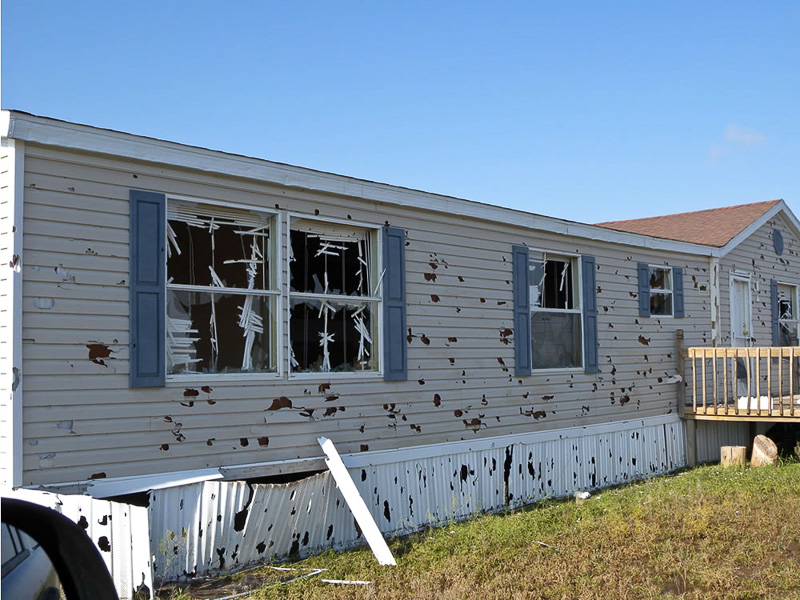
Homeowner Roof Damage Report Template After a Storm
A copy-paste homeowner roof damage report template after a storm, plus a ground-level photo checklist and the safe, factual wording that keeps your record clean for an insurer or roofer.