
A Field-Rep Storm Documentation Workflow That Scales

On this page
Short Answer
A field rep storm documentation workflow that scales is a single, written, repeatable process every rep on your team follows the same way on every roof, so that the records one rep captures in the field are good enough for the next person — an estimator, an office manager, an adjuster, a homeowner, or a judge — to use without re-walking the roof. The workflow has five fixed stages: confirm the storm event before you knock, capture a standardized photo set in a fixed order, label and time-stamp everything at the source, hand off a complete packet the same day, and audit a sample of packets weekly. The thing that makes it scale is not the camera or the app — it is the standard: a named shot list, a naming convention, a same-day deadline, and a closeout gate that won't let an incomplete packet move forward.
Most roofing teams do not have a documentation problem because their reps are lazy. They have it because every rep documents differently. One rep shoots 60 photos and forgets the address; another shoots 8 and skips the soft-metal hits; a third has perfect photos buried in a personal phone they take to a competitor when they quit. The records exist, but they are not comparable, not findable, and not defensible. When you standardize the workflow, you stop losing supplements to missing photos, you stop re-sending reps to roofs they already walked, and you build a body of evidence that holds up when an insurer pushes back. You also protect the asset: the documentation belongs to the company, not to whichever rep happened to climb the ladder.
Before you do any of this, anchor the work to a real, verifiable storm. A roof inspection that floats free of a confirmed weather event is just an opinion; a roof inspection tied to a date, a hail size, and a wind speed from the public record is evidence. Use the NOAA Storm Events Database, the National Weather Service, the NOAA Storm Prediction Center, and the NWS hail information page to confirm what actually hit the address and when. For the broader picture of how to work with homeowners after a disaster and how claims get filed, the CFPB guidance on contractors after a disaster, the Insurance Information Institute's how-to-file-a-claim guide, and the FTC's home-improvement-scam guidance set the honest boundaries every rep should respect. Sources checked: June 20, 2026.
The rest of this guide gives you the exact shot list, the naming convention, the same-day handoff packet, three copy-paste artifacts you can hand a rep tomorrow, the metrics that tell you whether the workflow is actually working, and the regional and seasonal variations that change what "complete" means in your market. Build it once, train it hard, audit it weekly, and your documentation stops being a per-rep coin flip and becomes a company asset.
Why "Standardize" Is the Whole Game
Roofing storm documentation fails for one reason above all others: inconsistency. A rep is not graded on the day they shoot the photos. They are graded weeks later, when an adjuster asks for a close-up of the north-slope soft metal and nobody on your team can find it — because that rep didn't shoot it, or shot it but named the file IMG_4471.jpg and dumped it in a phone roll with 3,000 other pictures.
When documentation is inconsistent, three expensive things happen.
You re-walk roofs. A rep leaves, gets sick, or simply missed a slope. Now you send a second person to a roof you already paid to inspect. Every re-walk is a ladder set, a windshield hour, and a delay that lets a competitor close the homeowner first.
You lose supplements. When an adjuster's scope is light and you want to supplement for a full replacement, the photos are your argument. If the rep didn't capture the collateral damage — the dinged gutters, the bruised ridge cap, the spatter on the soft metals — you have no leverage. The money is on the table and you can't reach it.
You can't onboard. A new rep has no way to learn "how we document" if the answer is "however the last person felt like it." A written standard turns documentation from a personality trait into a trainable skill. That is the difference between a team of 3 and a team of 30.
The fix is boring and it works: write the standard down, make it the same on every roof, and gate the handoff so an incomplete packet can't move forward. Everything below is that standard, broken into parts you can adopt piece by piece.
The Five Stages of a Scalable Workflow
Every storm documentation workflow that survives growth has the same five stages. The tools change; the stages don't.
| Stage | What happens | Owner | Output |
|---|---|---|---|
| 1. Confirm | Verify the storm event for the address before inspection | Rep / office | Event date, hail size, wind speed, source |
| 2. Capture | Shoot the standardized photo set in fixed order | Rep | Complete photo set per shot list |
| 3. Label | Name, time-stamp, and tag every photo and note at the source | Rep | Findable, dated, attributed records |
| 4. Hand off | Deliver a complete packet the same day | Rep → office | Packet that passes the closeout gate |
| 5. Audit | Spot-check a sample of packets against the standard | Manager | Defect rate, retraining list |
The first instinct of most owners is to obsess over Stage 2 (the photos). But the stages that actually make a workflow scale are Stages 1, 4, and 5 — confirmation, handoff, and audit. Those are the stages that turn a pile of photos into a system. We'll cover all five, but watch how much of the work is process, not photography.
Stage 1 — Confirm the Storm Before You Knock
A rep should never inspect a roof for storm damage without first knowing what storm they're documenting. This is not bureaucracy; it is the foundation of every honest claim. The homeowner's insurer will tie any payout to a covered peril on a specific date. If your inspection doesn't line up with a real event, the claim is dead on arrival, and worse, you have wandered into the territory the FTC warns homeowners about: contractors who manufacture damage or invent storms to sell a roof.
Here's what "confirm" means in practice. Before or at the door, the rep establishes:
- The event date (or window). When did the storm hit this address? Pull it from the NOAA Storm Events Database, which lets you search by state and county for recorded hail, wind, and tornado events.
- The hazard size. What was the reported hail size and wind speed near the address? The NWS hail page and the Storm Prediction Center help frame what damage is even plausible. Pea-size hail does not total a roof; golf-ball hail can.
- The source. Write down where the confirmation came from — "NOAA Storm Events, [county], event date [x], 1.75-inch hail reported." That single line, attached to the packet, is worth more than ten photos because it grounds everything else in the public record.
A confirmed event also protects the rep from chasing damage that isn't there. If the public record shows nothing bigger than 0.75-inch hail at the address, the rep walks the roof with realistic expectations and doesn't oversell. That honesty is not only ethics — it is what keeps your supplements credible when you do have a strong case.
One caution rooted in the [PRODUCT_BRIEF and the brief's guardrails]: confirming a storm event and photographing damage does not prove storm causation on a specific roof, and it does not approve a claim. It builds the evidence that a licensed roofer's inspection and the insurer's adjuster will weigh. Keep that line clear with homeowners. You document; the adjuster and carrier decide coverage.
Stage 2 — The Standardized Storm Photo Shot List
This is the heart of the workflow: a fixed list of shots, taken in the same order, on every roof. A shot list does three jobs at once. It makes packets comparable (every roof has the same shots in the same order). It makes gaps obvious (if shot 14 is missing, anyone can see it). And it makes a new rep competent fast (follow the list, don't improvise).
Shoot wide-to-tight at every key location: an establishing shot that shows where on the roof you are, then a close-up that shows what the damage is, ideally with a reference object (a chalk circle, a coin, or a tape measure) for scale. Date-stamp every image — most camera and documentation apps do this automatically; confirm yours does before you rely on it.
Here is the standard shot list. Treat the order as fixed.
| # | Shot | Why it matters |
|---|---|---|
| 1 | Street view with house number visible | Proves the address — ties the whole set to a property |
| 2 | All four elevations (front, back, both sides) | Establishes the structure and pre-existing condition |
| 3 | Overview of each roof slope | Orients every later close-up |
| 4 | Test square (10'x10' chalked area) per slope | Standard adjuster method — count of hits in a known area |
| 5 | Close-ups of individual hail hits with scale reference | The core damage evidence |
| 6 | Soft metals: vents, flashing, valleys, drip edge | Hail dents soft metal first — often the clearest proof |
| 7 | Gutters and downspouts (dents/spatter) | Collateral damage that supports the claim and the supplement |
| 8 | Ridge cap and hip shingles | High-exposure areas, frequently bruised |
| 9 | Penetrations: pipe boots, satellite mounts, HVAC | Damage and pre-existing condition both live here |
| 10 | Window wraps, screens, AC fins, fence, deck | Collateral hits that corroborate the storm size |
| 11 | Any leak, interior staining, or daylight from attic | Ties exterior damage to interior consequence |
| 12 | Wide shot showing chalk marks / total hit pattern | Summarizes the slope's damage density |
| 13 | Shingle close-up showing granule loss / mat fracture | Distinguishes hail bruise from blister/wear |
| 14 | Pre-existing or non-storm issues (honest disclosure) | Protects you from a "you missed this" dispute later |
Two rules make the shot list bulletproof.
Rule one: every close-up gets a context shot first. A lone photo of a hail bruise is worthless if nobody knows which slope it's on. Shoot the slope overview, then walk to the damage, then shoot the close-up. The pair tells the story.
Rule two: document the absence of damage too. If a slope is clean, photograph it clean. A workflow that only captures hits looks like cherry-picking. A workflow that captures the whole roof — hits and clean areas — looks like an inspection. Honesty is more persuasive than enthusiasm, and it aligns with the Insurance Information Institute's framing of what an insurer actually evaluates when a claim is filed.
Hail vs. wind vs. mechanical: shoot the difference
Adjusters get suspicious when every "hail" photo could just as easily be foot traffic or age. Train reps to capture the markers that distinguish storm damage:
- Hail bruise: a soft spot with granule loss and often a fractured mat underneath, usually random in pattern, with matching hits on soft metals and collateral surfaces. The collateral (gutters, AC fins, fence) is what sells it — hail doesn't hit only the roof.
- Wind damage: creased, lifted, or missing shingles, often in directional rows along a windward edge, with torn or exposed nailing. Shoot the crease line and the exposed fasteners.
- Mechanical/foot traffic: scuffs and shiny marks in walkable paths, no mat fracture. Photograph these and label them as non-storm so nobody can accuse you of dressing up wear as a claim.
This honest separation is exactly the discipline the FTC's scam guidance is built to protect homeowners from contractors who can't or won't make. Reps who document the difference build credibility with adjusters that pays off on every future claim in that office.
Stage 3 — Label at the Source: The Naming Convention
A photo nobody can find is a photo that doesn't exist. The single cheapest upgrade to most roofing documentation is a naming convention applied at the moment of capture, not weeks later in a frantic scramble before a supplement deadline.
Use a consistent, sortable pattern. Here is one that works:
[address]_[date]_[slope]_[shot#]_[descriptor].jpg

Examples:
1420-Oak_2026-06-12_FRONT_05_hail-hit-scale.jpg
1420-Oak_2026-06-12_SOFTMETAL_06_vent-dent.jpg
1420-Oak_2026-06-12_GUTTER_07_spatter.jpg
Date format matters: use YYYY-MM-DD so files sort chronologically. Slope codes (FRONT, BACK, LEFT, RIGHT, or N/S/E/W — pick one and never mix) make any single photo self-describing. The shot number ties back to the shot list so a reviewer can immediately see what's missing.
If your documentation app auto-organizes photos into a job and date-stamps them, lean on it — but still enforce slope tagging and a short descriptor, because the app's auto-name (Job 4471 / Photo 22) tells a reviewer nothing. The principle is constant regardless of tool: a record's identity travels with the record. Address, date, location, and what-it-shows should be readable without opening a database.
Alongside photos, capture a short structured note per job. Don't make reps write essays; give them fields:
STORM INSPECTION FIELD NOTE
Property: ____________________  Inspection date: __________
Confirmed event date: __________  Source: ______________________
Reported hail size / wind: __________
Roof: material ________  approx. age ________  layers ________
Slopes inspected: F __ B __ L __ R __   Pitch: ________
Hits per test square: F __ B __ L __ R __
Soft-metal damage: Y / N   Collateral (gutter/AC/fence): Y / N
Interior leak / staining: Y / N   Location: ______________________
Pre-existing / non-storm noted: ______________________________
Rep recommendation: __________________________________________
Rep name: ____________  Photos captured: ____ / 14 shot list
Fields beat freeform because they force completeness. A blank field is a visible gap; a missing sentence in a paragraph is invisible.
Stage 4 — The Same-Day Handoff Packet
The most common point of failure in a scaling team is the handoff. A rep captures a perfect set in the field, then it sits on a phone for nine days while they chase the next door. By the time it reaches the office, the rep can't remember which slope had the leak, the homeowner has cooled off, and the supplement window is tightening.
The rule that fixes this: the packet is delivered the same day, before the rep's day ends. Not because the office is impatient, but because the rep's memory is freshest the day of the walk, and because a same-day packet keeps the homeowner moving while interest is high — which is also when you should be helping them understand the honest claim-filing process rather than letting confusion set in.
A complete handoff packet contains:
- The confirmed-event line (date, hazard size, source) from Stage 1.
- The full photo set, named per the convention, uploaded to the job — not the rep's phone roll.
- The structured field note from Stage 3, complete, no blank fields.
- The shot-list completeness count (e.g., "14/14" or "12/14 — skipped attic, no safe access; skipped interior, homeowner declined").
- A one-line recommendation ("full replacement candidate," "repairable," "no storm damage found — declined honestly").
The closeout gate is simple and non-negotiable: a job cannot advance to estimate or claim until the packet is complete and the count is filled in. If a shot is legitimately impossible — steep pitch with no safe access, attic the homeowner won't open — the rep notes why, and that note becomes part of the record. A documented "couldn't access, here's why" protects you; a silent gap looks like sloppiness.
This gate is where worker safety and process meet. Reps should never freelance access decisions in a way that violates fall protection. The OSHA fall-protection guidance for construction and its residential-construction standard define the baseline. "I didn't shoot that slope because it wasn't safe to walk" is a correct answer, documented as such — drone or ground-and-eave photos plus a note beat an injury every time.
Three Copy-Paste Artifacts You Can Deploy Tomorrow
The whole point of this guide is to hand you tools, not theory. Here are three you can copy into your job software, print on a card, or paste into a training doc today.
Artifact 1 — The Field Rep Storm Inspection Checklist (pocket card)
PRE-WALK
[ ] Confirmed storm event (date + hazard size + source) on file
[ ] Homeowner expectations set: I document, the adjuster decides coverage
[ ] Safe access confirmed (OSHA): ladder secured, weather OK, no live wires

CAPTURE (shoot in order, context then close-up)
[ ] 01 Street view, house number visible
[ ] 02 All four elevations
[ ] 03 Overview of each slope
[ ] 04 Test square chalked, per slope
[ ] 05 Hail-hit close-ups WITH scale reference
[ ] 06 Soft metals (vents, flashing, valleys, drip edge)
[ ] 07 Gutters + downspouts
[ ] 08 Ridge cap + hips
[ ] 09 Penetrations (boots, mounts, HVAC)
[ ] 10 Collateral (windows, screens, AC fins, fence, deck)
[ ] 11 Interior leak / stain / attic daylight (if accessible)
[ ] 12 Wide shot of total hit pattern
[ ] 13 Shingle close-up: granule loss / mat fracture
[ ] 14 Pre-existing / non-storm issues (honest)

CLOSE
[ ] Field note complete, no blank fields
[ ] Photos named + uploaded to the JOB (not my phone)
[ ] Shot-list count filled (__ / 14) + reasons for any skips
[ ] One-line recommendation written
[ ] Packet handed off TODAY
Artifact 2 — The Naming + Folder Convention (paste into your SOP)
FILE NAME:
[address]_[YYYY-MM-DD]_[SLOPE]_[shot#]_[descriptor].jpg

SLOPE CODES (pick ONE system, never mix):
FRONT / BACK / LEFT / RIGHT   — or —   N / S / E / W
Plus: SOFTMETAL, GUTTER, RIDGE, PENETRATION, COLLATERAL, INTERIOR

JOB FOLDER (inside job software):
/[address] - [homeowner last name]/
   /01-event-confirmation/   (the NOAA/NWS source line + screenshot)
   /02-elevations/
   /03-slope-overviews/
   /04-damage-closeups/
   /05-soft-metals-collateral/
   /06-interior/
   /07-field-note/
   /08-non-storm-disclosures/

RULE: identity travels with the file. Anyone should know the address,
date, slope, and subject WITHOUT opening a database.
Artifact 3 — The Weekly Packet Audit Scorecard (manager tool)
WEEKLY STORM PACKET AUDIT — sample 5 closed jobs/rep/week
Rep: __________   Week of: __________   Jobs sampled: __________

For each job, score 1 (present/correct) or 0 (missing/wrong):
[ ] Event confirmed with source line
[ ] Address-proving street shot present
[ ] All inspected slopes have overview + close-up pairs
[ ] Test square documented per slope
[ ] Soft metals + collateral captured
[ ] Files named per convention
[ ] Field note complete, no blanks
[ ] Shot-list count + skip reasons present
[ ] Honest non-storm disclosure included where relevant
[ ] Packet delivered same day

SCORE: ___ / 10 per job   |   Rep weekly avg: ___ / 10
DEFECT THEME (what keeps failing): ______________________________
ACTION (coach / retrain / fix the system): ______________________
These three artifacts are the workflow. The checklist drives capture, the convention drives findability, and the scorecard drives improvement. A team that uses all three consistently will out-document a team twice its size that relies on talent.
Stage 5 — Audit Weekly, Fix the System Not the Person
A standard you don't measure is a standard you don't have. The audit scorecard above is how you find out whether the workflow is real or just a poster on the breakroom wall.
Run it weekly. Pull a random sample of five closed jobs per rep, score each against the ten-point card, and — this is the important part — look for the pattern, not the individual mistake. If one rep misses one soft-metal shot, that's noise. If every rep on the team is missing the test-square shot, your training failed, not your people. The audit's job is to tell you which step of the system keeps breaking so you can fix the system.
| Defect pattern in the audit | What it usually means | The system fix |
|---|---|---|
| Photos on personal phones, not in the job | No enforced upload step | Make same-day upload the closeout gate |
| Missing collateral / soft-metal shots | Reps shoot the roof, forget the ground | Add collateral to the pocket card, drill it |
| Files unnamed or auto-named | No convention enforced at capture | Train the naming pattern; spot-check daily for a week |
| Blank field-note fields | Note is freeform, not fielded | Switch to the fields template; reject blank packets |
| No event confirmation line | Reps skip Stage 1 to save time | Make confirmation a required field before estimate |
| Skips with no reason | Gate not enforced | Require a written skip reason or the job won't advance |
Track one number over time: packet defect rate — the share of audited packets that fail any of the ten checks. A new team might start at 40-50%. A trained, gated team gets it under 10%. When the number creeps back up, something changed — a new hire, a busy storm week, a tool that broke — and the audit catches it before it costs you a supplement.
This is also where the documentation becomes a genuine company asset rather than a rep's personal property. Records that live in the job software, named to a standard, audited weekly, belong to the business. When a rep leaves, their roofs don't leave with them. That continuity is worth more than any single rep's photography skill.
What "Complete" Costs: Time and Money Math
Reps push back on documentation for one reason: they think it slows them down. The math says the opposite, but you have to show it as ranges, not promises.
A disciplined storm inspection — confirm, capture the 14-shot set, write the fielded note, upload — adds roughly 5 to 12 minutes over a sloppy walk, depending on roof size and access. Call it 10 minutes. Here's what that 10 minutes buys against the cost of not doing it.
| Scenario | Sloppy packet | Standardized packet |
|---|---|---|
| Adjuster requests a missing close-up | Re-walk: ~1-3 hrs + ladder set | Already on file: 0 |
| Rep quits mid-pipeline | Re-inspect their open roofs | Records stay in the job, no re-walk |
| Supplement opportunity (light scope) | No collateral photos = no leverage | Documented collateral = credible ask |
| New rep onboarding | Weeks of shadowing, inconsistent | Hand them the card, audit week one |
| Homeowner disputes "what you found" | Memory vs. memory | Dated, named, attributed photo set |
Put dollars on it as ranges. A single re-walk on a storm route can burn a half-day of a rep's selling time; in a busy storm season that is real opportunity cost, not a rounding error. A lost supplement can leave four or five figures of legitimate scope unclaimed. The 10 minutes per roof is the cheapest insurance you will ever buy against those outcomes — and it compounds, because a team that documents consistently also closes faster (the homeowner sees a professional process) and supplements more successfully (the adjuster trusts your file).
None of this is a promise of a specific result. Storms, markets, and adjusters vary. But the direction is reliable: standardized documentation reduces re-work, protects supplements, and de-risks turnover. The SBA's guidance on managing and marketing a small business makes the same general point about repeatable process beating individual heroics, and it holds in roofing.
Common Mistakes That Quietly Wreck Your Documentation
Even teams with a shot list fall into the same traps. Here are the ones that cost the most.
Documenting damage you can't tie to a storm. If the public record shows no qualifying event, a roof full of "hail hits" is a liability, not an asset. Always confirm first. This is the line the FTC's scam guidance draws, and crossing it can end a contractor.
Letting photos live on personal phones. This is the single biggest unforced error. Personal-phone photos walk out the door with the rep, get lost when the phone breaks, and are impossible to audit. Upload to the job, same day, every time.
Shooting only the hits. A packet of nothing but damage close-ups reads as cherry-picking. Document the whole roof, including clean slopes, so the file reads as an inspection, not a sales pitch.
No scale reference. A hail bruise with no coin, chalk circle, or tape next to it could be any size. Adjusters discount unscaled close-ups. Train the scale reference into muscle memory.
Freeform notes. "Roof looked bad, lots of hail" tells the estimator nothing. Use fields. Fields force completeness and make gaps visible.
Skipping the handoff deadline. A perfect set captured today and uploaded next Tuesday is half as valuable — the rep's memory has faded and the homeowner has cooled. Same-day or the gate stays closed.
Treating safety as optional for a shot. Never let a checklist push a rep onto a roof that isn't safe to walk. The OSHA fall-protection standard governs, and "documented from the ground/drone with a stated reason" is always the right answer over an injury.
Mixing slope-naming systems. Half the team uses N/S/E/W and half uses FRONT/BACK/LEFT/RIGHT. Now nobody can cross-reference. Pick one, company-wide, forever.
Regional and Seasonal Variations
"Complete" doesn't mean the same thing in every market. A scalable workflow has a fixed core (the five stages) and a few regional dials.
Hail alley (Texas through the Plains and Colorado Front Range). Hail is the dominant peril, and adjusters here are sophisticated. The test-square method, scale references, and soft-metal/collateral corroboration are non-negotiable. Spring and early summer bring the heaviest activity; document fast because routes saturate and adjusters get backlogged. Cross-check every address against the NOAA Storm Events Database and the Storm Prediction Center — multiple events in one season are common and you must tie damage to the right date.
Wind and hurricane coast (Gulf and Southeast Atlantic). Wind and uplift dominate over hail. Shift the shot list toward crease lines, lifted and missing shingles, exposed nailing, and directional patterns along windward edges. Hurricane season runs roughly summer into fall; the National Weather Service and FEMA's disaster-recovery resources frame the event timing. Resilient-roofing standards like the IBHS FORTIFIED roof program matter here, and documenting whether a roof met them can affect the conversation.
Northern freeze-thaw and snow-load markets. Wind events still occur, but reps must also distinguish storm damage from ice-dam, freeze-thaw, and age-related failure. Document the difference explicitly so a wear claim doesn't get dressed up as a storm claim. Winter access is a safety constraint — snow and ice on a roof is a hard stop; ground and drone documentation dominate.
Mixed and mild markets (Pacific Northwest, parts of the West). Storm frequency is lower, so each event matters more and reps must be especially disciplined about confirming the event before inspecting. Moss, age, and moisture failure are easily confused with — and must be distinguished from — genuine storm damage.
Across all regions, the housing stock itself shapes what you'll find. Older neighborhoods have older roofs that show storm damage differently than five-year-old subdivisions. Public housing-age data from the Census American Community Survey and recent building-permit data help a manager understand a territory's roof-age profile before reps even arrive — useful for setting expectations about what "typical" looks like in a given subdivision.
| Region type | Dominant peril | Shot-list emphasis | Peak season | Safety note |
|---|---|---|---|---|
| Hail alley | Hail | Test squares, scale, soft metals, collateral | Spring–early summer | Heat exposure |
| Hurricane coast | Wind/uplift | Crease lines, missing shingles, nailing | Summer–fall | High winds, debris |
| Northern freeze | Wind + ice/age | Storm-vs-wear distinction | Variable + winter | Ice/snow = ground only |
| Mild/mixed | Lower frequency | Strict event confirmation | Event-driven | Moss/slip hazards |
A Decision Framework: Walk It, Drone It, or Decline It
Not every roof should be walked, and not every door should turn into an inspection. Give reps a simple decision tree so the judgment is consistent.
Step 1 — Is there a confirmed qualifying event? No → don't manufacture a storm. Offer an honest maintenance inspection or move on. Yes → continue.
Step 2 — Is it safe to walk? Steep pitch, wet/icy surface, brittle old tile, live wires, or no safe ladder set → do not walk. Document from the ground and by drone, note the reason, and bring in the right equipment if the roof warrants a closer look. Safe → continue, following OSHA fall protection.
Step 3 — Does the visible evidence support a claim? Genuine hits, collateral, soft-metal damage matching the event → full standardized packet, recommend the homeowner file with their carrier (III's how-to-file guide is the honest reference). Marginal or wear-only → document honestly, tell the homeowner the truth, don't push a claim that won't hold.
Step 4 — Is the packet complete before handoff? No → the gate stays closed; finish it. Yes → hand off same day.
This framework keeps three things aligned: honesty (no invented storms), safety (no reckless climbs), and consistency (the same packet standard every time). It also keeps your team on the right side of the CFPB's after-a-disaster guidance, which homeowners are increasingly told to read before signing with any contractor.
Training a New Rep to the Standard in Week One
A workflow only scales if a new hire can run it fast. Here's a one-week onboarding path that gets a rep to "audit-ready" without months of shadowing.
Day 1 — The standard, on paper. Hand them the pocket card (Artifact 1), the naming convention (Artifact 2), and the scorecard (Artifact 3). Walk through why each shot exists and what an adjuster does with it. Watch a screen-share of two real, well-documented packets and two failed ones.
Day 2 — Confirm and capture, supervised. On a real roof (or a practice structure), have them confirm the event from the public record, then shoot the full 14-shot set while a veteran watches. Correct in real time.
Day 3 — Label and hand off. They name and upload the set themselves, write the fielded note, and assemble the packet to the gate. Review every file name and every field.
Day 4 — Solo with audit. They run two roofs alone. You score both on the ten-point card the same day and coach the gaps.
Day 5 — Calibrate honesty. Walk a marginal or wear-only roof and practice the honest "no qualifying damage" conversation, plus the safety-decline conversation. This is where reps either build credibility or learn bad habits.
By the end of week one, you don't have a rep who's "seen how we do it." You have a rep producing packets you can audit against the same card as your veterans. That is the difference between a team that scales and a team that's perpetually retraining.
Tools: Phone, App, Drone — and Why the Standard Outranks All of Them
Reps love to argue about gear. The truth is that the standard matters far more than the tool, but the right tool makes the standard easier to follow.
- A phone camera is enough to run this entire workflow if the rep follows the shot list and naming convention. Most teams start here.
- A documentation app that auto-organizes photos into the job, date-stamps them, and supports tagging removes the most error-prone step (manual upload and naming). If it auto-creates the job folder and forces fields, even better. The app's value is enforcement, not pixels.
- A drone earns its keep on steep, fragile, or unsafe roofs and for whole-roof overviews. It is a safety tool first and a documentation tool second — it lets you capture slopes you should never walk. Follow local rules for operation.
Whatever the tool, the test is the same: does the packet pass the ten-point audit? A flawless app with no discipline still produces unfindable photos; a basic phone with a strict standard produces a defensible file. Buy tools to enforce the standard, not to replace it. The Building America Solution Center's asphalt-shingle resource is a good technical reference for reps learning to read what they're photographing — knowing what a properly installed and weathered roof looks like makes damage easier to spot and document accurately.
Where RoofPredict Fits
You can run this entire workflow by hand for one roof: confirm the storm, shoot the 14-shot set, name the files, write the note, hand off the packet. The hard part is making it repeatable across a whole territory and a whole team — and keeping the records as a company asset instead of a pile on someone's phone.
That is the layer RoofPredict adds. RoofPredict is software for roofing contractors that helps your team capture storm photos, dates, and roof-area notes and organize the paper trail behind a job — the invoice, permit, warranty, and inspection records — into one packet per property, so the field-rep documentation you just standardized actually lands somewhere findable and stays there when a rep moves on. Upstream of the field, it scores which properties in a territory are most likely to need roof work using property characteristics, storm and hail exposure history, and roof imagery signals, and turns that into targeted direct-mail campaigns and professional, shareable roof reports a rep can walk in with. So the same storm history your reps confirm at the door can also tell you which doors to knock first.
A note on cost, stated honestly: a RoofPredict subscription and its credits cover the roof reports — one report per home, no matter how many mail touches that home gets. Mailers are billed separately in real dollars, per piece, with volume discounts by send size, and nothing is charged until you approve the proof and the mailers go to print. Reports are subscription; mail is per-piece dollars. We won't quote you a number you can't hold us to.
Guardrail — read this line and keep it with your team. RoofPredict organizes and predicts; it does not decide. It does not physically inspect or climb a roof, certify its condition, prove roof age or storm causation by itself, or approve, guarantee, or settle an insurance claim. Its property score is a priority and targeting signal, never a verdict that a specific roof is damaged. Whether a roof was damaged by a storm, and whether a claim is covered, is decided by a licensed roofer's inspection, the building department, the manufacturer's terms, and the homeowner's insurer — using the documentation your reps capture. The software keeps the evidence organized and the territory prioritized; people and policies decide the outcome.
For Sales and Field Managers: Make the Standard Stick
Adopting a workflow is easy; sustaining it is the job. Three practices keep it alive:
Gate, don't nag. A standard enforced by a closeout gate ("the job can't advance without a complete packet") survives; a standard enforced by reminders dies the first busy week. Build the gate into your job software so it's mechanical, not personal.
Audit and publish. Run the weekly scorecard and share the team's defect rate openly. People manage what gets measured. A visible number drives behavior better than any speech.
Reward the asset, not the hero. Praise the rep whose packets are findable, named, and complete — not only the one who closes loud. The quiet, disciplined documentarian is the one building the company's durable value. When you celebrate the standard, the standard sticks.
Key Takeaways
- A storm documentation workflow scales because of the standard, not the camera: a named shot list, a naming convention, a same-day handoff, and a weekly audit.
- Confirm the storm first from the public record (NOAA Storm Events, NWS, SPC). An inspection untied to a real event is an opinion, not evidence — and inventing storms crosses the FTC's scam line.
- Shoot a fixed 14-shot set in fixed order, context-then-close-up, with scale references, and document clean areas and non-storm issues honestly.
- Label at the source with a sortable name (
address_YYYY-MM-DD_SLOPE_shot#_descriptor) and a fielded field note, so identity travels with every record. - Hand off a complete packet the same day through a closeout gate; never let photos live on personal phones.
- Audit weekly with a ten-point scorecard, track the packet defect rate, and fix the system, not the person.
- Standardized documentation cuts re-walks, protects supplements, de-risks turnover, and turns records into a company asset — for about 10 extra minutes a roof.
- Honor safety and honesty: OSHA fall protection governs access, and reps document the truth, including "no qualifying damage."
- RoofPredict organizes the documentation and prioritizes the territory; licensed roofers, building departments, and insurers decide damage and coverage.
FAQ
What is a field rep storm documentation workflow?
It is a single, written, repeatable process every rep on a roofing team follows the same way on every roof: confirm the storm event from the public record, capture a standardized photo set in a fixed order, label and time-stamp everything at the source, hand off a complete packet the same day, and audit a sample weekly. The goal is that any record one rep captures is good enough for an estimator, office manager, adjuster, or homeowner to use without re-walking the roof. What makes it "scale" is the standard — a named shot list, a naming convention, a same-day deadline, and a closeout gate — not any particular app or camera.
How do I standardize storm documentation across a roofing team?
Write the standard down and enforce it mechanically. Create a fixed shot list (the same shots in the same order on every roof), a naming convention applied at capture so every file is self-describing, a fielded field note that forces completeness, and a same-day handoff gate that blocks an incomplete packet from advancing. Then audit a random sample of packets weekly against a ten-point scorecard and fix whichever step keeps failing across the whole team. Consistency, not talent, is what makes documentation comparable, findable, and defensible at scale.
What photos should a field rep take after a storm?
Shoot a fixed set, context-then-close-up, with a scale reference on every close-up: a street view with the house number, all four elevations, an overview of each slope, a chalked test square per slope, hail-hit close-ups, soft metals (vents, flashing, valleys, drip edge), gutters and downspouts, ridge and hip shingles, penetrations, collateral damage (AC fins, screens, fence, deck), any interior leak or attic daylight, a wide shot of the total hit pattern, a shingle close-up showing granule loss or mat fracture, and any pre-existing or non-storm issues disclosed honestly. Document clean slopes too, so the file reads as an inspection rather than cherry-picking.
How many photos should a roof inspection have?
There is no magic number; completeness against the shot list matters more than count. A typical standardized storm inspection produces dozens of photos — enough to cover every inspected slope with an overview-and-close-up pair, the test squares, soft metals, collateral, and any interior damage. A reviewer should be able to look at the set and see no gaps against the 14-item shot list. Too few photos leaves holes an adjuster will exploit; thousands of unnamed photos are just as useless as too few because nobody can find the one that matters.
Why is consistency more important than the camera in storm documentation?
Because records are graded weeks after capture, by someone who wasn't there. If every rep documents differently, the photos exist but aren't comparable, aren't findable, and aren't defensible — so you re-walk roofs, lose supplements, and can't onboard new reps. A consistent standard makes any packet readable by anyone, makes missing shots obvious, and turns documentation into a trainable skill instead of a personality trait. A basic phone used with strict discipline beats an expensive app used inconsistently every time.
How do I name and organize storm inspection photos so they're findable?
Apply a sortable naming convention at the moment of capture: address_YYYY-MM-DD_SLOPE_shot#_descriptor.jpg. Use the YYYY-MM-DD date format so files sort chronologically, pick one slope-coding system (FRONT/BACK/LEFT/RIGHT or N/S/E/W) and never mix it, and add a short descriptor. Store everything in a per-property job folder inside your job software — never on a personal phone — with subfolders for event confirmation, elevations, slope overviews, damage close-ups, soft metals and collateral, interior, the field note, and non-storm disclosures. The principle: a record's identity should travel with it, readable without opening a database.
How do I confirm a storm actually happened at an address?
Use the public record before you inspect. Search the NOAA Storm Events Database by state and county for recorded hail, wind, and tornado events, cross-reference the National Weather Service and the Storm Prediction Center for the event date and hazard size, and write a one-line confirmation ("source, county, event date, hail size") that travels with the packet. Tying every inspection to a verifiable event grounds your documentation in evidence and keeps you on the right side of consumer-protection rules against manufactured storms.
Should reps upload photos to the job the same day?
Yes — same-day handoff is one of the load-bearing rules of a scalable workflow. The rep's memory of which slope had the leak is freshest the day of the walk, the supplement window is often tight, and the homeowner stays engaged while interest is high. Photos that sit on a phone for a week lose half their value and risk being lost entirely if the phone breaks or the rep leaves. Make same-day upload to the job (not a personal phone) a hard closeout gate so it happens every time, not when someone remembers.
What is a closeout gate and why does it matter?
A closeout gate is a rule built into your process that a job cannot advance to estimate or claim until its documentation packet is complete: event confirmed, full photo set named and uploaded, fielded note finished, shot-list count filled in, and a one-line recommendation written. If a shot is legitimately impossible — unsafe pitch, attic the homeowner won't open — the rep records the reason, and that note becomes part of the file. The gate matters because it converts a standard from a suggestion people skip when busy into a mechanical requirement they can't bypass.
How do I audit storm documentation packets?
Sample about five closed jobs per rep each week and score each against a ten-point checklist: event confirmed, address-proving shot, overview-and-close-up pairs per slope, test square, soft metals and collateral, correct file naming, complete field note, shot-list count with skip reasons, honest non-storm disclosure, and same-day delivery. Track the packet defect rate (share of audited packets failing any check) over time and look for the pattern across the team, not the one-off mistake. A recurring defect means the system or the training failed, so you fix the process rather than blaming an individual rep.
How is hail damage documented differently from wind damage?
Hail produces random soft spots with granule loss and often a fractured mat, plus matching hits on soft metals and collateral surfaces like gutters and AC fins — so the collateral is what sells it. Wind produces creased, lifted, or missing shingles in directional rows along the windward edge, with torn or exposed nailing — so you shoot the crease line and the exposed fasteners. Mechanical or foot-traffic marks are scuffs in walkable paths with no mat fracture; document and label those as non-storm so nobody mistakes wear for a claim. Matching the documentation to the peril is what makes the file credible to an adjuster.
Does good documentation guarantee an insurance claim gets approved?
No. Documentation builds the evidence; it does not approve a claim. Coverage is decided by the homeowner's insurer and a licensed adjuster, weighing your photos, the confirmed event, the policy terms, and an inspection — and a contractor cannot promise approval. What strong, consistent documentation does is give an honest claim its best shot and protect a legitimate supplement, because the adjuster can see exactly what was damaged and when. Frame it to homeowners that way: you document thoroughly and honestly, and the carrier decides coverage, as the Insurance Information Institute describes.
What if a slope is unsafe to walk and document?
Don't walk it. Worker safety governs every access decision, and the OSHA fall-protection standard sets the baseline. Document the slope from the ground and by drone, capture eave-level and overview shots, and write a clear note explaining why it wasn't walked. A documented "couldn't safely access, here's why, here's the drone coverage" is a correct and protective answer; a silent gap looks like sloppiness, and a reckless climb risks an injury that costs far more than any single packet. Build "decline-and-document" into your workflow as a legitimate outcome, not a failure.
How long does the standardized workflow add to an inspection?
Roughly 5 to 12 minutes over a sloppy walk, depending on roof size and access — call it about 10 minutes for confirming the event, shooting the full set, writing the fielded note, and uploading. That time is the cheapest insurance you'll buy: it prevents re-walks (which can cost a half-day of selling time), protects supplements (which can carry four or five figures of legitimate scope), de-risks turnover (records stay with the company), and speeds onboarding. The 10 minutes per roof compounds across a season into fewer re-inspections and more successful claims.
Does RoofPredict inspect roofs or approve insurance claims?
No. RoofPredict is software that helps roofing contractors capture storm photos, dates, and roof-area notes and organize the paper trail behind a job into one packet per property, and it scores which properties in a territory are most likely to need roof work so teams can prioritize outreach. It does not physically inspect or climb a roof, certify its condition, prove roof age or storm causation by itself, or approve, guarantee, or settle an insurance claim. Whether a roof was storm-damaged and whether a claim is covered is decided by a licensed roofer's inspection, the building department, the manufacturer's terms, and the homeowner's insurer — using the documentation your reps capture. The software keeps the evidence organized and the territory prioritized; people and policies decide the outcome.
Who owns the storm photos a rep takes - the rep or the company?
The company, if your workflow is built right. Photos stored to a standard inside the job software belong to the business and stay there when a rep leaves; photos on a personal phone walk out the door with the rep and can end up with a competitor. This is one of the strongest reasons to enforce same-day upload to the job and a naming convention: it converts each rep's field work into a durable company asset. Records that are named, dated, attributed, and stored centrally are findable forever and survive any single person's departure.
The Roofline by RoofPredict
Stay Ahead of Roofing Market Changes
Join The Roofline by RoofPredict for weekly roofing intelligence: material price signals, storm demand, insurance and regulatory updates, sales tactics, and local contractor opportunities.
Sources
- NOAA — Storm Events Database — ncdc.noaa.gov
- NOAA National Weather Service — weather.gov
- NOAA Storm Prediction Center — spc.noaa.gov
- NWS — Thunderstorm & Hail Information — weather.gov
- CFPB — Working With Contractors After a Disaster — consumerfinance.gov
- Insurance Information Institute — How Do I File a Claim — iii.org
- FTC Consumer — How to Avoid a Home Improvement Scam — consumer.ftc.gov
- OSHA — Fall Protection in Construction — osha.gov
- OSHA — Residential Construction (1926.501) — osha.gov
- SBA — Marketing & Sales Guidance — sba.gov
- FEMA — Recover From Disaster / Rebuild — fema.gov
- IBHS — FORTIFIED Roof — ibhs.org
- Census — American Community Survey — census.gov
- Census — Building Permits Survey — census.gov
- Building America Solution Center — Asphalt Shingle Roofs — basc.pnnl.gov
Related Articles

A Homeowner's Storm-Damage Records Folder Checklist
The exact folder, checklist, photo shot list, and 14-day timeline a homeowner needs to organize storm damage records and keep a roof claim moving.

A Roofing Job Packet That Survives a Warranty Dispute
The exact job packet that wins roofing warranty disputes: eight evidence buckets, an install photo shot list, a closeout gate, a warranty template, and the claim-response playbook.
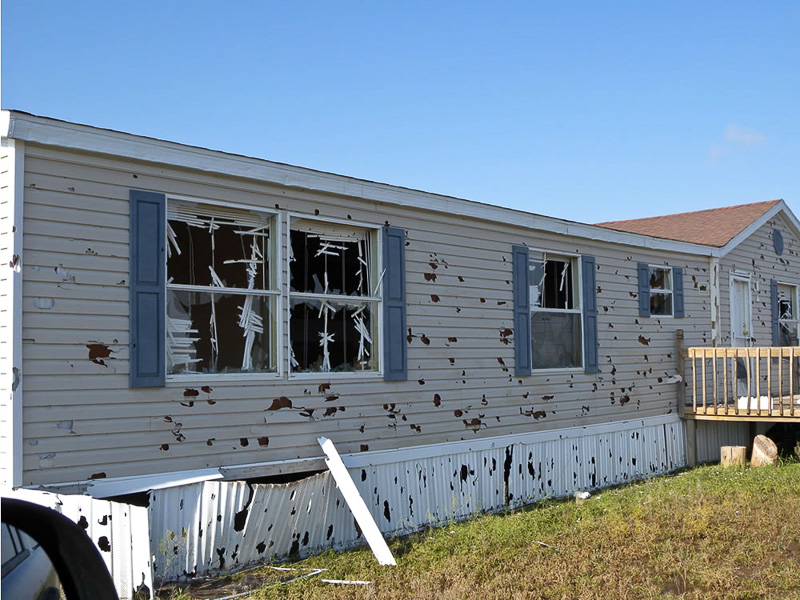
Homeowner Roof Damage Report Template After a Storm
A copy-paste homeowner roof damage report template after a storm, plus a ground-level photo checklist and the safe, factual wording that keeps your record clean for an insurer or roofer.