
Homeowner Roof Damage Report Template After A Storm
On this page
Use a homeowner roof damage report after a storm to record what happened, what you safely observed, what you photographed, what documents you saved, what is unknown, and who needs to answer the next question. The report should organize facts. It should not diagnose roof damage, prove storm cause, decide insurance coverage, approve a warranty, or set the repair scope.
Start with safety. Do not climb onto the roof, use a ladder, lift shingles, scrape roof materials, tarp the roof yourself, enter unstable spaces, touch wet electrical areas, or work near downed power lines. Document from the ground, from safe interior areas, through windows, or through records supplied by qualified people.
The template below can be used before calling a roofer, before filing or updating a claim, before sending photos to a contractor, or before preserving a warranty question. Keep the language factual: "water staining on the upstairs bedroom ceiling at 8 a.m. on May 19," "granules visible near the north downspout," or "roofer photographed missing shingles on the rear slope." Avoid conclusions such as "the storm destroyed the roof," "the insurer must replace it," or "the shingles are defective."
Source review date: June 9, 2026.
Quick Answer
| Question | Short answer |
|---|---|
| What is this report for? | A safety-first packet of dates, observations, photos, receipts, contractor notes, insurance records, warranty records, and unanswered questions. |
| What should I fill out first? | Safety status, storm/discovery timeline, safe photo log, interior damage log, temporary repairs, and who needs the next follow-up. |
| What should I avoid? | Do not climb, use ladders, lift shingles, tarp the roof, remove samples, enter unsafe spaces, or write cause/coverage/warranty conclusions as facts. |
| How should weather records be used? | Use warnings, alerts, SPC reports, and NOAA/NCEI Storm Events records as timing and area context only. They do not prove address-level damage or coverage. |
| What can RoofPredict do? | RoofPredict can organize the template, photo labels, roof age, storm exposure, reports, contractor estimates, claim notes, warranty files, and follow-up tasks. It does not inspect, diagnose, approve, or price repairs. |
Route-Priority Matrix
Use this matrix before filling out the full template. It keeps urgent safety items, insurance records, warranty questions, contractor records, and weather context in separate lanes.
| If this is true | Fill out first | Next safer route | Do not assume |
|---|---|---|---|
| There is active leaking, sagging ceiling material, wet electrical risk, downed power lines, gas odor, or unsafe access | Safety status, rooms avoided, emergency contact, first safe photo time, receipts | Protect life and safety first, then contact the appropriate emergency, insurer, roofer, mitigation, or utility contact | That completing the template matters more than safety |
| You only have ground-level exterior observations | Exterior photo log, visible condition, roof side, distance, date, what is not visible | Ask a qualified roofer how inaccessible areas should be documented | That missing roof photos mean you should climb |
| You have interior stains or moisture | Interior damage log, room name, first noticed date, change after rain, photos, receipts | Preserve records and route active damage to the proper professional or insurer contact | That an interior stain proves one roof cause |
| You are considering an insurance claim | Insurance packet fields, deductible, claim number if any, photos/videos, damaged-property list, receipts | Contact the insurer or agent using policy and contact details if you decide to file or update a claim | That the report proves payment, coverage, cause, or repair scope |
| You are preserving a warranty question | Product name if known, install date, warranty PDF, contractor invoice, photos, manufacturer instructions | Follow the manufacturer's process and ask how any requested material should be handled | That warranty terms match insurance terms or that homeowners should pull roof samples |
| You are choosing or reviewing a contractor | Contractor document fields, written estimate, credentials, permits, warranties, payment schedule, receipts | Compare written records and keep contractor files separate from insurer and warranty decisions | That one estimate is a claim decision or warranty decision |
| You want to add storm records | Storm/discovery timeline, warning/alert source, SPC preliminary note, NOAA/NCEI search note when available | Treat weather records as time and area context beside photos and inspections | That a storm report proves address-level roof damage |
How To Use This Template
Fill in what you know and mark what you do not know. Blank fields are better than unsafe guesses. If a field requires roof access, write "not visible from a safe location" and leave the roof access question to a qualified person.
Use one folder for originals and one working copy for notes. Save the first photo set before adding arrows, circles, captions, or file-name edits. If a roofer, contractor, adjuster, or mitigation company gives you photos, save the original set, the marked set, and the document that came with it.
Keep five buckets separate:
- Homeowner observations: what you saw, heard, smelled, photographed, and noticed.
- Contractor or roofer documents: estimates, reports, warranties, permits, payment records, and receipts.
- Insurance documents: claim number, policy contact, declarations page, deductible, estimate, letters, and messages.
- Warranty documents: product name if known, installation date, warranty PDF, registration or transfer record, proof of installation, photos, sample-request instructions if any, and manufacturer instructions.
- Weather context: warning dates, public storm reports, local emergency updates, and later official storm-event records.
Those buckets can live in one report packet, but they should not be blended into one conclusion.
Copyable Roof Damage Report Template
Copy these fields into your own document or packet. Delete sections that do not apply.
1. Report Header
- Property address:
- Homeowner name:
- Best phone/email:
- Report created date:
- Report updated date:
- Main reason for report:
- Is anyone injured or in immediate danger:
- Is the home safe to enter:
- Unsafe areas to avoid:
- Emergency contact, utility, local authority, insurer, or mitigation service contacted:
- Who is responsible for the next update:
2. Storm And Discovery Timeline
- Storm date and approximate time:
- Weather type noticed: wind, hail, heavy rain, lightning, debris, tree limb, unknown:
- First time damage was noticed:
- Who noticed it:
- First photo or video date:
- First call to roofer, insurer, contractor, property manager, utility, or local authority:
- Temporary repair date, if any:
- Areas not checked because of safety or access:
- Weather alert, warning, or public report saved:
- SPC preliminary storm report checked:
- NOAA/NCEI Storm Events record checked when available:
Weather context is useful for timing. It is not property-specific proof by itself. Keep warnings, alerts, local reports, neighbor notes, SPC records, and NOAA/NCEI records separate from the actual photos, inspection records, and insurance or warranty documents.
3. Roof And Property Background
- Approximate roof age:
- Installation date if known:
- Roofing material if known:
- Manufacturer or product line if known:
- Prior roof repairs:
- Prior leaks:
- Prior inspection reports:
- Warranty file available:
- Permit, invoice, or contractor record available:
- Solar panels, satellite mounts, skylights, chimneys, vents, gutters, trees, fences, or other nearby features:
If you do not know the roof age, say unknown. Do not guess to fill the field.
4. Safe Exterior Photo Log
For each photo, record:
- File name:
- Date and time:
- Location: front, rear, left, right, garage, detached structure, gutter, downspout, yard:
- Photo distance: wide, medium, close:
- What is visible:
- What is not visible:
- Who took it:
- Was the photo taken from the ground, window, doorway, vehicle, or another safe location:
Photo targets:
- whole front elevation;
- whole rear elevation;
- left and right elevations;
- visible roof slope from the ground;
- gutters and downspouts;
- missing, loose, or displaced visible material;
- detached shingles or materials found on the ground;
- debris, fallen limbs, or impact areas;
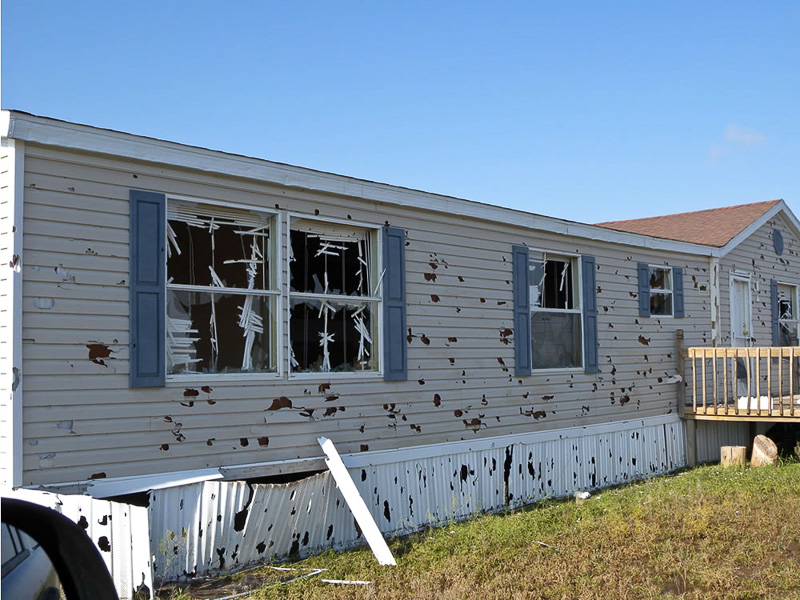
- siding, windows, screens, soft metals, fencing, vehicles, HVAC units, or other exterior context.
Do not climb for missing angles. If an area cannot be seen safely, write: "not visible from safe ground, window, or interior location."
5. Interior Damage Log
For each room or interior area:
- Room or area:
- Date noticed:
- Photo file names:
- Visible condition: ceiling stain, active drip, bubbled paint, drywall damage, wet floor, odor, attic moisture, other:
- Is the area safe to enter:
- Did the condition change after rain:
- Temporary mitigation used:
- Receipts or service records:
- Items moved or discarded for safety:
Interior photos should include a wide room photo, a medium area photo, and a closer photo of the visible condition if safe. Use attic access only if it is normal access, dry, lit, structurally safe, and free of electrical, gas, mold, animal, and falling-object hazards.
6. Temporary Repairs And Mitigation
- What was done:
- Who did it:
- Date:
- Why it was needed:
- Photos before work:
- Photos after work:
- Receipts:
- Invoices:
- Materials used:
- Insurer or adjuster contacted before agreement:
- Items preserved before disposal:
- Items discarded for health or safety:
FEMA guidance supports safety-first documentation, photos, videos, receipts, and records after severe weather. FEMA's material-sample examples are interior or flood-damaged materials such as carpeting, wallpaper, furniture upholstery, and window treatments. Do not remove roof materials yourself because a document mentions samples.
7. Contractor Or Roofer Documents
- Company name:
- Contact:
- Visit date:
- Estimate date:
- Report file name:
- Photo file names:
- Recommended work:
- Warranty or guarantee mentioned:
- Permit responsibility discussed:
- Payment terms:
- Credentials, license, registration, or insurance information provided:
- Receipts, invoices, or contracts:
- Follow-up questions:
Consumer contractor guidance supports written estimates, credential checks, permit questions, warranty questions, contracts, receipts, and records. The report should hold those documents without turning them into an insurance decision, warranty decision, or contractor endorsement.
8. Insurance Packet Fields
- Claim number:
- Policy number:
- Insurer:
- Agent or claim contact:
- Deductible:
- Date reported:
- Reported cause or date of loss:
- Adjuster appointment:
- Estimate or letter received:
- Photos or documents already uploaded:
- Missing documents:
- Follow-up questions:
If you include policy pages, label them. State insurance policy guidance can help identify sections such as declarations, insuring agreement, exclusions, conditions, definitions, endorsements, and riders. Store the pages; do not interpret them from one phrase.
9. Warranty Packet Fields
- Manufacturer if known:
- Product line if known:
- Installation date:
- Installer:
- Warranty PDF:
- Warranty registration or transfer record:
- Proof of ownership:
- Required notice method:
- Photos requested:
- Sample requested:
- Repair or disposal restrictions:
- Manufacturer contact:
One manufacturer warranty example shows why warranty files need their own section: product-specific terms can involve notice, installation proof, owner proof, photos, sample products, exclusions, and repair timing. Do not assume those terms apply to every roof. Do not pull a shingle, cut material, scrape granules, or remove a roof component yourself. If a manufacturer asks for a sample, ask the manufacturer and a qualified roofing professional how it should be collected, preserved, and documented safely.
10. Open Questions
- What areas still need professional inspection?
- What photos are missing because of safety or access?
- What should be preserved before repair or disposal?
- What should be sent to the roofer?
- What should be sent to the insurer?
- What should be sent to the manufacturer?
- What should be checked in weather records later?
- What is the next deadline or appointment?
- Who owns the next response?
Photo And Document Rules
Keep originals. Use labels, not edits, as the main organizing tool. A useful file name is factual:
2026-05-19_front-gutter_granules_ground-photo.jpg
Avoid dramatic file names. They can confuse the record.
If you annotate a photo, save the original beside the annotated copy. If you receive photos from a roofer, ask for the date, location, and slope or component label. If you receive an estimate, save it as a separate document rather than pasting every line into the report.
For warranty questions, preserve product labels, invoices, installation records, prior photos, and manufacturer instructions before repair or disposal where possible. For insurance questions, preserve photos, videos, receipts, temporary repair records, claim communications, and contractor estimates. For contractor questions, preserve written estimates, contracts, warranties, permits, payment schedule, and receipts.
Weather Record Notes
Use weather records as context, not proof. A warning, radar screenshot, SPC preliminary report, local emergency update, or NOAA/NCEI Storm Events record can help you remember timing and location. It does not prove that your roof was damaged, that a specific condition was caused by one event, that insurance applies, that warranty applies, or that a repair or replacement is required.
Keep recent and official sources separate. SPC storm reports are useful for recent preliminary hail, wind, and tornado context, but SPC labels current reports preliminary. NOAA/NCEI Storm Events records support official event-date and area context after data is collected and published. NCEI also notes that data has an update lag and can include outside-source information that may be unverified by NWS.
In the report, use weather records like this:
- "NWS warning saved for county on May 19."
- "SPC preliminary report checked on May 20."
- "NCEI Storm Events not yet available for this month."
- "Weather record kept for timing context only; roof condition still needs qualified review."
How City And State Versions Should Change The Template
A local roof-damage report template should have a real operational reason to exist. Do not make a city or state page by changing the place name in the headline and leaving the same fields underneath. The template should change when local roof stock, weather pattern, permitting path, access constraint, insurer process, contractor capacity, or market timing changes what a roofer needs to know before the first inspection or follow-up call.
For a hail-heavy plains market, the local template should give more room to storm-date notes, SPC preliminary reports, later NOAA/NCEI checks, roof orientation, exposed elevations, gutter/downspout photos, soft-metal context, and route-priority notes. The report should still say that weather records are timing and area context only. A storm report can help the roofing office plan inspection routes; it cannot prove that one address has covered roof damage.
For a coastal, lake-effect, or humid market, the local template should capture exposure. Roof plane direction, distance from water when relevant, salt or moisture exposure, tree shade, moss or algae context, wind-driven rain, attic ventilation questions, skylights, chimneys, and prior maintenance records can change the first questions. The report should keep those as context fields, not use them to diagnose the stain, leak, granule loss, or blister-like surface condition.
For older cities and first-ring suburbs, the local template should make roof history easier to preserve. Many properties have prior-owner gaps, mixed repair areas, old permits, older decking, multiple layers in historical records, chimneys, narrow lots, alley access, rowhome party-wall issues, or roof surfaces that are hard to photograph from the street. A strong city template asks for permit lookup notes, seller disclosures, old inspection reports, prior repair invoices, access limitations, and whether contractor photos are needed to fill safe-view gaps.
For HOA-heavy subdivisions, historic districts, high-cost metros, and tight urban lots, the local template should include process friction. That may mean board correspondence, historic-review notes, permit contacts, staging or parking constraints, neighbor-facing slope photos, property-manager contacts, buyer or lender requests, and written estimate comparison fields. A report can make those conversations cleaner, but it should not promise approval, lower cost, faster claim handling, or a specific repair path.
For wildfire-interface, high-heat, or material-constrained markets, the local template should preserve roof age, product records, fire-rating documents when available, debris context, ventilation questions, defensible-space records where relevant, distributor lead-time notes, and insurance renewal or underwriting questions as separate fields. Commodity and financing context can also matter for roofers: asphalt and petroleum-linked material costs, interest rates, labor availability, storm-season demand, and supplier timing can affect scheduling and homeowner pressure. Treat those as market context, not financial advice or a price prediction.
RoofPredict city and state pages should use this structure to make each page stand alone. The local version should answer: what homes are common there, what storm or exposure pattern changes the first report fields, what records homeowners usually have or lack, what licensing or permit questions need neutral handling, what insurance or warranty pressure can distort the packet, what access or topography makes photo documentation harder, and what a roofer needs before dispatch, estimating, warranty routing, or production handoff. That is the difference between a useful local article and a template clone.
This topic is a good fit for a contractor directory CTA when the directory can surface companies that handle storm documentation, safe photo review, inspection availability, emergency protection, written estimates, warranty-document support, and production handoff cleanly. It is a good fit for The Roofline newsletter CTA when the angle is storm report quality, claim-document discipline, contractor intake, weather-record limits, or market timing. It is a good fit for a state market brief when the page uses verified state-level facts about licensing, code, insurance, roof stock, severe-weather pattern, housing age, material availability, and contractor capacity.
Where RoofPredict Fits
RoofPredict can help turn this template into a working packet: roof age, storm exposure, photo labels, report files, contractor estimates, claim notes, warranty documents, temporary repair records, weather-context notes, unsafe-access notes, and follow-up tasks.
That matters because storm documentation often spreads across camera rolls, email threads, claim portals, PDFs, text messages, and contractor notes. RoofPredict keeps the packet organized so each reviewer gets the right records and the next unanswered question is visible.
RoofPredict does not inspect the roof, diagnose cause, decide coverage, approve warranty claims, negotiate repairs, act as a public adjuster, price repair, decide repairability, interpret legal rights, or replace qualified professional review.
Related RoofPredict Workflows
Use this page for the report template. For adjacent tasks, keep the workflow separate:
- Start with visible observations in how to tell if hail damaged your roof from the ground.
- Separate damage labels with what counts as functional roof damage versus cosmetic damage.
- Prepare for a claim appointment with how to prepare for an insurance adjuster roof inspection.
- Photograph surface details with granule loss, blistering, and cracking: what homeowners should photograph.
- Decide the next professional call with how much roof damage is enough to call a roofer.
- Compare repair proposals with how to compare roofing quotes without getting burned.
Checklist Before You Send The Report
Use this checklist before sharing the report:
- Safety fields are completed first.
- Unsafe or inaccessible areas are labeled.
- Photos are saved in original form.
- Wide, medium, and closer safe photos are labeled.
- Interior damage photos include room names and dates.
- Storm date, discovery date, first-photo date, and weather-context notes are listed.
- Roof age and install records are attached if available.
- Contractor estimates and invoices are separate attachments.
- Insurance claim number, contact, deductible, and submitted documents are listed if a claim exists.
- Warranty documents, registration records, and manufacturer instructions are separated from insurance documents.
- Local context is added when relevant: storm timing, roof orientation, roof age, roof stock, permit records, HOA or historic-review notes, access constraints, insurance-process questions, financing pressure, material timing, and contractor-capacity notes.
- Temporary repair records and receipts are attached.
- Follow-up questions are assigned to the right party.
- No roof access, ladder use, shingle lifting, scraping, sample pulling, tarp work, or unsafe entry was used to complete the report.
Examples
- Active leak after heavy rain: fill out the safety status, room name, first noticed time, wide and close interior photos, receipts, and who was contacted. Add exterior photos only from safe ground or window locations. Do not enter wet electrical areas or claim the photos prove the roof cause.
- Missing shingle visible from the driveway: record the storm/discovery date, whole elevation photo, medium safe photo, what is not visible, roof age if known, and any roofer-provided photos. Leave roof access and scope review to qualified people.
- Warranty question on a newer roof: save the install invoice, product name if known, warranty PDF, registration or transfer record, original photos, and manufacturer contact notes. Do not remove roof material yourself; ask for the manufacturer's process and a qualified roofer's help if a sample is requested.
- Hail or wind report nearby: save the alert or public report as weather context, then keep it separate from photos and inspection documents. Do not write that the public report proves roof damage at the address.
Official-Source Limits
| Source | Use it for | Do not use it for |
|---|---|---|
| FEMA severe-weather documentation | Safety-first documentation, photos, videos, receipts, records, interior/flood-damaged material sample examples, and insurer/adjuster consultation before certain agreements. | Private-insurance coverage decisions, roof diagnosis, roof-material removal, repair scope, or legal advice. |
| NAIC homeowners claim guidance | Photos/videos, damaged-property lists, deductible awareness, insurer contact, and claim-process records. | Payment guarantee, coverage promise, state-specific deadline advice, or roof diagnosis. |
| NWS after severe weather | Waiting until the threat has ended, damaged-building caution, downed power-line caution, protective clothing/shoe context, and post-storm safety. | Proof that a specific roof has storm damage. |
| OSHA re-roofing fall guidance and CDC/NIOSH ladder safety | Roof-work and ladder-fall risk context supporting no homeowner roof or ladder access. | DIY roof inspection instructions or homeowner fall-protection instructions. |
| CFPB contractor disaster guidance | Written estimates, credentials, permits, warranties, contracts, receipts, payment records, and non-rushed contractor decisions. | Contractor endorsement, contract approval, roof diagnosis, or insurance coverage. |
| South Carolina DOI policy guide | Policy section labels such as declarations, insuring agreement, exclusions, conditions, definitions, endorsements, and riders. | Interpreting a reader's actual policy or giving legal advice. |
| GAF shingle warranty example and GAF warranty registration | Manufacturer-specific examples for notice, proof, photos, sample products, registration, transfer, and product-specific warranty records. | Warranty approval, all-manufacturer rules, insurance coverage, legal advice, or homeowner roof-material removal. |
| SPC storm reports, NCEI Storm Events, and NCEI FAQ | Weather-date and area context, with preliminary-versus-official source limits and update-lag context. | Address-level roof damage proof, cause, coverage, warranty eligibility, repairability, or repair scope. |
| RoofPredict | Packet organization and follow-up tracking. | Inspection, diagnosis, coverage, warranty approval, repair pricing, legal decisions, public-adjuster work, or professional review. |
FAQ
Is this report enough for an insurance claim?
No. It is a clean record to support the claim process. The insurer still reviews the facts, policy, deductible, cause, scope, and documents.
Should I include weather alerts?
Yes, as timing context. Keep them separate from photos and inspection records. A weather alert, SPC report, or NOAA/NCEI event record does not prove what happened to your roof by itself.
Do I need roof photos?
Use safe photos only. If roof access is needed, ask a qualified roofer how they document it. Do not climb the roof or use a ladder to finish a template field.
Can I use the same report for warranty?
You can reuse the photo and record packet, but warranty questions need manufacturer-specific documents and instructions. Keep warranty files separate from insurance claim files.
Should I include contractor estimates?
Yes, but attach them as contractor documents. Do not rewrite an estimate as your own roof diagnosis or insurance conclusion.
Can RoofPredict complete the report for me?
RoofPredict can organize the report packet and follow-up tasks. It does not inspect, diagnose, negotiate, approve, interpret, or price the work.
The Roofline by RoofPredict
Stay Ahead of Roofing Market Changes
Join The Roofline by RoofPredict for weekly roofing intelligence: material price signals, storm demand, insurance and regulatory updates, sales tactics, and local contractor opportunities.
Sources
- How to Document Damages After Severe Weather Events — fema.gov
- What You Need to Know When Filing a Homeowners Claim — content.naic.org
- What to Do After Severe Weather — weather.gov
- Reducing Falls During Residential Construction: Re-Roofing — osha.gov
- Ladder Safety — cdc.gov
- How can I find and work with contractors to rebuild after a disaster? — consumerfinance.gov
- Understanding Your Insurance Policy — doi.sc.gov
- GAF Shingle & Accessory Limited Warranty — gaf.com
- Register your GAF Roofing Warranty — gaf.com
- Storm Prediction Center Storm Reports — spc.noaa.gov
- Storm Events Database — ncei.noaa.gov
- Storm Events Database - FAQ — ncei.noaa.gov
- RoofPredict — roofpredict.com
Related Articles
How To Build A Homeowner Storm Damage Report Before The First Visit
A homeowner storm damage report is a safe pre-visit handoff for the roofer. It should tell the roofer what happened, what you observed, what photos and documents you have, and what still needs inspection.
Should You File A Roof Insurance Claim After Hail? Evidence Checklist
There is no safe universal answer to "should I file a roof insurance claim after hail?" The better first step is to build a pre-filing evidence file: safety status, visible property evidence, storm-date context, roof age, receipts, policy questions,...
How To Tell If Hail Damaged Your Roof From The Ground
You cannot confirm hail damage to a roof from the ground. You can collect clues that make the next conversation safer: storm date, safe photos, collateral dents, spatter, visible missing or lifted material, granules near downspouts, interior stains, and...