
Hail Damage Roof Inspection: What a Roofer Should Check
On this page
A hail damage roof inspection should check safety, storm-date context, every roof plane, the roofing material, roof age and weathering, ridge and hip caps, valleys, penetrations, vents, flashings, gutters, downspouts, soft metals, skylights, siding, windows, screens, fences, decks, attic signs, interior stains, prior repairs, and anything that could not be inspected safely.
The inspection should not turn a weather report, gutter dent, test square, or close-up shingle photo into an insurance conclusion. A good report says what was checked, where it was checked, what was photographed, what limits existed, what conditions were observed, and what needs further review. It does not tell the homeowner that every hail inspection ends in full roof replacement.
The source limits are important. NOAA NSSL's hail guide supports hail behavior and severe-size context. NOAA/NWS SPC storm reports and the NOAA NCEI Storm Events Database support weather-history context. OSHA fall-protection resources support roof-access caution. IBHS/RICOWI roofing guidance supports condition, age, weathering, and professional judgment. Those sources do not decide whether a specific roof is damaged, whether insurance covers the damage, or whether a warranty applies.
Quick Answer
| Inspection area | What a roofer should check | What the homeowner should expect |
|---|---|---|
| Safety and access | Slope, height, surface condition, weather, debris, skylights, soft decking, overhead hazards, and fall-protection needs. | A clear note if an area was unsafe or not inspected. |
| Storm-date evidence | Homeowner-reported storm date, time zone, hail size notes, original photos/videos, preliminary reports, and later NOAA records. | Weather context labeled as context, not proof of roof damage. |
| Roof planes | Each slope, ridge, hip, valley, eave, rake, upper roof, lower roof, and directional exposure. | Wide photos and roof-plane labels, not only close-ups. |
| Material type | Asphalt, metal, tile, slate, synthetic, low-slope membrane, accessories, and penetrations. | Material-specific notes and product-documentation limits. |
| Collateral areas | Gutters, downspouts, vents, flashing, siding, screens, windows, decks, fences, AC fins, and debris. | Collateral marks separated from roof scope. |
| Interior or attic | Ceiling stains, daylight, wet decking, wet insulation, old stains, or water trails only where access is safe. | Safe interior documentation, not forced attic entry. |
| Report limits | Prior condition, age, weathering, repairs, unavailable areas, photos, proposed next steps, and review boundaries. | No promise that the report proves coverage, warranty approval, or replacement. |
Start With Safety And Scope
No hail inspection is worth unsafe roof access. Homeowners should not climb onto the roof after hail. A roofer should not treat a quick look as a reason to ignore wet surfaces, steep slope, brittle materials, hidden deck damage, skylights, loose debris, overhead lines, or unstable access.
The NWS severe-weather safety page cautions people to wait until the threat has ended and avoid hazards such as downed power lines. OSHA's roof repair fall-prevention fact sheet says residential roof repair requires planning ahead and fall-protection measures, and it describes competent-person evaluation where roof condition is in question.
Before documenting hail marks, the inspection should define:
- who is allowed on the roof;
- whether roof access is safe today;
- weather conditions during the inspection;
- roof slope, height, surface condition, and access method;
- whether fall protection, stable platforms, drones, binoculars, or alternate photo methods are needed;
- whether tree limbs, loose material, skylights, soft decking, wet surfaces, or electrical hazards change the inspection scope;
- which roof planes, elevations, or areas were not inspected and why.
For homeowners, the safe expectation is simple: ask for photos and a written explanation. Do not climb to verify the roofer's findings yourself.
Storm-Date Evidence Workflow
Weather context belongs in the file, but it has limits. Use this workflow to keep it useful without overstating it.
| Step | What to save | Limit to write in the report |
|---|---|---|
| 1. Homeowner observation | Date, approximate time, time zone, hail sound, wind, rain, leaks, debris, or visible hail size. | Memory is context, not proof by itself. |
| 2. Original media | Original photos or videos of hail, yard impacts, dents, leaks, or debris with filenames and timestamps preserved where possible. | Metadata can help timeline review, but it does not decide roof scope. |
| 3. Early report context | Local storm reports, SPC preliminary reports, local alerts, or weather-app screenshots saved with retrieval date. | Preliminary reports are not final NOAA Storm Data and may not be address-specific. |
| 4. Later archive context | NCEI Storm Events lookup when records are available. | Storm Events records support weather history, not roof-plane damage. |
| 5. Inspection timing | Inspection date, inspector name, roof access method, and whether the inspection was same day, days later, or weeks later. | Time gaps matter because repairs, weathering, and other storms can change the evidence. |
| 6. Report label | A short note: "Weather records are used for storm context only." | Do not call a public report proof that the property has covered hail damage. |
NOAA NSSL says quarter-size hail, or 1 inch diameter, is considered severe, and it explains that wind-driven hail can fall at an angle and land in swaths with variable size distribution. That matters because two nearby homes may not receive the same hail size, angle, or concentration.
The SPC reports page provides preliminary storm-report context, while the NCEI database and FAQ support later Storm Data context and limits. Use them as weather-history tools. A report near a home does not prove every roof plane was hit the same way.
Route-Priority Matrix
Not every hail concern belongs in the same workflow. Use the situation to route the next step.
| Situation | First priority | Then route to |
|---|---|---|
| Active leak, wet ceiling, or interior water | Safety screen and water-entry documentation from safe areas. | The first-24-hour storm leak workflow or emergency tarping documentation if temporary protection is needed. |
| No active leak, but hail or collateral marks are visible | Hail inspection packet: storm date, access limits, roof planes, material, collateral, and photos. | Use the inspection matrix and photo checklist below. |
| Homeowner has not called anyone yet | Ground-only safety observations and basic records. | What roof photos to take before calling insurance and the roofer inspection checklist here. |
| Claim or adjuster inspection is already scheduled | Preserve report, photos, timestamps, receipts, and questions. | Adjuster preparation. |
| Homeowner is deciding whether to file | Documentation and policy/agent contact boundaries. | Hail claim evidence checklist. |
| Concern is visible only from the ground | Safe exterior observations and limits. | Ground-only hail damage observations. |
| Inspection raises repair vs replacement questions | Observed conditions, scope options, and further review. | Roof replacement vs repair decision checklist. |
| Low-slope, tile, slate, metal, solar, or specialty system | Product documentation and specialist review if the general inspection is limited. | Manufacturer/product documentation reviewer, specialty roofer, or engineer where needed. |
This matrix protects the inspection's purpose. The hail inspection says what a roofer checked. It should not become a claim-filing script, tarp manual, adjuster-prep packet, or replacement decision.
Hail Inspection Matrix
A useful hail inspection checks the whole system and the surrounding property. The matrix below keeps the report organized.
| Area | What the roofer should check | What the report should show |
|---|---|---|
| Safety and access | Roof slope, height, surface condition, debris, weather, access method, fall hazards, skylights, soft areas, electrical hazards. | Access notes, limitations, and safety method. |
| Roof overview | All roof planes, ridge, hips, valleys, eaves, rake edges, lower slopes, upper slopes, and directional exposure. | Wide photos labeled by elevation or roof plane. |
| Asphalt shingles | Dents, tears, granule displacement, exposed mat, bruising indicators, broken seal areas, missing tabs, lifted shingles, age and wear context. | Close photos with location, plus wider context photos. |
| Ridge caps and hip caps | Impact marks, cracks, missing pieces, exposed fasteners, loosened or displaced caps. | Separate photos because caps may show damage differently from field shingles. |
| Metal components | Gutters, downspouts, valley metal, flashing, vents, furnace caps, drip edge, pipe jacks, chimney caps, metal roof panels. | Dents or deformation by location, with notes about function versus appearance. |
| Tile, slate, or synthetic units | Cracks, shattered units, displaced pieces, broken corners, debris impact, unsafe walking limits. | Photos from safe access; notes if specialized inspection is needed. |
| Low-slope membranes | Possible punctures, cuts, displaced surfacing, drainage issues, seams, drains, scuppers, edge metal, and rooftop equipment, if visible and safely accessible. | Product-documentation or low-slope specialist review where the general inspection is limited. |
| Roof penetrations | Pipe boots, vents, skylights, chimneys, satellite mounts, solar attachments, HVAC curbs. | Photos of impact marks, sealant condition, flashing, and water-entry risk. |
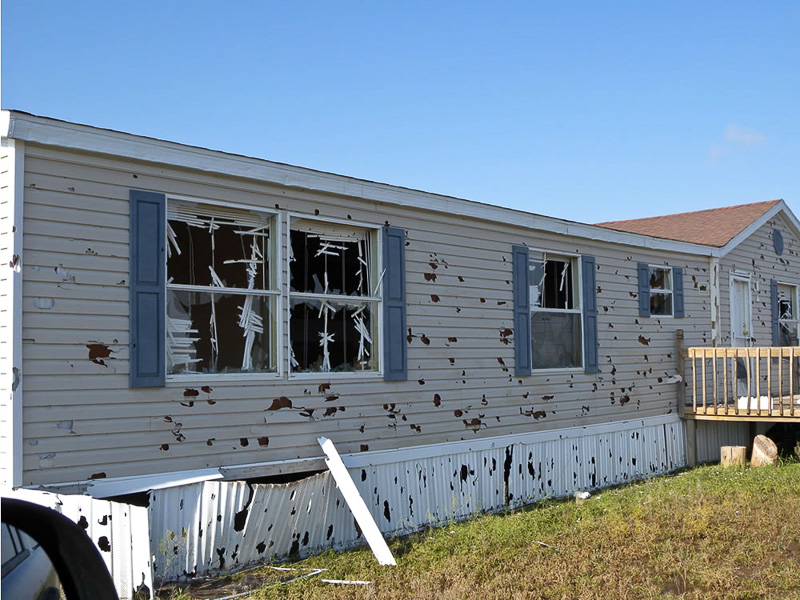
| Exterior collateral | Siding, windows, screens, fascia, garage doors, fences, decks, AC fins, vehicles, patio furniture. | Context photos that separate roof observations from broader property exposure. |
| Interior and attic | Ceiling stains, active leaks, daylight, wet roof decking, wet insulation, water trails, prior stain history. | Safe interior photos and notes; no unsafe attic access. |
| Prior condition | Roof age, repairs, patches, manufacturing records, ventilation concerns, weathering, moss, brittle material, previous damage. | Separate condition notes so age and wear are not confused with new hail observations. |
The Owens Corning storm checklist supports checking visible roof damage, gutters, vents, windows, outside areas, attic, ceilings, leaks, and water spots. Owens Corning also publishes homeowner material on roof hail damage. The GAF storm damage guide says signs of hail can appear on gutters and downspouts, and recommends professional roof checks after storms. Those sources support visible categories. They do not decide cause, scope, warranty, or coverage.
Roofer Photo Checklist
A hail inspection report should not rely on isolated close-ups. The photo packet should let another reviewer understand where the mark is, what roof plane it came from, and what conditions surround it.
| Photo type | What to capture | Why it matters |
|---|---|---|
| Wide property view | Front, rear, left, and right elevations from safe ground locations. | Establishes orientation and exposure. |
| Roof-plane overview | Each slope or plane that can be safely photographed. | Prevents close-ups from floating without location context. |
| Medium context photo | Area around the suspected mark, ridge cap, valley, vent, or flashing. | Shows whether the mark is isolated or part of a pattern. |
| Close photo | Suspected impact, tear, granule loss, dent, crack, or opening. | Documents the observed condition without making it a coverage decision. |
| Collateral photo | Gutters, downspouts, soft metals, siding, screens, windows, AC fins, fences, or decks. | Supports exposure context while staying separate from roof scope. |
| Interior or attic photo | Ceiling stains, daylight, wet decking, wet insulation, or water trails only where access is safe. | Connects exterior observations to water-entry concerns when present. |
| Limitation photo | Locked gate, unsafe slope, wet roof, damaged ladder area, blocked access, or unsafe attic entry. | Explains why an area was not inspected. |
| File record | Original filenames, dates, timestamps, report labels, and who took the photos. | Preserves the audit trail. |
FEMA's severe weather documentation guidance supports photos, videos, receipts, and material samples in damage documentation. The NAIC homeowner claim guidance supports damaged-property lists, photos and videos, policy information, deductible awareness, and insurer or agent contact. Use those sources for recordkeeping. Do not use them to say a claim should be filed or paid.
Material-Specific Hail Checks
Hail does not show the same way on every material. A report that treats all roofs alike is weaker than one that names the material and inspection limits.
For asphalt shingles, IBHS material research explains that hail impact can dent the shingle, breach or tear it, and displace granules. The roofer should photograph suspected impact areas in context, then close, and should note roof age, granule wear, brittleness, blisters, foot traffic, manufacturing concerns, prior repairs, and other conditions that may look similar to hail in casual photos. The report should avoid declaring coverage from a close-up alone.
For metal roofing and metal accessories, IBHS notes that hail can dent metal. The report should separate cosmetic-looking dents from functional concerns such as open seams, damaged fasteners, displaced flashing, broken coatings, punctures, or water entry. That distinction often needs product, warranty, or engineering review beyond a general inspection note.
For tile and slate, large hail may crack or shatter units, and damage can vary by material, thickness, and impact location. The report should include safe photos of broken pieces, displaced units, impact location, debris, underlayment exposure if visible, and areas that could not be walked safely. Specialized tile or slate review may be needed because unsafe walking can create damage.
For low-slope membranes and specialty systems, keep the language narrower. A general inspection may flag possible punctures, cuts, displaced surfacing, drainage problems, damaged edge metal, rooftop-unit issues, or seam concerns, but product documentation and a qualified low-slope reviewer may be needed before turning those observations into repair scope. GAF's scheduled maintenance checklist supports checking roof areas after severe weather and reviewing system components, drainage, debris, and coverage documents carefully. It is not a universal repair standard for every roof.
IBHS's Impact Resistance Test Protocol for Asphalt Shingles is useful because it names the kind of controlled work needed to compare materials. IBHS also states the protocol is for research and product comparison, not insurance claims, warranties, or legal standards. That warning belongs in any article about hail inspection.
Local Hail Inspection Factors For City And State Pages
A hail inspection page can earn a city or state URL when the local market changes the inspection packet. The basic safety and evidence rules stay the same, but the roof stock, storm pattern, access, weather-record workflow, material mix, insurance friction, and contractor capacity can be very different by market.
Do not publish a local hail page that only says "hail can damage roofs in CityName." A strong local page should explain why the inspection sequence, photo packet, report limits, and follow-up routing are different there.
Use this local inspection table before creating a city or state version:
| Local factor | What changes the inspection | What the roofer should capture |
|---|---|---|
| Hail pattern | Plains hail corridors, mountain-front storms, lake-influenced storms, tropical remnants, and urban microbursts can change hail size, wind angle, and swath confidence | Reported storm date, time zone, preliminary report context, later Storm Events context, and a clear note that weather records are context only |
| Roof stock | Asphalt subdivisions, tile neighborhoods, slate or historic homes, metal roofs, low-slope additions, solar attachments, and multifamily buildings show different hail and access issues | Material type, roof age, roof plane labels, specialty-system limits, and whether a specialty reviewer is needed |
| Housing age and prior work | Older roofs, overlays, partial replacements, patched slopes, recent repairs, and reroof waves can make hail observations harder to separate from age or weathering | Prior repair notes, permit or invoice year if known, old-condition photos, and separation between suspected storm observations and existing wear |
| Access and topology | Steep lots, alleys, tree cover, gated subdivisions, dense rowhouses, commercial-adjacent homes, and snow or wet surfaces can limit inspection | Access method, areas not inspected, limitation photos, alternate safe photo methods, and follow-up requirements |
| Collateral pattern | Gutters, downspouts, soft metals, AC fins, screens, siding, fences, decks, skylights, and vehicles may show exposure differently by neighborhood | Collateral photos labeled as exposure context, not roof scope or coverage proof |
| Insurance and property process | Some markets have more adjuster meetings, public-adjuster activity, HOA approvals, landlord rules, condo process, or carrier document requests | Report boundaries, photo file structure, receipt handling, who received the report, and no coverage or filing instruction |
| Material and supplier timing | Large hail events can strain shingle, tile, metal accessory, underlayment, gutter, and labor availability | Written temporary work, material assumptions, follow-up date, and open product-documentation questions without price or availability promises |
| Directory fit | Local readers need roofers who can inspect the dominant materials and document cleanly under storm pressure | Profile fields should emphasize material experience, inspection method, photo discipline, service radius, storm response, report clarity, and follow-up ownership |
State pages should be broader than city pages but still specific. A Colorado hail-inspection page may need elevation, UV, rapid storm movement, metal accessories, and roof-plane exposure context. A Texas page may need hail corridors, high heat, fast-growth subdivisions, insurer documentation pressure, and post-storm contractor capacity. A Minnesota page may need hail plus freeze-thaw, older asphalt, steep roofs, and seasonal inspection timing. A Florida hail page may need to separate hail from wind-driven rain, tile underlayment concerns, insurer roof-age pressure, and hurricane-season emergency capacity.
City pages can get more granular. A mature tree-heavy suburb may need gutter, valley, debris, and shaded-slope context. A new subdivision may need product-age records, builder warranties, roof-plane labels, and repeated-neighborhood storm reports. A historic neighborhood may need slate, tile, metal, preservation review, and specialty repair limits. A dense urban market may need access notes, shared-roof questions, landlord or association routing, and safe exterior-photo constraints.
Financing and economics can be part of the local brief, but keep them in the right lane. Deductibles, interest rates, material-price movement, oil-linked asphalt inputs, labor capacity, and distributor lead times can affect scheduling, budgeting, and customer urgency. They do not prove damage, decide scope, determine coverage, or replace inspection. The local page can explain why written scope, material assumptions, and follow-up timing matter after a large hail event without giving financial advice or price forecasts.
For roofing teams, the local hail page should improve operations:
| Workflow | Local use | Boundary |
|---|---|---|
| Intake | Sort active leaks, unsafe access, material type, roof age, storm date, collateral marks, and inspection availability | Do not diagnose damage from a call or weather report |
| Inspection | Label roof planes, material, limitations, collateral, prior condition, weather context, and photo source | Do not turn the report into coverage, warranty, or replacement certainty |
| Office follow-up | Track report due date, missing photos, weather records, adjuster meeting, repair estimate, or specialty review | Do not leave temporary work, unavailable areas, or product questions undocumented |
| Directory and market brief | Show local capability: material experience, service radius, storm response, report clarity, photo discipline, and follow-up ownership | Do not imply endorsement, claim success, or exact damage outcome |
The local page should feel like a market brief attached to an inspection workflow. It should name the actual local inspection problem and the exact records that make the roofer's report stronger.
What The Report Should Include
A hail inspection report should be easy for a homeowner, roofer, reviewer, insurer, manufacturer, or second contractor to follow without guessing.
Include:
- property address or job identifier;
- inspection date, storm date, reported storm time, and time zone;
- roof age if known, material type, slope, stories, and access limits;
- weather sources reviewed, retrieval dates, and source limits;
- safety and access notes;
- roof plane map or clear elevation labels;
- overview photos, medium photos, close photos, and limitation photos;
- collateral observations;
- attic and interior observations where safely accessible;
- prior repairs, aging, weathering, manufacturing concerns, and other non-hail conditions;
- temporary repair needs, if any;
- observed conditions and proposed repair options;
- report limitations;
- receipts, homeowner photos, and relevant call notes.
Insurance and warranty lines need to stay clean:
- Weather context is not coverage.
- Collateral marks are not roof scope.
- A close photo is not a full inspection.
- A test square is not a policy decision.
- A manufacturer's hail warranty language is not universal.
- An impact-resistant label is not immunity from damage.
- A roof that has hail marks may still need repair scope, code, warranty, and insurance review.
- A roof that has no obvious marks from the ground may still deserve professional review after large hail.
That clarity protects the homeowner and the roofer. A roofer can document observed conditions and proposed repair options. Coverage questions belong with the insurer or agent and depend on policy terms, facts, documentation, and claim review.
Where RoofPredict Fits
RoofPredict can help organize the hail inspection packet: roof age, material, storm date, weather context, homeowner photos, roofer photos, roof plane labels, collateral marks, attic and interior notes, inspection report, receipts, insurer or agent notes, manufacturer records, and follow-up tasks.
The value is not diagnosis. The value is keeping the file from scattering across text messages, camera rolls, weather screenshots, handwritten notes, estimates, and claim portals.
RoofPredict does not inspect roofs, diagnose hail damage, verify safety, select contractors, file claims, decide coverage, interpret warranties, or determine repair scope.
Checklist For A Hail Damage Roof Inspection
Use this checklist to evaluate the inspection packet:
- Safety and access limits are written down.
- Homeowner did not climb the roof.
- Storm date, time zone, hail size notes, original media, and weather sources are saved.
- Preliminary reports and later Storm Events records are labeled as context only.
- Roof material, age, slope, and prior repair history are documented.
- Every roof plane is labeled or listed as not safely inspected.
- Wide, medium, close, collateral, interior, attic, and limitation photos are included where safe and relevant.
- Asphalt, metal, tile, slate, membrane, accessories, and penetrations are checked by material type.
- Existing wear, aging, repairs, and non-hail conditions are separated from suspected storm observations.
- Report limitations are included.
- Insurance and warranty conclusions are left to the proper reviewer.
- RoofPredict or another folder contains the complete packet.
Source Limits
| Source | Use it for | Do not use it for |
|---|---|---|
| NOAA NSSL, SPC, and NCEI | Hail behavior, severe-size context, preliminary reports, official Storm Data archive context, and weather-record limits. | Proving property-specific roof damage, scope, or coverage. |
| NWS and OSHA | Post-storm safety, roof-worker fall risk, fall-protection resources, planning, competent-person roof condition evaluation, and access caution. | Complete safety plan, state-specific compliance decision, or homeowner roof access. |
| IBHS/RICOWI | Roof condition evaluation, age/weathering context, material damage modes, and testing protocol limits. | Claims handling standard, legal standard, warranty interpretation, or property-specific diagnosis. |
| Owens Corning and GAF | Visible storm categories, hail awareness, product-maintenance context, collateral indicators, and professional inspection trigger. | Independent cause determination, warranty decision, coverage decision, or contractor endorsement. |
| FEMA and NAIC | Photos, videos, receipts, material samples, damaged-property lists, deductible and policy-contact boundaries. | Telling the homeowner whether to file or promising payment. |
| RoofPredict | Organizing storm, roof, photo, report, receipt, and follow-up records. | Hail diagnosis, safety approval, contractor choice, claim filing, coverage decision, or warranty decision. |
FAQ
What should a roofer check first after hail?
Safety and access. The roofer should decide whether the roof can be inspected safely, document limits, and use safe access methods before checking shingles, metal, vents, gutters, or collateral areas.
Does quarter-size hail mean the roof is damaged?
No. NOAA treats quarter-size hail as severe, but roof damage depends on hail size, hardness, wind, impact angle, roof material, age, weathering, installation, and roof plane exposure. Field inspection still matters.
How many photos should be in a hail inspection report?
There is no universal number. The better test is coverage: wide property photos, labeled roof-plane photos, medium context photos, close photos, collateral photos, safe interior or attic photos if relevant, and limitation photos for areas that could not be inspected.
Should the roofer label each roof slope or elevation?
Yes. Labels make the report easier to review. A close-up photo should connect back to a roof plane, elevation, room, or component so the homeowner is not left guessing where the mark was found.
What if the roofer says some areas could not be inspected safely?
That should be written in the report. An honest limitation is better than unsafe access or vague certainty. The report can explain the area, the reason it was not inspected, and whether a safer alternate method or specialist review is needed.
Can hail damage look like old wear or blistering?
Sometimes casual photos can confuse hail observations with age, weathering, foot traffic, blisters, manufacturing concerns, or prior repairs. That is why the report should separate suspected storm observations from prior condition and material context.
Should gutters and soft metals be checked too?
Yes, but keep them in context. Dented gutters, downspouts, vents, or soft metals can support hail exposure context. They do not prove shingle damage, replacement scope, warranty outcome, or insurance coverage.
What weather records should be saved with the inspection?
Save homeowner-reported storm date and time, original media, local alerts or preliminary reports if available, SPC report context where relevant, and later NCEI Storm Events records when available. Label all of them as weather context, not address-level roof damage proof.
Is a test square enough to prove roof replacement is needed?
No. A test area may help document observed conditions, but replacement scope can depend on material, age, installation, roof area, code, manufacturer documentation, repair feasibility, and policy review. A test square is not a coverage decision by itself.
Can a roofer tell me whether insurance will pay?
A roofer can document roof conditions and explain observed conditions and proposed repair options. Coverage questions belong with the insurer or agent and depend on policy terms, facts, documentation, and claim review.
Can RoofPredict store a hail inspection report?
Yes. RoofPredict can organize storm context, roof age, inspection photos, reports, receipts, insurer notes, and follow-up tasks. It does not inspect the roof or diagnose hail damage.
The Roofline by RoofPredict
Stay Ahead of Roofing Market Changes
Join The Roofline by RoofPredict for weekly roofing intelligence: material price signals, storm demand, insurance and regulatory updates, sales tactics, and local contractor opportunities.
Sources
- Severe Weather 101: Hail Basics — nssl.noaa.gov
- Storm Prediction Center Today's Storm Reports — spc.noaa.gov
- Storm Events Database — ncei.noaa.gov
- Storm Events Database FAQ — ncei.noaa.gov
- What to Do After Severe Weather — weather.gov
- RICOWI Best Practices Guide for Roofing — ibhs.org
- Natural Weathering and Hazard Exposure — ibhs.org
- Impact Resistance Test Protocol for Asphalt Shingles — ibhs.org
- Fall Protection - Construction — osha.gov
- Reducing Falls During Residential Construction: Roof Repair — osha.gov
- Roof Storm Damage Checklist — owenscorning.com
- Roof Hail Damage — owenscorning.com
- Storm Damage Roof Repairs: Resources Guide — gaf.com
- Scheduled Maintenance Checklist — gaf.com
- How to Document Damages After Severe Weather Events — fema.gov
- What You Need to Know When Filing a Homeowners Claim — content.naic.org
- RoofPredict — roofpredict.com
