
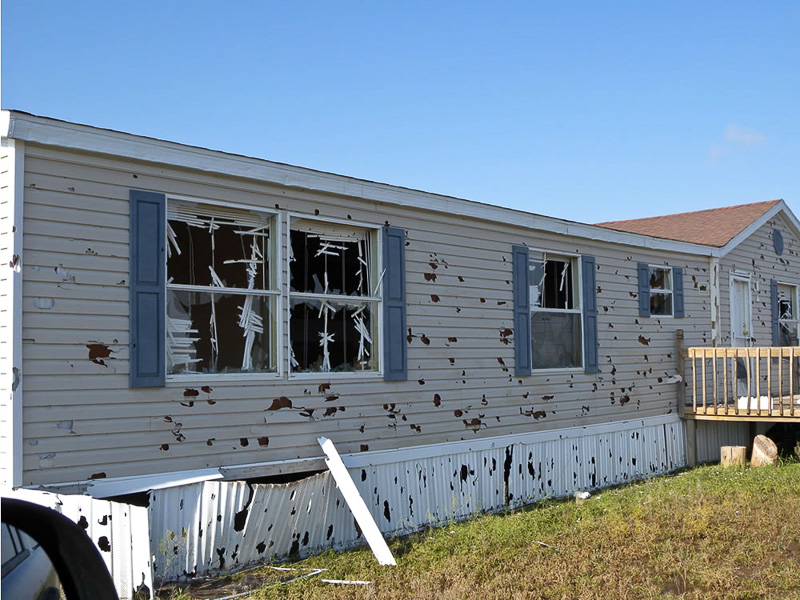
Storm Alert to Route List: How Roofers Prioritize After Hail
A storm alert is a triage signal, not a route. Here is the field-tested workflow that turns a hail alert into a ranked, safe, legally clean route list.
Expert resources on roof maintenance, storm damage, insurance claims, and more.

A storm alert is a triage signal, not a route. Here is the field-tested workflow that turns a hail alert into a ranked, safe, legally clean route list.

A repeatable pre-send audit that catches missing roofing line items before the supplement leaves your office, with the items carriers skip most and how to document each one so a reviewer can actually approve it.

A roofer's playbook for ranking which roofs to inspect first using age range, product line, warranty status, and storm context, with the honesty and legal guardrails that keep the conversation clean.
Interior water damage turns a roof job into a documentation, safety, and claims problem. Here are five things a roofing contractor needs to get right when a ceiling stain shows up.
A roofing veteran's 5-step plan for Orange County, FL post-storm work: emergency tarps, 24-hour permits, the 25% rule, hurricane deductibles, and the Florida claim laws that get contractors fined.
A field-tested, five-step plan for handling hail and wind roof damage in Deatsville and the rest of Nelson County, Kentucky — from the first safety check to a clean, documented repair.
Florida's insurance reforms killed the easy storm-claim funnel. Here is a five-step plan to rebuild a roofing business around customer-paid retail work that holds up legally and financially.
A clear, step-by-step plan for homeowners and contractors dealing with tornado or high-wind roof damage near the Lake Murray Dam, Irmo, and Lexington County, SC.
A 15-year field playbook for closing out a commercial roof: what goes in the closeout package, how to build the as-built record, how to clear a punch list with evidence, how to separate warranty paths, and how to finish payment without friction.
A field-grade walkthrough of the five roof-damage signs Collinsville homeowners should check after the March 6, 2026 EF2 tornado, plus how to document conditions and screen a contractor before signing anything.
A field-tested playbook for emailing homeowners to send roof photos before the inspection: ready-to-use templates, the one safety sentence you can't skip, secure photo handling, and the insurance language that gets roofers in trouble.
A practical field system for assembling a roofing job file that holds up when a warranty question lands three, ten, or twenty years after the crew left.
A field-tested framework for writing a roofing comparison email to homeowners that earns trust instead of pressure, with copy-ready templates, side-by-side tables, and the compliance lines that keep you out of trouble.
Sills sits in Jackson County, where the real roof threat is wind, not hail. Here is a roofer's five-step plan to inspect, document, and repair after a Panhandle storm.
A field-tested way to run the final roofing walkthrough so the homeowner understands the work, the punch list has owners, and the job closes clean.
A field-tested checklist for spotting hail and wind roof damage near Laurel, Nebraska, including what 2.5-inch hail does to a roof, what to document, and when to call a pro.
A field-tested way to turn a sold roofing job into a crew brief the foreman can run from the trailer, with scope, hold points, safety, photos, change-order rules, and closeout owners spelled out before anyone climbs a ladder.
After the March 2026 EF0 tornado clipped Payne City inside Macon, here are the five roof-damage signs to check from the ground, what to document, and the wording that protects you.