
How to Find Old Roofs in the Storm Path Before Your Competition Knocks
On this page
Every storm restoration crew knows the feeling. The hail rolls through on a Tuesday afternoon, your phone lights up with weather alerts, and by Wednesday morning there are six other trucks parked in the same neighborhood you were planning to work. The question that separates a profitable storm season from a break-even one is not whether you can get to the damage. It is whether you can get to the right damage first: the roofs that were already aging out, already brittle, already one good impact away from a legitimate, documentable claim.
A storm does not damage every roof equally. A 4-year-old architectural shingle roof and a 19-year-old three-tab roof can sit on the same block, take the same 1.25-inch hail, and end up in completely different places. One sheds the impact with bruising you would have to hunt for. The other loses granule mat, cracks at the mat, and shows the kind of functional damage an adjuster will actually write. If you are knocking both doors with the same pitch and the same priority, you are burning the most expensive resource you have, which is your reps' time, on roofs that will not convert.
Finding old roofs in the storm path is the core skill of profitable storm work. Not finding the storm, finding the intersection: the addresses where an aging roof and a real wind or hail track line up. This is a long, practical walk through how experienced restoration teams actually do that, what the data looks like, where crews waste days, and how to build a repeatable targeting workflow that puts your best closers in front of the highest-probability doors. There is no magic involved. There is method, a handful of free public datasets, some aerial imagery discipline, and a clear-eyed understanding of what a roof's age actually tells you.
Why Roof Age Is the Variable That Moves the Needle
Storm intensity gets all the attention. Crews chase the biggest hail reports and the highest wind gusts because that is what shows up on the radar maps and the storm-chaser feeds. Intensity matters, but it is the second variable, not the first. The first is the condition of the roof when the storm arrives, and condition correlates strongly with age.
Think about what age does to an asphalt shingle. When a shingle is new, the asphalt is flexible, the granule mat is fully seated, and the mat itself has not lost the petroleum oils that keep it pliable. Over years of thermal cycling, UV exposure, and ordinary weathering, the asphalt hardens and shrinks, granules loosen and wash off, and the mat becomes brittle. A brittle, granule-depleted shingle does not absorb an impact. It fractures. The exact same hailstone that leaves an invisible bruise on a young roof can crack the mat on an old one, and a cracked mat is functional damage that compromises the roof's ability to shed water.
That is the mechanism. It is why two roofs in the same hail swath convert at completely different rates. The young roof produces a maybe; the adjuster squints, measures, and often denies. The aging roof produces a clear story: brittle shingles, granule loss exposing the mat, cracking consistent with the date of loss. Same storm, different outcome, and the difference is mostly age.
There is a second reason age matters that has nothing to do with physics and everything to do with the homeowner. A person with a 20-year-old roof already knows, somewhere in the back of their mind, that they are living on borrowed time. They have seen the granules in the gutter. Maybe a neighbor already replaced. When you knock that door and you are credible and specific, you are not creating a need, you are confirming one the homeowner already feels. A person with a 5-year-old roof thinks you are trying to sell them something they do not need, and they are usually right.
There is a third reason, and it is the one that shows up in your numbers at the end of the season: the economics of a knock. Treat a single inspection as a unit cost. A rep who knocks, qualifies, gets onto a roof, photographs it, and writes it up has spent somewhere between thirty and ninety minutes of skilled labor on that address, and that is before the follow-up, the supplement, and the build. If half of those inspections land on roofs too young to convert, you have doubled your effective cost per signed job without writing a single extra contract. The whole argument for age targeting is that it raises the conversion rate per inspection, which is the metric that actually drives margin in storm work. You are not trying to knock more doors. You are trying to make each inspection more likely to end in a job, and the cheapest way to do that is to stop spending inspections on roofs that were never going to show functional damage.
One caution before going further. Age correlates with vulnerability; it does not guarantee damage, and it never replaces the inspection. A 23-year-old roof in a verified hail core is a high-probability door, not a certainty, and the only thing that establishes damage is a rep on the roof documenting what is actually there. Age targeting decides where to look first. It does not decide what you find. Keep that line clean in your own head and in every conversation with a homeowner, because the moment a rep starts asserting damage from the curb, the credibility of the whole crew is on the line.
So the targeting question becomes concrete: how do you find, before you knock, the addresses where an aging roof sits inside a real storm footprint? You need two layers of information that you then overlay. Layer one is the storm path. Layer two is roof age across the territory. Get both layers honest and specific, line them up, and you have your route.
Layer One: Mapping the Storm Path Honestly
Most crews map the storm by feel. They drive to where they heard the hail was big, eyeball some dented gutters, and start knocking. That works in a narrow, obvious swath, but it costs you on the edges, where the real money often is. The edge of a hail core is where damage is real but not obvious, where the other trucks have not bothered to go, and where an aging roof tips from probably-fine to definitely-damaged. To work the edges you need an actual map, not a feeling.
The free data sources that define a storm footprint
You can reconstruct a credible storm footprint from public data, usually within a day or two of the event. The core sources, all free, are worth knowing cold.
NOAA's Storm Prediction Center (SPC) storm reports. The SPC publishes daily storm reports that aggregate hail, wind, and tornado reports from the field. Hail reports come with an estimated stone size and a location. Wind reports come with measured or estimated gusts. These are spot reports, not a continuous map, but plotted together they sketch the spine of the track. The limitation to keep in mind: reports cluster where people are. A rural stretch of a track may have zero reports and still have taken 2-inch hail. Absence of a report is not absence of hail.
The National Weather Service (NWS) local office. After a significant event, the responsible NWS Weather Forecast Office often issues a public information statement and a storm survey, especially for wind and tornado events where they assign an EF or wind-speed estimate. These surveys are the closest thing to a ground-truth narrative of where the worst damage ran.
Radar-derived hail products. NWS radar generates Maximum Estimated Size of Hail (MESH) and related products that estimate hail size across the full radar coverage, rather than only where someone reported. MESH fills in the gaps the spot reports leave. It is an estimate, and it overestimates and underestimates in known ways, but as a continuous footprint it is far better than connecting the dots between scattered reports. Several commercial weather-data vendors package radar-derived hail and wind swaths into clean maps and per-address verification reports, and many restoration companies pay for one because it saves hours and produces a document an adjuster recognizes.
Local Storm Reports and the public. Social media, local news, and homeowner photos are messy but useful for confirming the spine of a track and the approximate stone size people experienced. Treat them as corroboration, never as your primary map.
Building a usable footprint
The goal is a footprint you can draw on a map and divide into intensity bands. A practical version looks like this.
- Pull the SPC reports for the event date and plot every hail and wind point.
- Overlay the radar-derived hail swath (MESH or a vendor product) to fill the gaps between reports.
- Mark a core band, where estimated hail was roughly 1.25 inches or larger or measured wind gusts crossed the threshold where shingle damage becomes common, and an edge band around it where stones ran smaller or gusts were marginal.
- Note wind direction. Wind-driven hail and straight-line wind both produce directional damage: the windward and leeward slopes take very different punishment. Knowing the predominant direction tells your inspectors which slopes to climb first.
You now have a map with bands. The core band is where damage is likely on most roofs and near-certain on old ones. The edge band is where damage is marginal on young roofs and still probable on old ones. That edge band is where roof-age targeting earns its keep, because age is the deciding variable there.
Reading wind events differently from hail events
Hail and wind damage have different signatures, and the targeting overlay shifts between them. Hail tends to produce a broad, roughly oval footprint with damage distributed across all slopes, weighted toward the direction the hail was driving. Wind is more linear and more directional. Straight-line wind and the gust front of a severe thunderstorm tend to peel and crease shingles on the windward edges, lift tabs along rake and ridge lines, and concentrate damage where the roof geometry catches the wind: leading eaves, corners, and any slope facing into the gust. Older roofs lose to wind for the same reason they lose to hail. The sealant strips that bond each shingle course to the one below dry out and weaken with age, so an aging roof's tabs break their seal and lift at wind speeds a freshly sealed roof would ride out.
That changes how you read the map. For a wind event, the predominant direction is not a footnote, it is half the targeting. You want the addresses where aging roofs presented an exposed, windward face to the strongest gusts, often the outer edge of a subdivision or the first row of homes behind an open field with no windbreak. Sheltered interior streets, surrounded by mature trees and other houses, frequently came through a wind event with far less damage than the exposed perimeter, even on old roofs. Sketch the wind direction as an arrow across your footprint and prioritize the windward-exposed old roofs first.
A note on hail size thresholds
There is no single magic stone size above which every roof is damaged and below which none is. Functional asphalt-shingle damage starts becoming common somewhere around 1 to 1.25 inches and grows more likely as size increases, but the roof's age, slope, shingle type, and the angle of impact all shift that line. A 1-inch stone on a brittle 22-year-old three-tab roof can crack the mat; a 1.5-inch stone on a fresh impact-rated shingle may do nothing functional. Treat size as a probability dial, not an on/off switch. This is exactly why pairing the storm map with roof age beats chasing stone size alone.
Layer Two: Estimating Roof Age Across a Whole Territory
Mapping the storm is the half most crews already half-do. Estimating roof age across thousands of addresses, before you knock, is the half almost nobody does well, and it is where the real edge lives. Here is the honest truth up front: you cannot know the exact install date of a stranger's roof from the curb or from the sky. What you can do is estimate an age range with enough confidence to rank doors. A range is all the targeting math needs.
Signals that correlate with roof age
Several observable and recorded signals correlate with how old a roof is. None is definitive alone. Stacked, they get you a usable range.
Permit records. Many jurisdictions require a permit to reroof, and many publish permit data. A reroof permit pulled in 2009 tells you the roof is roughly 16 to 17 years old as of today, near or past the end of a typical 3-tab service life. Permit data is gold when it exists, but coverage is wildly uneven: some counties publish clean searchable records, others bury them, and plenty of reroofs happen without a permit at all. Treat a found permit as strong evidence and a missing permit as no evidence either way.
Property and tax records. County assessor and property records sometimes carry a roof-cover field or a last-major-improvement year. Even when they do not, the year the house was built sets a floor: a roof cannot be older than its house. For housing stock where original roofs are common, build year is a rough proxy. In a 1995 subdivision where most original roofs lasted into the 2010s, build year plus typical service life brackets a lot of roofs into the replacement window.
Aerial and satellite imagery over time. This is the strongest curb-free signal available at scale. Historical aerial imagery lets you watch a roof change. When a roof goes from worn and streaked in one image year to clean and uniform in a later one, you have witnessed a replacement and you can bracket its date between those two image dates. Beyond replacement events, current high-resolution imagery shows age tells directly: granule loss reads as patchy color and exposed darker mat, streaking and biological growth read as dark stains, and surface wear shows up as loss of the crisp shingle pattern a newer roof has. Imagery also reveals shingle type, which matters because a 3-tab roof and an architectural roof of the same age are at different points in their life.
Neighborhood vintage and patterning. Tract neighborhoods were roofed in waves. If you can date a few roofs on a street from permits or imagery, you can reasonably infer that the un-permitted ones nearby are of similar vintage unless the imagery shows otherwise. Whole streets often replace within a few years of each other after the same long-ago storm.
Curbside tells, for the inspector. Once a rep is on the street, the visual confirmation is fast: granules in the gutters and at downspout splash blocks, cupping or curling shingle edges, missing tabs, exposed mat, moss or heavy streaking, and the overall flatness or sheen of the surface. These confirm the desk estimate but do not scale, which is why you want the age work done before anyone drives.
Turning signals into an age range
The workable output is a bracket, not a date. A worked example shows how the signals stack.
Take an address in a 1998-built subdivision. No reroof permit on file. Historical imagery from 2008 shows a uniform, lightly worn roof consistent with the original install. Imagery from 2017 shows the same roof noticeably darker and streaked, no sign of replacement between the two. Current imagery shows heavy streaking, color patchiness consistent with granule loss, and the flat look of a worn surface. The shingle pattern reads as 3-tab.
Stack that up: original roof from roughly 1998, 3-tab, no replacement visible through the most recent imagery, now showing clear wear. Your estimate is a roof in the rough range of 25-plus years old, well past typical 3-tab service life. That is not a date. It is a high-confidence bracket that says: old, brittle, primed for functional damage from even modest hail. That address belongs near the top of your route.
Contrast with the neighbor: same subdivision, but a 2014 reroof permit is on file and current imagery shows a clean, uniform architectural surface. Estimate: roughly 12 years old, architectural, mid-life. In the core band you might still inspect it. In the edge band, you deprioritize it. Same storm, same street, two very different priorities, and you sorted them from your desk before spending a single rep-hour.
Confidence levels, and how to use them
Not every age estimate is equally trustworthy, and a disciplined crew tracks confidence alongside the range. A useful habit is to tag each estimate as high, medium, or low confidence based on how many signals agree.
A high-confidence read has multiple sources pointing the same way: a permit date that lines up with an imagery replacement event, current imagery that matches the implied age, and a shingle type that fits. You can route those aggressively and let reps lead with more specificity. A medium-confidence read has one strong signal and no contradiction, say, clear imagery wear but no permit either way. Route those normally but have reps verify with curbside tells before investing a full inspection. A low-confidence read has conflicting or thin signals: a build year but no imagery clarity, or imagery that could read as either heavy weathering or a darker shingle color. Treat low-confidence old estimates as worth a knock but not worth front-loading ahead of high-confidence Tier 1 doors.
The payoff of tracking confidence is that it keeps reps honest at the door. A rep working a high-confidence old roof can speak with appropriate specificity; a rep working a low-confidence estimate knows to ask open questions and let the homeowner fill in the history rather than asserting an age that might be wrong. Confidence levels turn a static list into a smarter one.
What roof age does not tell you
Age is a powerful proxy, but it has blind spots worth naming so you do not over-trust it. It says nothing about installation quality; a poorly installed five-year-old roof with under-driven nails and broken seals can fail in wind before a well-installed fifteen-year-old roof. It says nothing about ventilation, and an under-ventilated attic cooks shingles from below and ages a roof faster than its calendar years suggest, which is why two roofs of identical age can show very different wear. It says nothing about prior repairs or partial replacements, which is why a homeowner can correct your read in a way the data never would. And it says nothing about microclimate: a roof with heavy tree cover and constant moisture ages its north slope differently than its sun-baked south slope. None of these break the strategy. They are reminders that the age range is an input to a ranking, confirmed on the roof, not a verdict delivered from the sky.
Overlaying the Two Layers: Building the Target List
The storm map tells you where the energy went. The age estimate tells you which roofs were vulnerable. Overlaying them produces a ranked target list, and ranking is the whole point, because your constraint is never doors, it is rep-hours against those doors.
A simple priority scoring approach
You do not need a data-science team to score doors. A four-tier scheme handles most of the value.
Tier 1 (knock first): Old roof estimate, inside the storm core band. Aging, brittle roof plus real storm energy. Highest damage probability and highest close probability. These get your best closers and your earliest knocks, before the area is saturated with competitors.
Tier 2 (knock early): Old roof estimate in the edge band, OR mid-life roof in the core band. One strong factor. The aging roof in the edge band is the classic underserved opportunity: marginal storm energy, but the roof was vulnerable enough that the marginal energy did real work, and competitors skipped the area because the hail looked small.
Tier 3 (knock if capacity allows): Mid-life roof in the edge band, or newer roof in the core. Real but lower probability. Worth working when your Tier 1 and 2 are covered.
Tier 4 (skip or defer): Newer roof estimate in the edge band. Low probability on both axes. Knocking these dilutes your numbers and trains your reps to expect rejection.
The discipline is to actually skip Tier 4 and front-load Tier 1 and 2. Crews that knock every door in a swath in geographic order feel busy and convert poorly. Crews that knock in priority order cover fewer doors and write more jobs.
Worked routing example
Suppose a hail event runs through a metro on a Saturday. By Monday you have a footprint: a core band roughly two miles wide through three older subdivisions and an arc of edge-band coverage clipping a fourth, newer subdivision and a stretch of 1990s tract homes.
Your desk pass produces roughly these counts: 600 addresses in the core band, of which an age screen flags about 180 as likely old roofs (Tier 1). The edge band over the 1990s tract homes holds maybe 400 addresses, with about 150 flagged old (Tier 2). The newer subdivision in the edge band, 300 addresses, flags only about 20 as old (mostly Tier 3 and 4).
That reframes the week. Instead of treating 1,300 doors as one undifferentiated swath, you have 180 Tier 1 and 150 Tier 2 doors, 330 high-probability knocks, that should soak up your reps' first two or three days while the competition is still busy carpet-bombing the obvious core. The 1990s tract edge band in particular is the kind of place the other trucks drive past because the radar showed smaller hail there, yet those brittle old roofs took real functional damage. That is your quiet advantage.
Run the rough math on that reframe and the case makes itself. Say a rep can complete twelve real knocks in a productive morning and you have four reps. If they work the full 1,300-door swath in geographic order, the morning's forty-eight knocks land on a random mix where maybe a quarter are high-probability old roofs. Roughly twelve of the morning's knocks hit doors worth a serious inspection. Point those same forty-eight knocks at the 330 ranked Tier 1 and Tier 2 doors instead, and nearly all forty-eight land on high-probability roofs. You did not work harder. You pointed the same labor at a list where the hit rate is three to four times higher, and you did it during the narrow window before the area saturates. That multiplier, applied across a season of storms, is the difference between a crew that stays busy and a crew that stays profitable.
Scoring with more than two axes
The four-tier scheme uses two axes, storm band and age, because two axes capture most of the value and stay simple enough to run fast. Mature crews sometimes layer a third and fourth axis once the basics are reliable. A natural third axis is property value or roof size, because a large or steep roof is a bigger job and may justify priority even at slightly lower damage odds. A natural fourth is ownership signal: owner-occupied homes generally convert differently than absentee-owned rentals, and some crews weight accordingly. Add these only after the storm-and-age overlay is solid, and add them as tie-breakers within a tier rather than as new tiers, so the core logic, old roof plus real storm energy, stays in charge. A scoring model that gets too clever too early tends to bury the signal that actually matters under proxies that matter less.
Where RoofPredict Fits in the Targeting Workflow
Everything described so far is doable by hand. Crews have stitched together permit portals, county GIS, free aerial imagery, and SPC reports for years. The catch is time. Doing the age screen by hand across a few thousand storm-affected addresses is slow, and storm work is a race; the value of a target list decays by the day as competitors saturate the area. That time pressure is the specific problem RoofPredict is built to take off your plate.
RoofPredict tells roofing contractors which roofs in a territory are due, house by house. For each address it produces a roof-age range estimated from aerial imagery, the same kind of bracket the manual workflow produces, but generated across a whole territory at once instead of one address at a time. On top of that it models storm physics per roof: rather than treating the storm as a single blob over a neighborhood, it considers how a given storm interacts with each individual roof. The output is a ranked view of which doors are most likely to be both aging out and storm-worn, which is exactly the Tier 1 and Tier 2 list you would otherwise build by hand over days.
Used honestly, it collapses the slowest part of the workflow. Your reps spend their hours knocking ranked doors instead of your office spending its hours building the ranking. In the edge bands especially, where age is the deciding variable and the manual screen is most tedious, having the age range and the per-roof storm model already lined up is the difference between working that underserved 1990s tract on day one and getting to it on day five after everyone else.
Be clear about what it is and is not. It is a ranking and routing tool. It tells you which roofs to look at first based on age range and modeled storm exposure. It does not replace the physical inspection, it does not certify damage, and it does not tell you a roof is damaged. Roof age comes back as a range, not an install date, because nobody can read an exact date off a stranger's roof from the sky. The storm model gives you odds of meaningful exposure, not proof that a specific roof was hit. The roofer still climbs the roof, documents the actual conditions, writes the estimate, and lets the homeowner and their insurer handle the claim from there. What the data does is make sure the roofer climbs the right roofs in the right order. That is the entire job of a targeting tool, and it is a meaningful edge in a business where the first credible knock usually wins.
What Pros Get Wrong
Most of the money lost in storm canvassing is not lost at the door. It is lost in targeting decisions made before anyone knocks. A handful of mistakes show up again and again.
Chasing stone size instead of the intersection
The biggest hail report becomes a gravitational pull. Everyone converges on the spot that reported 2.5-inch stones, the area saturates within hours, and the doors that get knocked include plenty of new roofs that shrugged off the hail. Meanwhile the edge of the track, with smaller stones over aging roofs, sits unworked. The intersection of age and energy beats raw energy almost every time, and the edge bands are where that intersection is least competed.
Treating the storm as uniform
A storm is not a rectangle of equal damage. Hail size varies across the footprint, wind is directional, and terrain and tree cover shadow some roofs and expose others. Crews that knock a whole subdivision with one pitch and one priority ignore that the windward-facing roofs on the north edge took a very different beating than the sheltered ones three streets over. Directional thinking, which slopes faced the wind, which streets sat in the core, sharpens both the route and the inspection.
Treating roof age as a date instead of a range
The opposite error of ignoring age is over-trusting it. A rep who tells a homeowner "your roof was installed in 2006" based on a permit or an imagery guess is one correction away from losing all credibility, because the homeowner may know the porch roof was redone separately, or that the permit was for a different structure. Age is a range. Speak in ranges. "From what I can see, this roof looks like it is in the range where it has lived most of its life," is honest, defensible, and still moves the conversation. Precision you cannot back up is a liability.
Ignoring shingle type
A 15-year-old 3-tab roof and a 15-year-old architectural roof are not the same risk. Three-tab shingles are thinner, typically shorter-lived, and tend to show impact damage and age wear earlier. Architectural shingles carry more mass and often last longer. Folding shingle type into the age read, which imagery usually reveals, separates the genuinely aged-out roofs from the ones with life left.
Letting the target list go stale
A storm target list is a perishable asset. Its value is highest in the first 24 to 72 hours and drops as competitors arrive and as homeowners get knocked by everyone else. Crews that spend a week building a perfect manual list have a beautiful list and a saturated market. Speed in the targeting phase is itself a competitive variable; a good-enough ranked list on day one beats a perfect one on day six.
Knocking in geographic order to feel efficient
It feels productive to work a neighborhood street by street, leaving no door un-knocked. It is actually a way to spend your highest-energy morning hours on Tier 4 doors because they happened to be first on the street. Sort by priority, not by geography. Drive a little more, knock a lot smarter.
Overstating what the data can prove
The last mistake is the most expensive because it is a compliance problem, not only an efficiency one. A storm model gives odds of exposure; it is not proof a particular roof was struck. A roof-age estimate gives a vulnerability range; it is not a damage finding. A rep who tells a homeowner the data proves their roof is damaged, or who promises a specific outcome before anyone has climbed the roof, has crossed a line that can come back on the company. The honest and stronger position is to say that the storm came through this area, that this roof is in a range and condition where it is worth a close look, and that the rep will document exactly what is up there so the homeowner has the facts. Let the inspection establish the damage, let the homeowner own the claim, and let their insurer decide coverage. The roofer's job is to find, document, and estimate honestly. Selling certainty you do not have is how good crews get into trouble that no amount of volume makes up for.
A Repeatable Targeting Workflow
Put the pieces together into something a crew can run every time a storm hits, the same way each event, so it gets faster with reps.
Step 1: Confirm the event and pull the storm data (hours after the storm)
The moment a significant wind or hail event clears your service area, pull the storm reports from the SPC for the date, note the responsible NWS office for any survey or public information statement, and either pull a radar-derived hail product or order a verification map from your weather-data vendor. Note the predominant wind direction. The deliverable is a rough footprint with a core band and an edge band sketched on a map.
Step 2: Screen roof age across the footprint (same day to next day)
Run your age screen over the addresses inside the footprint. By hand, that means working permit portals, property records, neighborhood vintage, and aerial imagery to bracket each block or address into rough age tiers. With a roof-age data source such as RoofPredict, the age ranges and per-roof storm exposure come back across the whole territory at once, which is the step that otherwise eats the most time. The deliverable is an age estimate, as a range, attached to each address or block in the footprint.
Step 3: Score and rank the doors (same day)
Apply the four-tier scheme: cross the storm band with the age estimate for each address. Old-in-core is Tier 1, old-in-edge or mid-in-core is Tier 2, and so on. The deliverable is a ranked list, ideally loaded into whatever canvassing app your reps already use, with the tiers visible on the map.
Step 4: Route and assign (same day to next morning)
Assign Tier 1 and Tier 2 to your strongest reps and route them to minimize drive time within priority. Hold Tier 3 for when the top tiers are covered. Mark Tier 4 as skip-unless-asked. The deliverable is a per-rep route that front-loads the highest-probability doors during the highest-energy hours and during the narrow window before competitors saturate the area.
Step 5: Inspect, document, and verify on the roof
This is where the desk work meets reality. Every conversation that earns an inspection ends with a rep on the roof documenting actual conditions: photographing granule loss, mat cracking, bruising, wind-lifted or creased shingles, and collateral indicators such as dented soft metals, gutters, and screens that corroborate a hail event. The desk estimate said this roof was probably old and probably exposed. The roof itself confirms or corrects that. Document thoroughly and honestly; the inspection findings, not the desk model, are what support a homeowner's claim, and overstating what is on the roof helps no one and exposes you.
Step 6: Close the loop and refine
After the event, look at which tiers actually converted. Did Tier 1 close at the rate you expected? Was a particular edge-band subdivision a surprise winner because its roofs were older than the radar size suggested? Feed that back into how you draw bands and weight age next time. Storm targeting is a skill that compounds; the crew that reviews its hit rates by tier gets sharper every season.
A Field Checklist
Keep this short and put it where the team can see it before every storm push.
- Pulled SPC storm reports for the event date.
- Checked the NWS office for a storm survey or public information statement.
- Pulled a radar-derived hail swath or vendor verification map.
- Noted predominant wind direction and marked windward slopes to inspect first.
- Drew a core band and an edge band on the map.
- Ran a roof-age screen across the footprint and attached an age range to each block or address.
- Folded shingle type into the age read where imagery showed it.
- Scored every address into Tier 1 through Tier 4.
- Routed reps in priority order, not geographic order.
- Front-loaded Tier 1 and Tier 2 into the first 24 to 72 hours.
- Equipped reps to inspect and document actual roof conditions, rather than only the desk estimate.
- Reviewed conversion by tier after the event to refine the next push.
How the Storm Footprint and Age Estimate Compare as Targeting Inputs
It helps to hold the two layers side by side and see what each one does and does not tell you, so you weight them correctly.
| Input | What it tells you | What it does not tell you | Best source |
|---|---|---|---|
| Storm footprint | Where wind or hail energy went, and roughly how much | Whether any specific roof was damaged | SPC reports, NWS surveys, radar-derived hail, vendor maps |
| Hail stone size | Probability dial for functional damage | A hard yes/no on damage for a given roof | SPC reports, radar MESH, vendor products |
| Wind direction | Which slopes took the worst of it | The condition of the roof before the wind | NWS survey, radar, local reports |
| Roof age range | How vulnerable the roof was to that energy | The exact install date | Permits, property records, aerial imagery, RoofPredict |
| Shingle type | How fast that roof ages and shows damage | Age by itself | Aerial imagery, inspection |
| On-roof inspection | The actual, documentable condition | Anything before the rep climbs it | Your inspector |
The pattern in that table is the whole strategy. No single input is sufficient. The storm footprint without age sends you to new roofs that shrug off the hail. Age without the storm sends you to old roofs that have no fresh, claimable loss. The combination, refined by shingle type and confirmed by the inspection, is what puts a credible rep on a high-probability roof before the competition arrives.
Edge Cases Worth Planning For
The clean workflow handles the common case. A few edge cases come up enough to plan for.
The recently re-roofed neighborhood. Some subdivisions got hit by a prior storm a few years back and largely re-roofed at once. Current imagery shows clean, uniform, relatively young roofs across the whole tract. If a new storm clips that tract, age targeting correctly deprioritizes it, but verify with imagery rather than assuming, because some homeowners deferred and a handful of old roofs hide in an otherwise young neighborhood. Those holdouts can be quiet Tier 1 doors inside an otherwise Tier 4 area.
Mixed-material roofs. Tile, metal, wood shake, and impact-rated shingles respond to hail very differently from standard asphalt, and the age-to-damage relationship shifts. Imagery usually reveals the material. Adjust expectations rather than applying the asphalt mental model everywhere; a 25-year-old tile roof is a different conversation than a 25-year-old 3-tab.
Sparse data territories. Some counties barely publish permits and have thin property records. There, aerial imagery carries more of the load, and neighborhood-vintage inference matters more. A roof-age data source that estimates from imagery is most valuable exactly where the public records are weakest, because it does not depend on a permit existing.
The marginal-storm event. Sometimes the storm is genuinely borderline: small hail, modest wind, real questions about whether functional damage occurred at all. Age targeting is most decisive in marginal events, because the only roofs likely to show real damage are the ones that were already vulnerable. In a marginal event, run your age screen tight and work almost exclusively the oldest brackets; the new roofs almost certainly came through fine and knocking them wastes the credibility of the whole crew.
The over-knocked metro. In a saturated market hit by frequent storms, homeowners are exhausted by door-knockers and gun-shy. Targeting tightens the funnel so your reps knock fewer, better doors with a more specific and credible opening, which lands better with a homeowner who has already turned away five trucks this month. Precision is not only an efficiency play in those markets; it is a credibility play.
Pulling It Together
Finding old roofs in the storm path is the discipline of overlaying two honest maps: where the storm's energy actually went, and where the aging, vulnerable roofs actually sit. Build the storm footprint from free public data and, where it pays, a vendor verification map. Build the roof-age picture from permits, property records, neighborhood vintage, and especially aerial imagery, and always speak of age as a range rather than a date. Cross the two into a simple priority ranking, front-load your best reps onto the Tier 1 and Tier 2 doors inside the first 24 to 72 hours, and let the on-roof inspection confirm or correct the desk estimate.
The crews that win storm season are not the ones with the most trucks or the loudest pitch. They are the ones who get a credible person onto the right roof first, before the area saturates. The targeting work that makes that possible used to take days of manual data-stitching; tools that estimate roof-age range from imagery and model storm exposure per roof compress that into the first morning, which in a race that decays by the day is most of the game. Map the storm honestly, find the old roofs underneath it, rank, route, and knock the right doors first. That is how the math works in your favor.
More storm-targeting guides
- The Storm Targeting Playbook: Work the Path, Skip the Circus — storm work that starts from the roofs, not the hype
- How To Prioritize Neighborhoods After A Hail Swath — which neighborhoods to work first after hail
- How to Canvass for Roofing Without a Storm: A Field Playbook for Steady Year-Round Production — a year-round door program that does not need weather
FAQ
Why does roof age matter more than hail size when targeting storm damage?
Hail size sets the energy of the impact, but the roof's condition decides what that energy does. An aging asphalt roof has hardened, granule-depleted, brittle shingles that crack and lose mat under impacts a young, flexible roof would shrug off. So a smaller stone on an old roof often produces clearer functional damage than a larger stone on a new one. Size is a probability dial; age is frequently the deciding variable, especially at the edges of a storm where energy is marginal.
Can you actually tell how old a roof is from aerial imagery?
You can estimate an age range, not an exact install date. Historical imagery lets you bracket a replacement between two image years when a roof goes from worn to clean. Current high-resolution imagery shows age tells directly: granule loss reads as patchy color and exposed mat, streaking reads as dark staining, and surface wear shows as loss of the crisp shingle pattern. Imagery also reveals shingle type. Combined with permits and property records, that gets you a defensible range, which is all the targeting math needs.
What free data sources define a storm footprint?
Start with NOAA's Storm Prediction Center daily storm reports for plotted hail and wind points, then check the responsible National Weather Service office for any storm survey or public information statement. Overlay a radar-derived hail product such as MESH to fill the gaps between scattered reports, since reports cluster where people are and a rural stretch can take big hail with zero reports. Many restoration companies also buy a vendor verification map because it packages the radar data into a clean, per-address document an adjuster recognizes.
How do I prioritize which doors to knock first after a storm?
Cross your storm band with your roof-age estimate for each address. Old roof in the storm core is the top tier and gets your best closers first. Old roof in the storm edge, or a mid-life roof in the core, is the next tier and is often underserved because competitors skip the edge where hail looked small. Mid-life in the edge is lower priority, and a new roof in the edge is usually a skip. Then route in priority order, not geographic order, and front-load the top tiers into the first 24 to 72 hours.
Why is the edge of a hail track often the most profitable area to work?
Competitors converge on the spot with the biggest hail report and saturate it within hours, knocking plenty of new roofs that took no functional damage. The edge of the track, where stones ran smaller, gets ignored. But aging, brittle roofs in that edge band still take real damage from marginal hail. Because the energy and the vulnerability intersect there and almost no one is working it, the edge over older subdivisions is frequently the quiet high-conversion zone.
What does RoofPredict do in a storm targeting workflow?
RoofPredict tells contractors which roofs in a territory are due, house by house, by estimating a roof-age range from aerial imagery and modeling storm exposure per individual roof rather than treating a storm as one blob over a neighborhood. That gives you the ranked old-roof-in-storm-path list you would otherwise build by hand over days. It is a ranking and routing tool: it does not certify damage or replace the inspection, and age comes back as a range, not an install date. The roofer still climbs the roof, documents conditions, and lets the homeowner and insurer handle the claim.
How should reps talk about roof age at the door without overstating it?
Speak in ranges, never exact dates. Saying a roof was installed in a specific year based on a permit or imagery guess is one correction away from losing all credibility, because the homeowner may know something you do not. Instead, frame it honestly: the roof looks like it is in the range where it has lived most of its life, which is true, defensible, and still moves the conversation. Precision you cannot back up is a liability, especially with homeowners who have already been over-pitched.
Does shingle type change how I read roof age?
Yes. A 15-year-old three-tab roof and a 15-year-old architectural roof are different risks. Three-tab shingles are thinner, typically shorter-lived, and show impact and age wear earlier, while architectural shingles carry more mass and often last longer. Aerial imagery usually reveals the type, so fold it into the age read. The same calendar age points to a more aged-out roof if it is three-tab than if it is architectural, which sharpens which old roofs are truly primed for damage.
How quickly does a storm target list lose value?
Fast. A storm target list is most valuable in the first 24 to 72 hours and decays as competitors arrive and homeowners get knocked by everyone. Crews that spend a week hand-building a perfect list end up with a beautiful list and a saturated market. Speed in the targeting phase is itself a competitive variable, which is why compressing the slowest step, screening roof age across the whole footprint, into the first morning matters as much as the accuracy of the screen.
The Roofline by RoofPredict
Stay Ahead of Roofing Market Changes
Join The Roofline by RoofPredict for weekly roofing intelligence: material price signals, storm demand, insurance and regulatory updates, sales tactics, and local contractor opportunities.
Sources
- Storm Prediction Center Storm Reports — spc.noaa.gov
- National Weather Service — weather.gov
- NOAA National Severe Storms Laboratory: Severe Weather 101 - Hail — nssl.noaa.gov
- Insurance Institute for Business & Home Safety (IBHS) — ibhs.org
- National Roofing Contractors Association (NRCA) — nrca.net
- OSHA Fall Protection in Construction — osha.gov
- International Code Council (IRC / I-Codes) — iccsafe.org
- U.S. Census Bureau Building Permits Survey — census.gov
- Bureau of Labor Statistics: Roofers Occupational Outlook — bls.gov
- Federal Trade Commission: Hiring a Contractor — consumer.ftc.gov
- Texas Department of Insurance: Hail and Roof Damage — tdi.texas.gov
- NOAA National Centers for Environmental Information: Storm Events Database — ncdc.noaa.gov
- FEMA: Wind and Hail Mitigation — fema.gov
- RoofPredict — roofpredict.com
Related Articles
The Storm Targeting Playbook: Work the Path, Skip the Circus
After a storm, everyone runs at the same doors. The crews that win rank the swath by roof age, document honestly, and never promise what an insurer decides.
How to Use Storm Data to Plan Roofing Canvassing That Actually Closes
Storm data is everywhere and most of it is noise. Here is how to turn hail swaths, wind reports, and roof age into a ranked door list your crew can actually work.
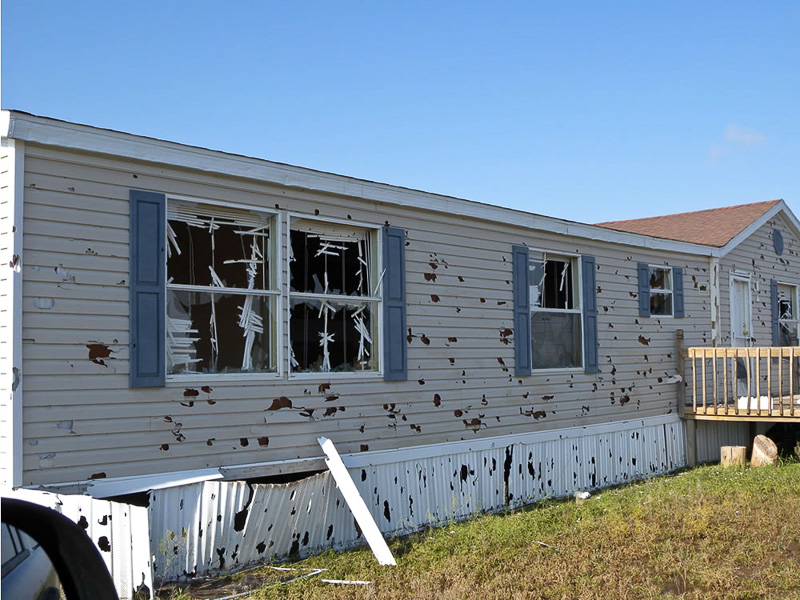
How To Prioritize Neighborhoods After A Hail Swath
A hail swath tells you where to look, not which roofs are damaged. Here is the triage system roofing teams use to score neighborhoods, route crews, and stay on the right side of safety and insurance law.