
Roof Storm Damage Myths Homeowners Should Ignore
On this page
After a severe storm, ignore any advice that turns one clue into a roof diagnosis, contractor decision, or insurance outcome. A nearby hail report, missing shingle, new ceiling stain, contractor promise, clean-looking roof, neighbor replacement, or quick phone photo is not enough by itself.
The safer move is to build a storm packet: document what you can from the ground and inside the home, stay off the roof, save weather records as context only, get a qualified roof inspection when needed, keep emergency protection separate from permanent repair, contact the insurer or agent if a claim may be filed, compare contractors in writing, and keep every record in one place.
The NOAA/NSSL hail FAQ points homeowners toward official weather-event data, and the NOAA/NSSL thunderstorm FAQ explains that local National Weather Service offices may conduct damage surveys and that NOAA maintains official weather information. Those records matter, but they do not inspect a roof. The roof still needs property-specific evidence.
This page does not diagnose storm damage, determine cause, separate cosmetic from functional damage, decide insurance coverage, choose repair versus replacement, interpret a warranty, approve a contractor, or tell homeowners to climb roofs. It is a myth filter and documentation workflow.
The Myth Table
Use this table when a storm story sounds too easy.
| Myth | Better action | Why it matters |
|---|---|---|
| "Hail fell nearby, so my roof is damaged." | Save the weather source and storm date, then get roof-specific evidence. | Weather reports are context, not roof findings. |
| "My neighbor got a roof, so I need one too." | Compare roof age, material, slope, exposure, prior repairs, tree cover, and inspection findings. | Neighbor outcomes do not prove the same roof condition or policy result. |
| "There is no leak, so the roof is fine." | Document safely and decide whether inspection is warranted. | Not every roof problem creates immediate interior water entry. |
| "One ceiling stain means I need a full replacement." | Find the water path and ask for photos, cause limits, and scope options. | One stain may have many causes and may not identify the roof scope. |
| "A ground photo proves the full scope." | Use ground photos as starting evidence only. Ask for labeled inspection photos by roof area. | Ground views can miss upper slopes, flashing, penetrations, granule patterns, and hidden conditions. |
| "Any storm damage means full replacement." | Ask what is repairable, what is widespread, what is temporary, and what remains unknown. | Repair, monitoring, temporary protection, partial replacement, or full replacement may all be possible discussions. |
| "The contractor said insurance will pay, so I can sign." | Keep coverage questions with the insurer or agent and read the contract before signing. | Contractor scope and policy coverage are separate roles. |
| "I should wait for the adjuster before taking photos." | Take safe photos and videos before temporary work when safe. Keep receipts. | Evidence can disappear after cleanup, tarping, or repairs. |
| "The fastest contractor is safest." | Verify license and insurance where available, compare written estimates, and avoid pressure. | Storm response attracts rushed decisions and weak documentation. |
| "I should climb up and check for myself." | Do not climb. Use safe photos, interior evidence, and qualified professionals. | Roof access after storms can involve fall, ladder, electrical, debris, and surface hazards. |
| "RoofPredict can tell me whether insurance owes a roof." | Use RoofPredict to organize the storm packet and follow-ups. | Organized records help; they do not replace inspectors, insurers, adjusters, or contractors. |
The theme is simple: one clue should lead to a better packet, not a final answer.
Evidence Confidence Ladder
Storm evidence is not all equal. A homeowner should not throw away weak clues, but weak clues need the right label. The point is to move from loose context toward property-specific records without pretending that any single record decides the whole roof.
Use this ladder:
| Confidence level | Example | How to use it |
|---|---|---|
| Context only | Hail was reported somewhere in the county. | Save the date and source; do not call it roof damage. |
| Property clue | Homeowner sees a ceiling stain, gutter dent, missing shingle, or debris from a safe location. | Photograph it and ask what else could explain it. |
| Labeled observation | A safe photo is tied to a room, exterior side, slope, or component. | Add it to the storm packet with a date and location. |
| Qualified finding | A roofer, inspector, consultant, or other qualified reviewer provides written findings and labeled photos. | Use it to discuss scope, unknowns, temporary protection, and next steps. |
| Role-specific decision | Insurer, warranty administrator, building department, contractor, or homeowner makes the decision inside their lane. | Store the decision with the source and do not let it answer unrelated lanes. |
The ladder helps when people disagree. A weather report can be true and still not prove damage. A ceiling stain can be real and still not prove the roof source. A roofer's finding can support a scope conversation and still not decide coverage. An insurer response can answer policy questions and still not replace a roofing inspection.
Write confidence labels directly into the file:
Weather context: saved, source-limited.
Homeowner clue: ceiling stain, first seen May 19.
Qualified finding: pending.
Coverage question: not decided.
Temporary protection: not needed / needed / completed.
Those labels keep the file honest. They also make RoofPredict more useful because every photo, note, estimate, and follow-up task can sit in the right lane.
Myth 1: A Nearby Hail Report Proves Damage
A nearby hail report is useful. It can tell you when to look, what date to save, and what weather context to give a roofer or insurer. It does not prove that hail struck the roof, that the roof was damaged, that the damage is covered, or that the roof needs replacement.
Hail size and impact can vary across short distances. Roof exposure can differ by slope direction, tree cover, roof height, roof age, prior repairs, material, installation details, ventilation, and surrounding structures. One side of a street may have different exposure than another. One roof section may be more exposed than a porch, garage, or addition.
Use weather data as a context layer:
| Field | What to save |
|---|---|
| Storm date and time | Date, approximate time, and source. |
| Weather source | NOAA/NSSL, local NWS information, local storm report, weather alert, or insurer-requested weather record. |
| Address context | Property address and whether the report is nearby, county-level, or specific to a surveyed area. |
| Roof context | Roof age, material, slope, prior repairs, and known leak history. |
| Property evidence | Safe photos, interior stains, collateral exterior marks, inspection photos, and contractor report. |
Write the conclusion carefully: "Hail was reported near the area on May 18" is safe. "Hail damaged my roof" requires property-specific evaluation.
Myth 2: No Leak Means No Roof Problem
No active leak is good news, but it is not a roof certification. Some storm effects show up as missing or lifted materials, damaged flashing, bruised or fractured materials, displaced accessories, damaged gutters or downspouts, or water paths that have not reached a finished ceiling yet. Other signs may turn out to be age, installation, maintenance, ventilation, or unrelated issues.
GAF's homeowner resource on storm damage signs lists signs homeowners may ask about, including damaged or missing shingles, leaks, granule loss, and gutter, downspout, flashing, and attic moisture indicators. That source is useful for question framing. It is not independent diagnosis, warranty approval, insurance approval, or contractor selection.
The better question is not "Is there a leak?" The better question is, "What evidence do we have, what roof areas were checked, and what remains unknown?"
Use safe checks:
- exterior photos from the ground;
- interior ceiling photos;
- attic photos only from safe accessible areas;
- gutter and downspout observations from the ground;
- visible siding, screens, soft metal, and outdoor-equipment notes;
- dated weather context;
- professional inspection report if warranted.
Do not access the roof to prove the absence of a leak.
Myth 3: A Ceiling Stain Decides The Whole Roof
A new ceiling stain after a storm deserves prompt attention. It does not decide the roof scope by itself. A stain can relate to roof covering, flashing, ventilation, ice, wind-driven rain, plumbing, condensation, siding, windows, chimney details, skylights, attic moisture, or prior staining that became visible again.
The right response is to document and trace, not guess. Record the room, stain size, first date seen, whether it is wet, whether it expands during rain, whether there is an odor, and whether the attic access point can be viewed safely. Photograph the stain with a date. If active dripping or ceiling bulging exists, treat it as urgent and ask for temporary protection guidance from qualified people.
Ask the roofer:
- Which roof area is above or near the stain?
- What evidence connects the stain to the roof?
- What else could cause it?
- Is temporary protection needed?
- Is the proposed work repair, partial replacement, full replacement, or further investigation?
- What is unknown until materials are opened or tear-off begins?
The stain starts a record. It should not become a shortcut to the most expensive or cheapest answer.
Myth 4: Ground Photos Are Enough
Ground photos are valuable because they are safe and fast. They can show missing materials, debris, visible gutter damage, tree impact, broken outdoor items, downspout dents, or interior context. They can also show the limits of what the homeowner could see.
Ground photos are not enough to determine full roof scope. Upper slopes, ridge details, valleys, flashing, roof penetrations, fastener issues, granule patterns, underlayment, decking, and subtle material damage may not be visible from the street. A phone camera can flatten roof pitch, hide texture, or make shadows look like damage.
Treat ground photos as the first layer:
| Photo type | Use |
|---|---|
| Whole house from each side | Shows roof areas, trees, slope orientation, and obvious debris. |
| Visible roof edges | Shows missing pieces or lifted edges where visible. |
| Gutters and downspouts from ground | Shows dents, displacement, overflow, or debris context. |
| Interior stains | Shows water evidence and room location. |
| Yard debris | Shows impact context or wind debris. |
| Temporary protection | Shows what changed before permanent repair. |
Then ask for professional labeled photos by slope, roof area, and component. The upgrade from ground photos to labeled inspection photos is where the storm packet becomes useful.
Myth 5: Storm Damage Always Means Full Replacement
Storm response often becomes binary: either the roof is fine or the roof needs replacement. Real roof decisions are more varied. Depending on evidence, the paths may include monitoring, temporary protection, localized repair, partial replacement, full replacement discussion, or further evaluation.
The Building America Solution Center asphalt shingle roof guide is useful here because it keeps roof work tied to roof assembly, installation, inspection, and professional practice boundaries. The NRCA maintenance advisory supports inspection and maintenance planning while warning that warranties do not necessarily assure satisfactory roof performance. Those are boundaries: condition and documentation matter; no single storm label decides the scope.
Ask for a decision matrix:
| Path | Ask |
|---|---|
| Monitor | What is stable, dry, documented, and scheduled for recheck? |
| Temporary protection | What is emergency work, what is permanent work, and what was photographed first? |
| Local repair | Which exact component or roof area is being repaired, and what remains unresolved? |
| Partial replacement | Which slope or section, what tie-in, what material match, and what warranty/permit questions? |
| Full replacement | What evidence makes smaller scopes weak? |
| Further evaluation | What could not be safely inspected or known yet? |
This prevents "storm equals roof" and "no obvious damage equals ignore" from becoming the only options.
Myth 6: The Contractor Can Decide Insurance
A contractor can inspect, document, estimate, repair, replace, and explain roof scope within the contractor's role. A contractor does not decide policy coverage, deductibles, depreciation, exclusions, claim payment, claim deadlines, or whether an insurer owes a roof. Those questions belong to the insurer, agent, adjuster, policy, and applicable rules.
The NAIC homeowners claim guidance supports deductible awareness, damaged-property lists, photos, videos, insurer or agent contact, and receipts. FEMA's severe-weather documentation resource on documenting damages after severe weather events supports safety-first recovery, photos, videos, receipts, material samples where safe, and insurer or adjuster consultation before signing certain post-damage service agreements.
Those sources support documentation. They do not tell a homeowner that insurance will pay.
Keep three lanes:
| Lane | Owner |
|---|---|
| Roof condition and scope | Qualified roofer, roof consultant, or inspector within their role. |
| Policy, coverage, deductible, claim process | Insurer or agent. |
| Homeowner decision, records, contract review | Homeowner with qualified help when needed. |
If a contractor promises a claim outcome, slow down and ask the insurer or agent.
Myth 7: You Should Wait To Document
Waiting can erase evidence. Rain dries. Emergency tarps cover openings. Cleanup removes damaged material. Contractors move debris. Interior stains change. Receipts get lost. Text messages become hard to find.
Documentation should start when it is safe:
- take photos and videos from safe locations;
- save the storm date and source;
- photograph interior water evidence;
- photograph temporary protection before and after;
- save receipts;
- make a damaged-property list when relevant;
- store contractor names, inspection dates, estimate versions, and insurer or agent notes;
- record what changed before permanent work.
Do not delay emergency protection just to get perfect photos. Safety and active water control matter. The practical rule is: document what you safely can before conditions change, then record what changed and why.
Myth 8: The Fastest Contractor Is Safest
Storm work creates urgency. Urgency can be real when water is entering the home. It can also be used as pressure.
The FTC's home improvement scam guidance flags contractors who show up because they are "in the area," pressure immediate decisions, request full payment up front, accept only cash, ask the homeowner to get required permits, or push contractor-arranged financing. It recommends licensed and insured contractors, checking license status with the proper state or county office, multiple written estimates, careful contract review, and no final payment until work is complete and the homeowner is satisfied.
For storm roofs, ask:
- Are you offering emergency protection, inspection, estimate, repair, replacement, or claim help?
- What exact areas did you inspect?
- Where are the labeled photos?
- Is the estimate independent of any insurance claim?
- What is temporary and what is permanent?
- Who handles permits, HOA, warranty, and code questions?
- What are the payment schedule and cancellation terms?
- What happens if hidden damage is found?
- What happens if the insurer disagrees with your scope?
Do not sign blank forms, vague scopes, cash-only deals, or full-up-front payment demands because the storm made the week chaotic.
Myth 9: Homeowners Should Climb Up And Check
Do not climb onto the roof after a storm. OSHA's roof inspection, tarping, and repair guidance describes hazards involving ladders, high work areas, tools, power lines, steep or slippery surfaces, deteriorated roofs, and fall protection.
Storms can leave wet surfaces, loose debris, damaged decking, unstable tree limbs, damaged electrical equipment, and slippery roofing materials. A homeowner leaning from a ladder, walking a roof plane, lifting shingles, or reaching over gutters can turn a documentation task into an injury.
Safe homeowner evidence is enough for the first layer:
- photos from the yard or street;
- photos through windows where safe;
- interior ceiling and wall photos;
- attic photos only from safe access areas;
- visible gutter and downspout notes from the ground;
- receipts and contractor reports;
- weather records and time notes.
Let qualified professionals handle roof access with proper equipment and safety practices.
Myth 10: RoofPredict Replaces The Storm Professionals
RoofPredict can organize the storm packet: roof age, storm dates, weather sources, safe photos, interior damage notes, inspection reports, contractor estimates, temporary protection records, receipts, claim questions, deductible notes, permit questions, warranty documents, and follow-up tasks.
That helps because storm response gets messy fast. One person has roof photos. Another has the weather report. The contractor has the estimate. The insurer has portal messages. The homeowner has receipts in a drawer. RoofPredict gives the file a single place to live and keeps open questions visible.
RoofPredict does not inspect roofs, verify storm damage, determine storm cause, decide coverage, approve safety, interpret warranties, choose contractors, set repair scope, negotiate claims, or replace the insurer, adjuster, roofer, attorney, warranty administrator, safety authority, or building department.
The product lane is record organization and follow-up discipline. That is enough. Overclaiming would make the storm file weaker, not stronger.
The 30-Minute Storm Packet
Use this first-pass workflow after a storm when it is safe.
| Time | Action | Output |
|---|---|---|
| 0-5 minutes | Write the storm date, time, address, and source. | Weather-context note. |
| 5-10 minutes | Photograph from safe exterior locations. | Whole-house, visible roof edge, gutter, debris, and siding context. |
| 10-15 minutes | Photograph interior signs. | Ceiling stains, wall staining, attic-access view if safe, damaged belongings. |
| 15-20 minutes | Save receipts and temporary-protection details. | Receipt folder and before/after notes. |
| 20-25 minutes | Write the claim/contract boundary questions. | Deductible, insurer/agent, contractor scope, temporary versus permanent work. |
| 25-30 minutes | Create the packet. | One folder with weather, photos, notes, receipts, estimates, and follow-ups. |
Stop if conditions are unsafe. The packet can wait; injury cannot.
Storm Packet Quality Score
Score the packet before you rely on it.
| Score area | Strong | Weak |
|---|---|---|
| Weather context | Date, time, source, and distance/context saved. | "There was hail somewhere nearby." |
| Photos | Dated safe photos before major changes. | Only after-repair photos or unsafe roof photos. |
| Interior evidence | Room, stain, timing, moisture, and follow-up notes. | "There was a leak" with no location or date. |
| Inspection | Labeled roof-area photos and written findings. | Verbal statement only. |
| Contractor scope | Written estimate separates temporary work, repair, replacement, assumptions, and exclusions. | One total price with pressure to sign. |
| Insurance lane | Deductible, policy questions, insurer/agent notes, and receipts saved. | Contractor promise treated as coverage. |
| Safety | Homeowner stayed off roof. | Homeowner climbed or lifted materials. |
| Follow-up | Open questions and next dates assigned. | Loose screenshots and memory. |
Weak does not mean useless. It means the packet needs more work before it supports a major decision.
Storm Packet Decision Board
After the first packet is built, the homeowner still needs to decide what the packet is ready to support. A packet with a storm date and two ground photos is useful, but it is not ready for a permanent repair contract. A packet with labeled inspection photos, written scope, temporary-protection record, and insurer notes is stronger, but it still does not decide coverage or warranty questions by itself.
Use a decision board before the file moves forward:
| Packet state | What it can support | What it cannot support yet |
|---|---|---|
| Weather context only | Saving the date, source, and question for later review. | Roof damage, repair scope, insurance filing decision, or contractor signing. |
| Safe homeowner clues | Asking for a qualified inspection and documenting what changed. | Full scope, cause determination, or coverage conclusion. |
| Labeled inspection findings | Scope discussion, estimate comparison, temporary-protection decision, and follow-up questions. | Policy payment, warranty approval, permit answer, or final hidden-condition cost. |
| Temporary protection installed | Proof that emergency action occurred and what changed before permanent work. | Permanent repair scope or final payment approval. |
| Written estimates compared | Contractor selection discussion, scope clarification, material questions, and hidden-condition planning. | Insurance outcome, warranty transfer, code interpretation, or legal advice. |
| Insurer or agent note saved | Claim-process, deductible, documentation, or policy-question tracking. | Contractor workmanship approval or roof-condition diagnosis. |
| Closeout packet complete | Future maintenance, resale, warranty, and next-storm reference. | Promise that no future roof problem exists. |
The board keeps the homeowner from using the wrong evidence for the wrong decision. A weather report can start inspection. It should not sign a contract. A contractor estimate can support scope review. It should not become a coverage promise. An insurer message can answer policy process questions. It should not replace roof-condition findings.
Write the current board state in one line:
Packet status: labeled inspection findings complete; temporary protection not needed; estimate comparison pending; insurer/agent questions not sent.
That line is easier to act on than a folder full of screenshots.
Neighborhood Pressure Filter
Storm myths spread fastest when the neighborhood gets loud. A neighbor may be replacing a roof. A door-to-door salesperson may say the whole street is approved. A contractor may point to tarps nearby. A social post may say hail hit the subdivision. Those clues are not useless, but they are not your roof file.
Use neighborhood information as context only:
| Neighborhood clue | Useful next step | Do not infer |
|---|---|---|
| Several nearby roofs are being replaced. | Ask whether your roof has property-specific inspection findings. | Your roof is damaged or covered. |
| Door-to-door contractor says the whole area has hail damage. | Ask for credentials, written scope, labeled photos, and inspected areas. | Street-level claims prove your roof condition. |
| Neighbor's insurer opened a claim. | Save the storm date as context if relevant. | Your policy, deductible, damage, or claim outcome is the same. |
| Social media shows hailstones nearby. | Save the source, date, and uncertainty. | Hail size at your address or roof damage is proven. |
| Contractors are booked for weeks. | Start safe documentation and a dated wait list. | The delay justifies unsafe roof access or unsupported conclusions. |
Write a neighborhood-context note:
Neighborhood context:
What was reported:
Who reported it:
Date/time:
How close to the property:
Property-specific evidence collected:
What still needs inspection:
That note helps because it preserves useful context without letting neighborhood pressure become diagnosis, coverage, warranty, or replacement scope. If the neighborhood clue is true, a qualified inspection and property-specific packet will still be useful. If the neighborhood clue is exaggerated, the packet protects the homeowner from overreacting.
The 72-Hour Storm Log
Storm decisions get worse when the timeline is missing. Use a 72-hour log to keep the first few days clear. It is not an insurance claim form, contractor scope, or legal record. It is a homeowner memory aid and evidence index.
| Time window | What to record | What to avoid |
|---|---|---|
| Hour 0-2 | Storm date, approximate time, location, alert source, visible exterior hazards, active leaks, and safety concerns. | Walking around downed power lines, climbing ladders, or touching damaged roof materials. |
| Hour 2-12 | Safe photos, interior water notes, temporary protection calls, receipts, and who was contacted. | Letting verbal promises replace photos or written notes. |
| Hour 12-24 | Contractor appointment details, insurer or agent process questions if a claim may be filed, and weather source links. | Signing a broad contract before scope, payment, and role boundaries are clear. |
| Day 2 | Inspection report status, labeled roof photos, temporary work notes, deductible and policy questions, and open questions. | Treating a contractor opinion as a coverage decision. |
| Day 3 | Estimate comparison, follow-up inspection needs, permit/HOA/warranty questions, and next dates. | Losing track of which version of an estimate or photo set is current. |
The log should be boring. Boring records are valuable because they show who said what, when the condition changed, which photos were taken before temporary work, and which decisions are still open.
Example entry:
May 18, 7:40 p.m. Heavy wind and hail reported in area. No active ceiling drip at 8:15 p.m. Safe photos taken from front yard, east side, and back patio. Noted dents on north downspout from ground. Called contractor for inspection tomorrow. No roof access by homeowner.
That entry does not diagnose damage. It creates a stable starting point.
Photo Map For Safe Documentation
A storm packet should show where every photo came from. Without a map, photos become loose evidence. A roofer, insurer, adjuster, or future homeowner may not know which slope, room, or exterior side a photo shows.
Use a simple naming system:
| Photo name | Example |
|---|---|
front-whole-house-2026-05-18.jpg |
Whole front elevation from street or driveway. |
left-side-gutters-2026-05-18.jpg |
Gutter and downspout view from safe ground location. |
rear-patio-roof-edge-2026-05-18.jpg |
Visible rear roof edge from patio. |
upstairs-hall-ceiling-stain-2026-05-19.jpg |
Interior stain with room and date. |
attic-access-view-2026-05-19.jpg |
Safe photo from attic access only, if accessible and safe. |
temporary-tarp-before-2026-05-19.jpg |
Condition before emergency protection, if safe. |
temporary-tarp-after-2026-05-19.jpg |
Condition after emergency protection. |
Add a one-page photo index:
| Photo | Where taken | What it shows | Limit |
|---|---|---|---|
front-whole-house |
Driveway | Overall roof shape and tree debris | Does not show upper rear slope. |
north-downspout |
Ground near garage | Dents visible from ground | Does not prove hail size or roof damage. |
hall-ceiling |
Upstairs hallway | New stain after storm | Does not identify roof source. |
The photo index stops people from overreading photos. It also stops photos from being dismissed because the location is unclear.
Role Boundaries After A Storm
Many storm myths come from role confusion. One person says something that sounds authoritative outside their lane. Keep the lanes visible.
| Question | Right lane | Why |
|---|---|---|
| Did a storm happen nearby? | Weather source, local NWS information, storm report, or other official/weather record. | Weather context is not roof diagnosis. |
| Is this roof damaged? | Qualified roof inspection or roof consultant within their scope. | Property-specific roof condition requires inspection and professional judgment. |
| Is the issue temporary-protection urgent? | Qualified roofer, emergency mitigation provider, insurer/agent process guidance where relevant. | Active water entry can require quick action before permanent scope is settled. |
| Is repair or replacement appropriate? | Roofing professional with written findings, plus homeowner decision and policy/code/warranty boundaries. | Scope needs roof evidence and role separation. |
| Will insurance pay? | Insurer, agent, policy, adjuster process, and applicable rules. | Contractor and homeowner assumptions do not decide coverage. |
| Is a contractor safe to hire? | Licensing/consumer-protection checks, written estimates, insurance proof, references, contract review. | Roof skill and business risk both matter. |
| Does a permit apply? | Local building department or project team under local rules. | Permit duties vary by jurisdiction and scope. |
| Does a warranty apply? | Manufacturer, warranty administrator, contractor documents, and actual terms. | Warranty paperwork is not a promise of approval. |
| What does RoofPredict do? | Record organization and follow-up tracking. | Product support does not replace inspections, insurers, or contractors. |
If the storm packet only does one thing, it should keep these lanes from merging.
Contradiction Handling
Contradictions are common after storms. A contractor may say replacement. Another may say repair. A neighbor may have a claim approved. The insurer may request more photos. A weather report may show hail nearby while the roof reviewer says no storm-related roof finding was visible.
Do not solve contradictions by picking the answer you prefer. Write them down.
| Conflict | What to do |
|---|---|
| Contractor A says full replacement; Contractor B says repair. | Ask each for labeled photos, roof areas inspected, repair limits, hidden assumptions, and what would remain unresolved. |
| Weather report shows hail nearby; inspection does not support storm damage. | Keep weather context separate from property-specific findings and ask whether another inspection or clearer photos are justified. |
| No leak inside; roof inspection shows damage. | Ask whether the finding affects water-shedding ability, repair scope, monitoring, warranty, or claim documentation. |
| Active leak inside; roof exterior looks fine from ground. | Treat the leak as real, document safely, and ask for qualified inspection of roof and non-roof paths. |
| Contractor says insurance will pay; insurer has not decided. | Keep contractor estimate in the scope lane and coverage questions in the insurer/agent lane. |
| Permit or code issue appears during repair. | Ask the local authority or project team how the changed scope should be handled. |
A contradiction is not a failure. It is a signal that the file needs a clearer next question.
What Changed After The First Inspection
The first inspection is not always the final record. Storm files change when weather changes, temporary protection is installed, an interior stain grows, a contractor revises a scope, an insurer requests documents, or hidden conditions appear. Track those changes instead of rewriting the first inspection as if it knew everything.
Use a change tracker:
| Change | Date | Source | Why it matters | Next owner |
|---|---|---|---|---|
| New ceiling stain appeared after next rain. | Homeowner safe interior photo. | May change urgency or water-path question. | Roofer, mitigation provider, insurer/agent if claim is involved. | |
| Temporary tarp installed. | Contractor receipt and photos. | Original condition may now be covered. | Permanent scope reviewer. | |
| Contractor revised estimate from repair to replacement. | Estimate version and photos. | Scope changed and needs explanation. | Contractor for scope; insurer for policy if claim exists. | |
| Adjuster or insurer requested more photos. | Claim note or email. | Documentation path changed. | Homeowner/contractor upload task. | |
| Hidden decking found after tear-off. | Contractor photo and change order. | Price and scope may change. | Contractor and insurer/agent if claim exists. |
Use this sentence:
First inspection record remains dated
[date]. Later change:[change]on[date], supported by[source], next owner[person/role].
That sentence keeps a later discovery from distorting the earlier record. It also prevents a common myth: "the story changed, so someone must be wrong." Sometimes the story changed because more information became available.
Second Inspection Triggers
Homeowners often ask whether one inspection is enough. Sometimes it is. Sometimes the first inspection creates a new question that deserves another look before a permanent decision. A second inspection trigger should be specific. It should not be used to shop for the most dramatic answer.
Use these triggers:
| Trigger | Why another review may help | What to ask for |
|---|---|---|
| Limited access | Upper slopes, steep areas, rear slopes, or low-slope sections were not inspected. | A report that names the uninspected areas and explains the safe inspection method. |
| Active water path unclear | Interior staining exists, but the roof source is not tied to a specific component. | Photos and notes that connect or rule out roof, flashing, wall, plumbing, window, attic, and condensation paths. |
| Contractor scopes conflict | One estimate says repair and another says replacement. | Side-by-side labeled photos, roof-area notes, and scope assumptions. |
| Temporary protection changed visibility | A tarp or emergency repair covered the original condition. | Before/after photos and a note about what can no longer be observed. |
| Next rain changes the file | Stain grows, new drip appears, temporary protection shifts, or drainage fails. | Updated photos, date, room/location, and reinspection of the affected area. |
| Hidden condition appears | Decking, layers, rot, fastener issues, or material mismatch appears during work. | Change-order documentation, photos, and revised scope before broad decisions. |
| Policy, permit, or warranty question depends on scope | A decision outside the roof inspection lane needs clearer scope facts. | Written scope boundaries without coverage, legal, or warranty promises. |
The second inspection request should be neutral:
The first report left these areas unresolved:
[list]. Please review only the unresolved areas if safe, provide labeled photos, separate observed facts from suspected causes, and identify what remains unknown.
This keeps the process fair. The homeowner is not asking for a different answer; the homeowner is asking for a clearer file. If the second review agrees with the first, the packet becomes stronger. If it disagrees, the contradiction goes into the contradiction table with source labels and next questions.
Do not use repeated inspections to delay urgent water control. If active water is entering the home, temporary protection may need to happen before every question is solved. Document what changed, save receipts, and keep permanent scope separate until the roof evidence is stronger.
Contractor Estimate Ledger
When a storm estimate arrives, put it into a ledger before signing.
| Field | Estimate A | Estimate B | Question |
|---|---|---|---|
| Inspection date | Were conditions dry, safe, and visible? | ||
| Roof areas inspected | Which slopes, additions, porch, garage, or flat sections? | ||
| Photos provided | Are photos labeled by roof area? | ||
| Temporary protection | Is this separate from permanent work? | ||
| Recommended scope | Repair, partial replacement, full replacement, monitoring, or more inspection? | ||
| Materials | Brand, line, underlayment, flashing, vents, fasteners, accessories? | ||
| Hidden conditions | Decking, layers, rot, code, permit, change orders? | ||
| Warranty terms | Product, workmanship, exclusions, transfer, registration? | ||
| Insurance language | Is the estimate independent of coverage decisions? | ||
| Payment terms | Deposit, progress, final payment, financing, cancellation? | ||
| Contractor credentials | License/insurance checks where applicable? |
The ledger prevents a homeowner from comparing only the total price. It also reveals when one estimate is actually temporary protection and another is permanent replacement, or when one includes decking assumptions and another hides them.
Estimate Revision Tracker
Storm estimates change. A first visit may be limited by weather, temporary protection, missing photos, hidden decking, material availability, permit questions, or insurer documentation requests. Changes are not automatically bad. Untracked changes are the problem.
Create an estimate revision tracker:
| Version | Date | What changed | Who requested it | Evidence added | Open question |
|---|---|---|---|---|---|
| Estimate 1 | Initial inspection scope. | Contractor. | Labeled photos, roof-area notes. | Hidden decking unknown. | |
| Estimate 2 | Added temporary protection or revised repair area. | Homeowner, contractor, or insurer/agent process. | New photos, receipts, next-rain notes. | Permanent scope still pending. | |
| Estimate 3 | Changed material, warranty, permit, code, or hidden-condition assumption. | Contractor or project review. | Product sheet, permit note, change-order explanation. | Approval owner unclear. |
Each version should answer five questions:
- What roof areas changed?
- What materials changed?
- What assumptions changed?
- What cost changed?
- What decision owner changed?
Do not let a revision erase the earlier version. Version history matters when a homeowner asks why the total changed, why temporary work became permanent work, why a repair became a replacement discussion, or why a scope was narrowed after new photos. Store every version in RoofPredict or the storm folder with the date and sender.
Use plain version labels: estimate-v1-initial, estimate-v2-temp-protection-added, estimate-v3-scope-after-second-inspection, estimate-v4-final-signed-scope. Avoid names such as final-final because storm files often need one more revision.
Inspection Question Bank
A storm inspection is easier to use when the homeowner asks for the right records before opinions harden into conclusions. The question bank should not tell the inspector what to find. It should ask for traceable observations.
Ask these questions:
| Question | Why it helps |
|---|---|
| Which roof areas were inspected? | A report should identify slopes, additions, porch roofs, garage roofs, low-slope areas, valleys, edges, and penetrations where relevant. |
| Which areas could not be inspected safely? | Unknown areas should be named instead of silently ignored. |
| Which photos support each finding? | Labeled photos reduce confusion later. |
| What is observed, suspected, and unknown? | The file should not turn suspicion into fact. |
| Is temporary protection needed before permanent work? | Emergency work and permanent scope should stay separate. |
| What other causes were considered? | Storm, age, wear, workmanship, maintenance, ventilation, flashing, plumbing, and prior repair can overlap. |
| What would make the scope change later? | Decking, layers, hidden rot, code, permit, material match, or warranty terms can change the job. |
| Which questions belong to the insurer, agent, warranty administrator, or local office? | The roof inspection should not absorb policy, warranty, or permit decisions. |
Save the answer even when the answer is "unknown." Unknown is a useful status. It tells the homeowner not to rely on the file yet. A report that says "rear upper slope not inspected because access was unsafe" is stronger than a report that simply omits the rear upper slope.
Use this inspection summary line:
Inspection summary:
Areas reviewed: [list].
Areas not reviewed: [list].
Observed findings: [list].
Suspected items: [list].
Unknowns: [list].
Temporary protection: [yes/no/details].
Next reviewer: [roofer/insurer/agent/warranty/local office/homeowner].
That format keeps the inspection useful without turning it into an insurance answer, warranty interpretation, or full roof certification.
Emergency Protection Is Not Final Scope
Temporary protection matters. If water is entering the home, a tarp, dry-in, board-up, or emergency repair may be needed quickly. That does not mean the permanent scope is settled.
Separate temporary protection in the file:
- what condition existed before temporary work;
- who performed the temporary work;
- what photos were taken before and after;
- what materials were used;
- what the receipt says;
- whether the insurer or agent gave process guidance;
- what still needs permanent inspection or repair;
- whether temporary work must be monitored after the next rain.
Use this wording:
Temporary protection was installed to reduce active water entry. Permanent repair or replacement scope remains pending inspection, estimate review, policy questions, and any local permit or warranty issues.
That sentence keeps emergency action from becoming accidental approval of a full scope.
Myth Language To Replace
Replace storm myths with record language.
| Myth wording | Safer wording |
|---|---|
| "The storm totaled my roof." | "Storm occurred nearby; roof-specific inspection and documentation are pending." |
| "No leak, no problem." | "No active leak seen yet; safe documentation and inspection decision still pending." |
| "My contractor says insurance owes it." | "Contractor provided a scope opinion; insurer or agent must handle policy questions." |
| "The adjuster denied damage." | "The insurer response should be stored with inspection evidence and policy questions; scope and coverage lanes remain separate." |
| "Everyone nearby is getting roofs." | "Neighbor outcomes are context only; this roof needs its own evidence." |
| "I checked it myself from the ladder." | "Homeowner did not access roof; photos are from safe ground/interior locations." |
| "The roof is fine because it looks fine." | "No obvious ground-visible issue documented; hidden or upper-slope conditions were not verified." |
This replacement language is less dramatic, but it is stronger. It can be shared with a roofer, insurer, agent, property manager, or future buyer without exaggerating.
Myth Audit Worksheet
When a storm story sounds convincing, audit it before acting. The worksheet below turns a claim into a safer next question. It is useful for contractor statements, neighbor stories, social posts, insurer notes, seller comments, and homeowner assumptions.
| Statement heard | Source | Evidence behind it | Role that can verify | Safe next action |
|---|---|---|---|---|
| "The whole neighborhood has hail damage." | Contractor, neighbor, social post, or local chatter. | Weather record, property photos, inspection findings, or none. | Weather source for context; roofer for property-specific findings. | Save the context, then ask for your own roof-area findings. |
| "Your roof is totaled." | Contractor or salesperson. | Labeled photos, roof-area report, material condition, hidden assumptions. | Qualified roofer for scope; insurer for policy if claim exists. | Ask for observed facts, repair/replacement reasoning, exclusions, and unknowns. |
| "No leak means you are fine." | Homeowner, neighbor, or contractor. | Interior check only, no inspection, or limited roof view. | Roofer or inspector for roof condition. | Document no active leak, then decide whether inspection is warranted. |
| "Insurance will pay." | Contractor, neighbor, or online post. | Usually not enough by itself. | Insurer, agent, adjuster, policy, and applicable rules. | Ask insurer/agent for policy and claim-process answers. |
| "You must sign today." | Salesperson. | Urgency, discount, storm demand, or pressure. | Consumer-protection review, contract adviser, qualified contractor comparison. | Slow down, request written scope, payment terms, credentials, and role boundaries. |
| "The tarp proves replacement is approved." | Contractor, homeowner, or adjuster misunderstanding. | Temporary protection receipt and photos. | Roofer for permanent scope; insurer for claim process if involved. | Separate emergency protection from permanent repair. |
Then write a short audit note:
Storm statement:
Who said it:
What evidence supports it:
What evidence is missing:
Which role owns the answer:
Next question:
Decision status: context / observation / qualified finding / role-specific decision / hold
This worksheet is especially useful when the homeowner feels pushed. It changes the response from "I believe it" or "I reject it" to "what evidence and role support it?" That is a better way to avoid myths without ignoring legitimate damage.
Here is an example:
Storm statement: "Everyone on this street needs a roof." Source: door-to-door contractor. Evidence: contractor says hail was nearby and pointed to neighbor projects. Missing: property-specific inspection photos, roof areas inspected, written findings, insurer answer. Role owner: roofer for roof condition, insurer for policy if claim exists. Next question: please inspect my property and label observed findings by roof area. Decision status: context only.
The myth audit keeps the file calm. It also creates an audit trail that a future roofer, insurer, property manager, or buyer can understand.
When To Slow Down And Get The Right Reviewer
Storm-damage myths are risky because several people may own different pieces of the answer. Slow down when the question moves from simple documentation into weather proof, roof condition, insurance, warranty, contracts, or local authority.
| Review lane | What to check |
|---|---|
| Weather-record review | Weather context is not treated as property-specific roof proof. |
| Roofing inspection review | Visible signs, repairs, replacement, and condition language do not become diagnosis. |
| Roof-safety review | Homeowner roof access is clearly rejected. |
| Insurance/claims review | Documentation does not become coverage, claim-filing, payment, deductible, depreciation, or policy advice. |
| Contractor consumer-protection review | FTC guidance is used for national safeguards without state-specific legal overreach. |
| Warranty/product review | Manufacturer and warranty references are bounded. |
| Product-positioning review | RoofPredict is a packet organizer, not a storm verifier or claim decision tool. |
| Recordkeeping review | The packet separates storm date, weather source, photos, professional findings, contractor scope, insurer notes, warranty questions, and follow-up tasks. |
The useful move is to assign each question to the source that can actually answer it. A storm date does not diagnose a roof. A contractor scope does not decide coverage. A warranty document does not replace inspection. A careful packet keeps those lanes separate.
Call Order After A Storm
Homeowners often ask who to call first. There is no one national answer because active water entry, safety, policy terms, local contractors, and property conditions vary. Use a call order based on the problem in front of you.
| Situation | First call | What to say |
|---|---|---|
| Active water is entering the home | Emergency roofer, mitigation provider, or insurer/agent process line if a claim may be involved. | "We have active water entry and need temporary protection. What should be documented before work starts?" |
| No active leak but visible exterior issue from ground | Qualified roofer or roof inspector. | "We have safe ground photos and storm date. Please inspect and provide labeled photos and written findings." |
| Claim may be filed | Insurer or agent. | "What documentation should we collect, what is the deductible, and what emergency work can proceed?" |
| Contractor pressures immediate full replacement | Slow down and compare. | "Please provide written scope, labeled photos, payment terms, permit handling, warranty terms, and what remains unknown." |
| Power lines, tree hazards, unsafe debris, or structural concern | Emergency services, utility, tree professional, or qualified safety response as appropriate. | "There is a safety hazard. Roof inspection can wait until access is safe." |
The call order should protect people first, then property, then paperwork. A myth-driven response reverses that order and chases the most dramatic claim first.
Storm Packet Routing Matrix
A storm packet should not be sent as one giant folder to everyone. Different people need different parts. The roofer needs roof-area photos and inspection context. The insurer or agent may need policy and claim documentation. A future buyer may need closeout records. The local office may need permit information. Mixing every document together creates privacy and role confusion.
Use a routing matrix:
| Packet item | Roofer or roof consultant | Insurer or agent | Contractor estimate reviewer | Future buyer or property manager | Keep homeowner-only unless requested |
|---|---|---|---|---|---|
| Storm date and weather source | Yes, as context. | Yes, as context. | Yes, as context. | Yes, as history. | No. |
| Safe exterior photos | Yes. | If requested or relevant. | Yes. | Yes. | No. |
| Interior leak photos | Yes if water path is relevant. | If claim or documentation is involved. | If scope involves interior or leak path. | Yes if part of history. | Sensitive room details may be limited. |
| Contractor estimate | Maybe, if comparing scopes. | If requested or claim-related. | Yes. | Final version only. | Drafts may stay internal. |
| Policy or deductible notes | No by default. | Yes. | Only if needed and appropriate. | Usually no. | Often yes. |
| Warranty documents | Yes if product or scope matters. | Sometimes. | Yes if warranty affects scope. | Yes after closeout. | No. |
| Payment or check records | No by default. | If claim/lender process requires. | Only payment terms relevant to contract. | Usually final invoice only. | Often yes. |
The routing rule is simple: share enough for the role to answer its question, not enough to blur every role together. RoofPredict can help keep these lanes separate by storing the same packet in labeled sections instead of one uncontrolled folder.
Three-File Storm Archive
The storm packet should eventually become three clean files: what happened, what was found, and what was decided. If all three are mixed together, later readers may confuse a storm report with roof damage, a roof estimate with coverage, or temporary protection with final scope.
Create these three files:
| File | Contents | What it should not contain |
|---|---|---|
| Event file | Storm date, weather source, safe photos, interior notes, temporary protection timing, receipts, and first contact log. | Repair/replacement conclusion or insurance outcome. |
| Findings file | Inspection reports, labeled roof photos, unknown areas, second-inspection notes, estimate versions, hidden-condition notes. | Policy interpretation, deductible decision, or warranty approval. |
| Decision file | Signed scope if any, insurer/agent notes if any, permit/warranty questions, final invoice, closeout records, follow-up tasks. | Unsupported diagnosis or erased earlier versions. |
Use clear file names:
storm-event-file-2026-05-18.pdf
roof-findings-file-2026-05-20-through-2026-06-02.pdf
storm-decision-closeout-file-2026-06-10.pdf
The archive helps homeowners avoid two opposite errors. One error is acting too early, before the findings file exists. The other is failing to preserve the final decision after the roof work or claim process ends. A good archive shows the sequence.
Example:
Event file: hail and wind context, safe photos, no homeowner roof access, temporary tarp receipt. Findings file: roofer inspection with labeled photos, rear slope not visible until second visit, estimate v1 and v2, hidden decking note. Decision file: selected repair scope, insurer note saved separately, final invoice, warranty packet, next-rain check.
That example does not say the roof was covered, denied, replaced, or repaired correctly. It says the record is organized. That is the product lane RoofPredict can support: connecting storm dates, roof age, photos, inspection findings, estimates, receipts, claim questions, and follow-up tasks without becoming the inspector, insurer, adjuster, warranty administrator, or contractor selector.
Storm Packet Status Labels
Status labels stop a folder from sounding more complete than it is. Put one label on the packet before each major conversation.
| Status | Use when | Next action |
|---|---|---|
| Context only | Weather record, neighborhood report, or storm date exists, but property evidence is thin. | Start safe documentation and ask whether inspection is warranted. |
| Observation packet | Safe photos, interior notes, and receipts exist, but no qualified roof findings are saved. | Send to a roofer or appropriate reviewer with limits clearly stated. |
| Inspection packet | Labeled findings and unknown areas are saved. | Compare scope questions, temporary protection, and next-review triggers. |
| Decision pending | Estimate, insurer/agent questions, permit, warranty, or payment items remain unresolved. | Assign each open item to the right role. |
| Closeout packet | Final scope, invoice, photos, warranty, receipts, and follow-up tasks are saved. | Keep for maintenance, resale, warranty, and future storm history. |
| Hold | A myth, pressure claim, contradiction, unsafe gap, or missing document makes the file unreliable. | Do not sign, file, close, or infer until the missing role-specific answer is added. |
Use the label in plain language:
Packet status: decision pending. Inspection packet exists, but estimate scope, insurer questions, and warranty documents are not resolved.
That label keeps everyone honest. It does not decide the answer. It says what the packet is ready to support.
If the label feels embarrassing, keep it anyway. Honest uncertainty is safer than confident myth language after a storm.
The Next-Rain Follow-Up
Storm documentation does not end after the first inspection. The next significant rain can show whether temporary protection worked, whether interior staining is stable, and whether a repaired area needs recheck.
Create a next-rain card:
| Field | Note |
|---|---|
| Date of next rain | |
| Rooms checked | |
| Ceiling stains changed? | |
| New drip or odor? | |
| Attic access view safe and dry? | |
| Temporary protection still secure? | |
| Gutters/downspouts moving water? | |
| Photos taken? | |
| Who needs follow-up? |
Do not use the next rain to climb up and inspect. Use it to check safe interior areas, visible exterior drainage, and whether the storm packet needs another professional visit. If a ceiling stain grows, a drip appears, or temporary protection moves, log it with photos and contact the right professional.
Storm Packet Release Card
Before a homeowner treats the storm file as decision-ready, run a release card. This is especially useful before signing a permanent repair contract, filing documents into an insurance portal, approving final payment, or closing a storm-related maintenance task.
| Gate | Ready when | Hold when |
|---|---|---|
| Weather context | Date, time, and source are saved with limits. | Weather note is only memory or neighbor report. |
| Safety | Homeowner stayed off the roof and hazards are documented. | Photos required roof access or unsafe ladder work. |
| Photo map | Photos are dated and location-labeled. | Photos are loose screenshots with unclear source. |
| Inspection | Written findings identify roof areas and unknowns. | Recommendation is verbal or only says repair/replace. |
| Temporary protection | Emergency work is separated from permanent scope. | Tarp or dry-in is treated as final repair approval. |
| Contractor estimate | Scope, materials, hidden conditions, warranty, payment, and exclusions are written. | Estimate is only a total price or pressure document. |
| Insurance lane | Deductible, policy questions, insurer/agent notes, and receipts are saved if claim may be filed. | Contractor coverage promises are the only claim guidance. |
| Follow-up | Next-rain or next-inspection task is assigned. | File ends with no monitoring or closeout step. |
If any row is held, that does not mean no work can happen. It means the packet is not ready to support a broad conclusion.
Final Payment And Closeout Records
Storm files often get sloppy after the work is done. That is when the homeowner needs the cleanest records. A closeout packet helps with future leaks, warranty questions, insurance follow-up, resale, and maintenance.
Before final payment or project closeout, request:
| Closeout item | Why it matters |
|---|---|
| Final invoice | Shows what was actually performed, not only what was estimated. |
| Change orders | Explains scope, decking, hidden damage, material, permit, or price changes. |
| Final photos | Shows completed roof areas, accessories, flashing, vents, and cleanup where visible. |
| Material list | Helps future repairs, warranty questions, and resale documentation. |
| Warranty documents | Separates workmanship terms, product terms, registration, exclusions, and transfer steps. |
| Permit or inspection closeout, where applicable | Keeps local-record questions from resurfacing later. |
| Payment record | Shows deposit, progress, final payment, and remaining balance if any. |
| Next-rain or maintenance note | Records whether follow-up is needed after weather returns. |
The closeout packet should also include what was not done. If the detached garage was not part of the work, say so. If one low-slope area was monitored rather than replaced, say so. If temporary protection was removed after permanent work, say so. Future confusion often comes from missing exclusions, not missing invoices.
RoofPredict can store the closeout packet beside the original storm packet. That gives the homeowner a full chain: storm date, first photos, temporary protection, inspection, estimate versions, final scope, payment, warranty, and follow-up.
Handoff Script For A Roofer
A homeowner can make the first roofer visit more useful by sending a clean handoff. It should not tell the roofer what to find.
Use this script:
We had a storm on
[date]. We are not accessing the roof. Attached are safe exterior photos, interior photos, weather context, roof-age records we have, and notes about any active water entry. Please inspect the roof areas you can safely inspect, provide labeled photos by area, separate temporary protection from permanent scope, and identify what is known, suspected, and still unknown.
That script tells the roofer the homeowner is organized and serious, but it does not ask for a predetermined answer.
Handoff Script For An Insurer Or Agent
If a claim may be filed, keep the insurer or agent handoff factual.
Use this script:
We had possible storm-related roof or interior damage on
[date]. We have safe photos, receipts, contractor inspection scheduling/status, and a damaged-property list where applicable. Please confirm the deductible, documentation needed, emergency-protection process, and any steps we should follow before signing permanent repair work.
Do not ask the agent or insurer to rely on a contractor's promise. Do not rewrite the roofer's estimate into a coverage conclusion. Save the response with the packet.
Handoff Script For A Future Buyer Or Property Manager
Storm packets are also useful later. A buyer, landlord, property manager, or future contractor may need to know what happened and what was resolved.
Use this summary:
Storm date:
[date]. Weather source:[source]. Safe photos saved:[yes/no]. Inspection by:[name/date]. Temporary protection:[yes/no/details]. Permanent work:[scope/date]. Insurance or agent notes:[location]. Open follow-up:[task/date]. RoofPredict folder:[folder name].
That summary prevents the storm from turning into vague history. It also strengthens future maintenance and resale conversations without promising that every storm question was answered forever.
Do-Not-Infer List
Keep this list inside the storm packet when the file is messy.
- Do not infer roof damage from a nearby hail report.
- Do not infer no damage from a dry ceiling.
- Do not infer full replacement from one damaged shingle.
- Do not infer repairability from one ground photo.
- Do not infer coverage from a contractor estimate.
- Do not infer claim denial from a request for more documentation.
- Do not infer final scope from temporary protection.
- Do not infer warranty approval from product paperwork.
- Do not infer permit compliance from a contract line.
- Do not infer contractor quality from speed of arrival.
- Do not infer roof safety from personal confidence.
- Do not infer RoofPredict verification from organized records.
The do-not-infer list is blunt because storm files often contain half-true statements. Half-true statements are useful only when they stay in the clue lane. They become risky when they are promoted into conclusions. When the file is unclear, write the open question and assign the next responsible person, date, record source, and follow-up trigger before making expensive decisions later.
Checklist After A Storm
Use this checklist before accepting any storm-damage story:
- Save the storm date, time, address, and weather source.
- Stay off the roof.
- Photograph visible exterior damage from the ground.
- Photograph interior stains, ceiling changes, attic moisture indicators, and damaged property from safe areas.
- Keep receipts for temporary protection, cleanup, and repair-related purchases.
- Make a damaged-property list if a claim may be filed.
- Ask a qualified roofer for labeled photos by roof area.
- Ask what is known, what is suspected, and what is unknown.
- Separate temporary protection from permanent repair.
- Read the policy and know the deductible before claim decisions.
- Contact the insurer or agent if you decide to file.
- Compare written estimates and contractor credentials.
- Do not sign under pressure.
- Store the storm packet in RoofPredict or another organized folder.
Source Limits
| Source | Use it for | Do not use it for |
|---|---|---|
| NOAA/NSSL | Storm-event context, official weather data paths, local NWS survey context. | Property-specific roof diagnosis or insurance decision. |
| GAF storm damage signs | Visible signs homeowners should ask about. | Independent diagnosis, warranty decision, insurance decision, or contractor endorsement. |
| Building America and NRCA | Roof assembly, inspection, maintenance, and warranty-performance boundaries. | Property-specific storm diagnosis, warranty approval, or insurance outcome. |
| NAIC and FEMA | Damage documentation, photos, videos, receipts, insurer or agent contact, and safety-first recovery. | Claim approval, coverage promise, or roof scope decision. |
| FTC | Contractor pressure, payment, permit, estimate, license, insurance, and contract safeguards. | Roofing technical judgment or state-specific contract law. |
| OSHA | Roof-access hazard boundary. | Homeowner roof-work training or insurance guidance. |
| RoofPredict | Organizing storm records, photos, reports, receipts, estimates, and follow-ups. | Damage verification, inspection, cause determination, coverage, warranty, safety, claim negotiation, or contractor selection. |
FAQ
Does hail nearby mean my roof is damaged?
No. It means the roof deserves attention if the storm was close enough and conditions fit. Weather records are context. A qualified inspection and property-specific evidence are still needed.
If there is no leak, can I ignore the roof?
No. Lack of an active leak is not proof that the roof is undamaged. It is a reason to document safely and decide whether a roof-specific inspection is warranted.
Should I file a roof insurance claim after every storm?
Not automatically. Know your deductible, document the damage, read your policy, and contact your insurer or agent if you decide to file. A contractor estimate is not a coverage decision.
Is full replacement always better than repair?
No. Replacement, repair, temporary protection, monitoring, or further inspection should come from qualified findings, roof condition, policy boundaries, code or permit questions, and homeowner decisions.
Can a contractor promise insurance will pay?
No. A contractor can inspect, document, estimate, and repair within the contractor's role. Coverage, deductible, depreciation, exclusions, claim payment, and policy duties belong with the insurer, agent, policy, and applicable rules.
Should I wait to take photos until the adjuster arrives?
Take safe photos and videos before cleanup, temporary protection, or repairs when it is safe. Do not delay urgent protection for perfect photos, but record what changed and keep receipts.
What should be in a storm packet?
Save the storm date, weather source, safe photos, interior evidence, receipts, damaged-property list, temporary-protection notes, inspection report, contractor estimates, insurer or agent notes, permit questions, warranty documents, and follow-up tasks.
Should I climb onto the roof after a storm?
No. Use safe ground-level photos, interior photos, accessible attic photos only where safe, weather records, receipts, and professional reports. Roof access belongs to qualified people with proper safety practices.
Can RoofPredict verify storm damage?
No. RoofPredict can organize the weather record, photos, inspection reports, estimates, receipts, claim questions, and follow-up tasks. It does not verify damage, determine cause, choose scope, or decide claims.
Who should resolve a roof storm damage disagreement?
Start with the role that owns the question. Weather sources can document the storm context. A qualified roofer can document visible roof conditions and scope limits. The insurer or agent controls policy and claim-process questions. Local offices, warranty administrators, and contract advisers may own separate answers. Keep each answer tied to its source instead of letting one opinion settle the whole file.
What should I do if two contractors disagree after a storm?
Ask both contractors for labeled photos, inspected areas, unknown areas, repair-versus-replacement reasoning, temporary-protection notes, material assumptions, hidden-condition assumptions, and written scope limits. Do not decide from price alone. Keep insurance and warranty questions in their own lanes.
Does temporary protection mean the permanent scope is approved?
No. Temporary protection means urgent water-control or damage-limitation work was done. Keep before-and-after photos, receipts, and notes, then continue the permanent-scope review with written findings, estimates, policy questions, permit questions, and warranty boundaries.
What if no roofer can inspect right away?
Document safely, control active water through qualified emergency help if needed, save receipts, and keep a dated wait list of who you contacted. Do not fill the gap with roof-access photos or unsupported conclusions. When a roofer is available, send the storm packet and ask for labeled findings. If the delay affects insurance, temporary protection, or interior damage, ask the insurer or agent what documentation they want while you wait. Save that response in the packet with the date.
Do neighbor roof replacements prove my roof has storm damage?
No. Neighbor replacements are context only. Your roof may have different age, slope, material, maintenance, prior repairs, tree cover, exposure, insurance terms, and inspection findings. Use neighborhood activity as a reason to build a property-specific packet, not as proof.
What if the first inspection and later evidence do not match?
Keep both records. Date the first inspection, date the later evidence, explain what changed, and assign the next question to the right reviewer. A later leak, tarp, revised estimate, or hidden condition can change the file without proving the first record was dishonest.
Should I send the whole storm packet to everyone?
No. Route documents by role. A roofer needs roof-area photos and scope context. An insurer or agent may need claim documentation. A future buyer may need closeout records. Policy, payment, and personal notes should not be sent broadly unless the role requires them.
How do I audit a storm damage claim before acting on it?
Write down who said it, what evidence supports it, what evidence is missing, which role can verify it, and the next safe question. Treat unsupported statements as context or hold items until property-specific findings and role-specific answers exist.
What should a final storm archive include?
Keep three files: an event file for storm context and safe documentation, a findings file for inspections and estimates, and a decision file for selected scope, insurer or agent notes if any, final invoice, warranty packet, and follow-up tasks.
What status should I put on my storm packet?
Use context only, observation packet, inspection packet, decision pending, closeout packet, or hold. The label should say what the file can support now, what it cannot support yet, who owns the next answer, and what still needs a role-specific answer.
The Roofline by RoofPredict
Stay Ahead of Roofing Market Changes
Join The Roofline by RoofPredict for weekly roofing intelligence: material price signals, storm demand, insurance and regulatory updates, sales tactics, and local contractor opportunities.
Sources
- Hail FAQ — nssl.noaa.gov
- Thunderstorm FAQ — nssl.noaa.gov
- 5 Signs of Storm Damage on Your Roof — gaf.com
- Asphalt Shingle Roofs — basc.pnnl.gov
- NRCA Consumer Advisory Bulletin: Maintenance — nrcawebstorage.blob.core.windows.net
- What You Need to Know When Filing a Homeowners Claim — content.naic.org
- How to Document Damages After Severe Weather Events — fema.gov
- How To Avoid a Home Improvement Scam — consumer.ftc.gov
- Roof Inspection, Tarping, and Repair — osha.gov
- RoofPredict — roofpredict.com
Related Articles
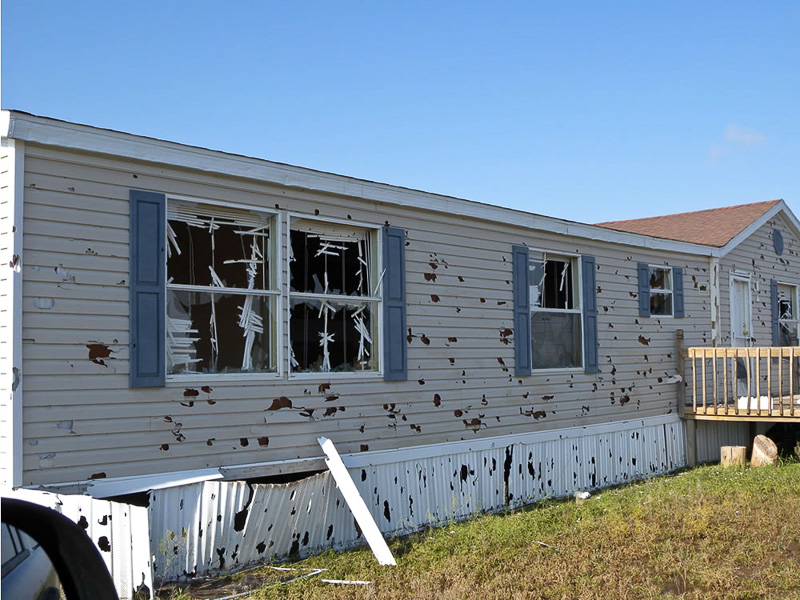
Hail Damage Roof Inspection: What a Roofer Should Check
A field reference for a hail damage roof inspection: what a roofer should check on every slope, how to tell functional damage from cosmetic marks and old wear, and what a credible report should and should not claim.

Roof Leak After a Storm: What to Do in the First 24 Hours
If your roof leaks after a storm, use the first 24 hours for safety, water control, documentation, and qualified help. Do not climb onto the roof. Build a clear packet before cleanup changes the record.