
Should You File A Roof Insurance Claim After Hail? Evidence Checklist
On this page
There is no safe universal answer to "should I file a roof insurance claim after hail?" The better first step is to build a pre-filing evidence file: safety status, visible property evidence, storm-date context, roof age, receipts, policy questions, inspection questions, and the information still missing.
Call the insurer or agent when property that may be covered appears damaged, water is entering, temporary protection may be needed, or you do not understand the policy process. If the only evidence is a nearby storm report, a door knock, or one ground-level clue, gather more facts before treating the situation as a claim conclusion. A storm record can support context. It does not prove roof damage, causation, coverage, or payment.
This checklist uses NOAA hail basics and NWS severe-thunderstorm safety guidance for hail context, NWS after-storm safety guidance and Ready.gov recovery guidance for safety boundaries, NAIC claim guidance and CFPB disaster-property guidance for process questions, and FEMA damage-documentation guidance for photos, videos, receipts, and records. None of those sources turns a checklist into a roof diagnosis or coverage decision.
Safety Comes Before The Claim Question
Do not start with the roof. Start with people, power, structure, water entry, and safe access. NWS guidance says to assess property damage only after the severe-weather threat has ended and to watch for downed power lines and damaged buildings. Ready.gov also warns about loose power lines, gas leaks, structural damage, damaged wiring, and unsafe reentry conditions.
For a homeowner, safe evidence means ground-level photos, interior photos, notes, receipts, and questions. It does not mean ladder work, roof walking, lifting shingles, installing a tarp yourself, entering unsafe rooms, or touching electrical hazards. CDC/NIOSH ladder safety guidance notes that ladder-related fall injuries are common at work and at home. OSHA's roof inspection, tarping, and repair activity sheet is worker-focused, but it makes the same practical boundary clear: roof inspection and tarping involve fall, ladder, electrical, and roof-stability hazards that belong with qualified workers using proper controls.
Put this safety gate at the top of the file:
| Safety question | If yes | What not to do |
|---|---|---|
| Is water actively entering the home? | Call the insurer or agent for process instructions and use qualified help for protection. | Do not climb up to trace the leak path. |
| Is there a downed line, gas smell, unstable ceiling, or unsafe room? | Stop documenting from that area and contact emergency or qualified help. | Do not enter the area for a better photo. |
| Is roof access needed to see the issue? | Leave roof photos to a qualified inspection. | Do not use a ladder or walk the roof. |
| Is temporary protection needed? | Ask the insurer or agent how to document it and use qualified help. | Do not install a tarp yourself from the roof. |
Should You File, Inspect First, Or Monitor?
Use this route-priority matrix to decide what kind of next step your evidence supports. It is not a claim score, legal instruction, or coverage decision. It is a way to avoid filing from panic, delaying when urgent facts exist, or letting a sales promise replace the policy process.
| Route | Priority | Evidence that points there | Still missing or not decided | Next owner |
|---|---|---|---|---|
| Call insurer or agent now | Highest | Active leak, damaged contents, unsafe opening, significant exterior damage, or property that may be covered appears damaged. | Coverage, payment, repair scope, and required forms are still insurer-process questions. | Homeowner plus insurer or agent |
| Get qualified temporary help and document | Highest when protection is needed | Water entry, exposed opening, interior damage, or unsafe condition that may worsen. | Reimbursement is not guaranteed; documentation and approval process still matter. | Homeowner, insurer or agent, qualified help |
| Schedule qualified roof inspection | High | Hail hit the area and there is collateral evidence such as damaged gutters, screens, siding, vents, A/C fins, vehicles, or fences, but no clear interior emergency. | Roof-surface condition, cause, age, wear, installation, and maintenance factors still need inspection. | Qualified roofer or inspector |
| Build the storm-date file | Medium | You have hail or wind context from personal notes, neighbors, SPC reports, NCEI records, or local warnings, but limited property evidence. | Weather context does not prove damage at the address. | Homeowner |
| Ask policy and deductible questions before signing | Medium | Deductible, wind/hail terms, notice steps, mortgage-payment process, or contractor paperwork is unclear. | Whether filing is financially or procedurally right for that policy is not answered by the checklist. | Homeowner plus insurer, agent, or servicer |
| Monitor and keep documenting | Lower, but still useful | No water entry, no safe visible property evidence, and no qualified inspection finding yet. | "No visible evidence" does not prove no damage exists. | Homeowner |
The clean answer may be "call the insurer for process," "schedule a qualified inspection," "build the storm-date file," or "monitor while preserving notes." The matrix should never become "hail happened, so file" or "no leak, so ignore it."
What Evidence Should You Gather Before Filing?
Build a one-page checklist and attach the files behind it. Keep each lane separate so weather context, policy questions, inspection findings, and photos do not get mixed into one unsupported conclusion.
| Evidence lane | What to collect | What it can support | What it cannot prove |
|---|---|---|---|
| Safety status | Active leak, unsafe room, downed line, gas smell, unstable ceiling, no-roof-access note. | Urgency and safe workflow. | Roof cause or coverage. |
| Storm context | Date, time, hail heard or observed, local warning, SPC or NCEI context, source accessed date. | Storm-date and area context. | Damage at your address. |
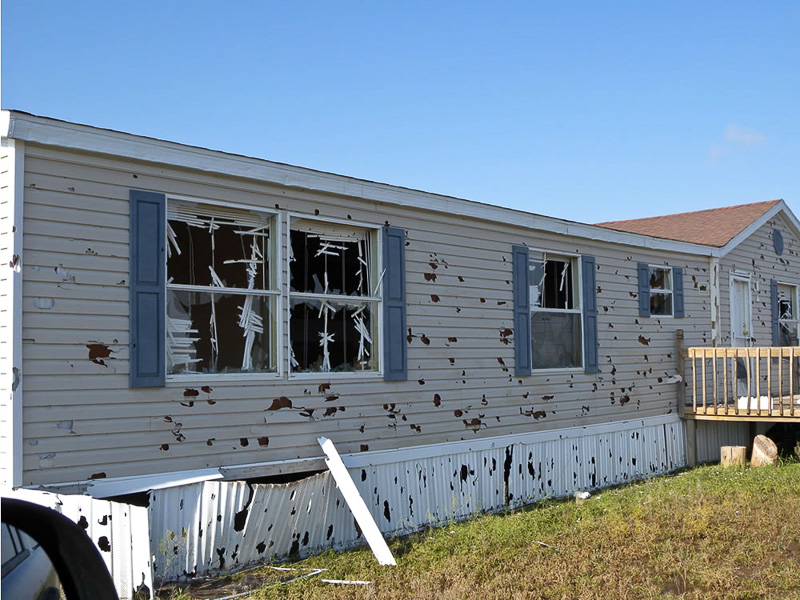
| Exterior observations | Safe photos of gutters, downspouts, vents, siding, screens, A/C fins, vehicles, fences, and debris. | Visible collateral evidence. | Roof-surface damage. |
| Interior observations | Ceiling stains, damp areas, drips, wet insulation signs, damaged contents. | Water-entry documentation. | Source of the leak. |
| Roof history | Age, prior repairs, old photos, inspection reports, warranty or product papers. | Context for insurer and inspector questions. | Claim approval. |
| Financial and process questions | Deductible, wind/hail terms, claim number if opened, mortgage or servicer issue, notice instructions. | What to ask before decisions. | Whether filing is worth it. |
| Inspection findings | Labeled roofer or inspector photos and written summary. | Condition evidence and next questions. | Coverage or payment. |
| Receipts | Qualified temporary help, cleanup, supplies, mitigation records. | What changed and when. | Reimbursement guarantee. |
Add a status value to every lane: urgent, attached, pending, not found, not visible from safe location, not checked safely, ready to ask insurer, needs inspection, or monitor.
What Photo Evidence Should You Collect Before Filing?
The photo checklist is about safe documentation, not diagnosis. Preserve original files with timestamps and metadata when possible. If you crop, mark up, or annotate a photo, keep that as a copy and keep the original unchanged.
Use a neutral file label such as 2026-05-31-address-area-001-original.jpg. Do not rename files in a way that states a conclusion, such as hail-damage-approved.jpg. If you cannot safely see something, write not visible from safe location instead of climbing.
| Photo type | Safe location | Required or optional | Label format | If unavailable |
|---|---|---|---|---|
| Address or property marker | Street or entry area, if safe and lawful. | Required for the packet. | date-address-front-001-original |
Write why the address marker was not photographed. |
| Four-side exterior overview | Ground level from safe public or property areas. | Required if safe. | date-address-north-overview-001-original |
Write not visible from safe location. |
| Interior water evidence | Inside a safe room. | Required if water entry exists. | date-address-bedroom-ceiling-001-original |
Write no interior water evidence observed or describe unsafe access. |
| Safety hazards | From a safe distance only. | Required if hazards exist. | date-address-downed-line-distance-001-original |
Stop and contact emergency or qualified help. |
| Collateral exterior details | Ground level only. | Optional but useful. | date-address-gutter-west-001-original |
Write which surfaces were not visible safely. |
| Old roof or prior condition photos | Existing files, inspection reports, listing photos, or owner records. | Optional. | prior-date-address-roof-overview-source |
Note source and approximate date if exact date is unknown. |
| Qualified inspection photos | From the inspector or roofer. | Optional until inspection occurs. | Inspector's label plus area or slope name. | Mark inspection as scheduled, not scheduled, or not needed yet. |
| Receipts and documents | Flat surface or scanned copy. | Required if money was spent or forms exist. | date-address-receipt-temp-help-001 |
Record vendor, date, amount, and reason. |
Do not ask a contractor to promise claim approval in the photo labels. Ask for location labels, condition descriptions, and limits of what the inspection could and could not confirm.
Before signing major repair work, keep the contractor lane separate from the insurance lane. FTC weather-emergency scam guidance says not to rely on a contractor to tell you what insurance covers and not to sign an insurance check over to a contractor. CFPB contractor guidance after disasters supports checking with the insurance company and mortgage company or servicer about how insurance funds are distributed, comparing services, researching contractors, and keeping written records and receipts.
How Do You Build The Storm-Date Evidence File?
Hail deserves attention because NOAA explains that hail can damage homes and cars, and NWS defines severe thunderstorms as capable of producing hail one inch or larger or wind gusts over 58 mph. That does not make the storm record a roof finding. Treat weather as one evidence lane.
Use this storm-date workflow:
| Step | Field to record | What to write | Proof limit |
|---|---|---|---|
| 1 | Homeowner observation | Date, approximate time, hail heard or seen, hail size if safely observed, wind or rain notes. | Personal observation is not roof diagnosis. |
| 2 | Recent report lane | Check SPC storm reports for recent preliminary hail or wind context. | Preliminary reports are not final official records. |
| 3 | Official historical lane | Check the NOAA/NCEI Storm Events Database for official Storm Data context. | NCEI records are not address-level roof proof. |
| 4 | Database status | Mark available, pending, not found, or not checked; include accessed date. |
A missing or delayed record does not prove no hail occurred. |
| 5 | Update-lag note | Use the NCEI Storm Events FAQ to note that Storm Data commonly arrives and updates after the event month, not immediately. | Do not promise exact availability for a local event. |
| 6 | Area note | Record county, city, nearby report location, distance if known, and whether the source is exact or approximate. | Area context is not property-specific causation. |
The storm-date file is strongest when it sits beside safe photos, roof history, inspection findings, receipts, and insurer instructions. It is weakest when it is the only evidence in the packet.
What Should You Ask The Insurer Or Agent?
Use a calm process call. You are not asking the insurer to accept a conclusion from your camera roll. You are asking what the policy process requires.
Ask:
- Should I open a claim now, or should I first gather inspection documentation?
- What policy pages or endorsements explain wind and hail?
- What is my deductible, and is there a separate wind or hail deductible?
- What photos, videos, receipts, or forms do you need?
- How should I document qualified temporary protection if water is entering?
- Will an adjuster inspect the roof or request contractor documents?
- Are there notice or timing requirements I should read in my policy?
- If I have a mortgage, will claim funds involve the mortgage company or servicer?
- Who should I contact if I do not understand the next step?
NAIC and CFPB guidance support documentation, insurer contact, receipts, policy copies, adjuster-process questions, and mortgage or servicer questions. They do not provide legal advice, decide coverage, or tell you whether a particular claim will be paid.
What Should You Ask The Roofer Or Inspector?
A roof inspection can answer condition questions. It should not be sold as a guaranteed claim outcome.
Ask:
- Can you inspect without me climbing onto the roof?
- Will your photos be labeled by roof slope, elevation, or area?
- Will you separate hail, wind, age, wear, installation, maintenance, and unknown conditions?
- What collateral evidence did you observe from the ground or exterior?
- What roof conditions need closer inspection?
- What is urgent enough for qualified temporary protection?
- What should I ask the insurer before signing repair work?
- Will your written summary state the limits of the inspection?
IBHS hail guidance is useful because it separates hail context from look-alike conditions. GAF's hail technical bulletin is useful as a manufacturer-specific example of shingle conditions and warranty boundaries. Neither source turns a homeowner into a roof inspector. Use them to ask better questions, not to diagnose the roof yourself.
A contractor can inspect, photograph, estimate, and describe observed roof conditions. Do not rely on a contractor to decide policy coverage, sign over an insurance check, accept a blank contract, or rush into major repair work. Verify credentials, get written estimates when practical, and ask the insurer or mortgage servicer how claim funds are handled before signing major work.
When A City Or State Hail Claim Page Deserves To Exist
A local hail-claim page should not exist because a city name can be appended to the title. It should exist when the filing decision, evidence packet, inspection workflow, or contractor handoff changes in a way that a roofer, sales manager, dispatcher, or homeowner can actually use.
For RoofPredict, the best city and state versions are market briefs with evidence rules, not generic claim advice. A Dallas-Fort Worth page might need to separate repeated spring hail exposure, large suburban service territories, steep-slope production scheduling, door-knock pressure, and high-volume adjuster coordination. A Front Range Colorado page might need to discuss fast storm movement, wildfire-adjacent roof material concerns, steep-slope access, older subdivisions mixed with new tract housing, and county-by-county storm-report distance. An Omaha or Lincoln page might need stronger emphasis on NCEI lag, neighborhood-by-neighborhood hail paths, and how crews prioritize inspection photos after a broad Plains event. A Panhandle or West Texas page may need to treat distance, rural access, metal-roof prevalence, wind-driven hail, and limited contractor availability as operational facts, not decorative local color.
Use this test before approving a local hail-claim URL:
| Local proof requirement | What a real page should add | What a weak page does instead |
|---|---|---|
| Storm pattern | Uses verified hail/wind history, recent event context, NWS/SPC/NCEI boundaries, and update-lag notes for the market. | Says the area gets storms without showing why that changes the workflow. |
| Roof stock | Explains local roof age, dominant materials, pitch/access issues, attached structures, and common collateral evidence. | Repeats the same shingle checklist for every city. |
| Insurance/process context | Names the questions homeowners should ask in that state or market while avoiding legal advice and claim promises. | Implies filing strategy, coverage, or payment outcomes without source support. |
| Contractor operations | Describes dispatch triage, photo intake, CRM tagging, temporary-protection routing, sales handoff, and adjuster-meeting preparation. | Writes only for homeowners and gives roofers no operational use. |
| Directory fit | Connects the page to contractor capabilities such as storm response, roof type, emergency tarping, documentation, service radius, and inspection availability. | Drops a generic directory CTA with no local capability reason. |
| Economic timing | Discusses real constraints such as labor availability, material lead times, deductible conversations, mortgage-servicer paperwork, or post-storm price pressure without giving financial advice. | Adds vague statements about costs rising after storms. |
Local hail pages can also be more intelligent over time. A state market brief can track hail seasonality, roof replacement age bands, asphalt shingle versus metal mix, code or licensing questions, insurer-documentation patterns, and post-storm crew capacity. A city page can narrow that into neighborhood age, subdivision build cycles, tree cover, roof pitch, HOA or historic-district friction, municipal permit timing, and whether storm reports usually map cleanly to the actual service area. If those facts are not available or do not change the advice, the page should stay merged into a broader state or storm-response guide.
The local page should still keep the same safety and insurance boundaries as the hail evidence workflow. It can say what to collect, what to ask, what sources to check, how to label photos, and how a roofer should organize the intake. It should not tell a homeowner that a claim is financially wise, that an insurer must pay, that a contractor can decide coverage, or that a storm report proves roof damage at a specific address.
What This Checklist Cannot Prove
Keep this visible before any filing decision:
| The checklist can show | The checklist cannot prove |
|---|---|
| Hail or severe storm context. | That hail damaged your roof. |
| Safe exterior and interior observations. | The cause, age, or newness of the roof condition. |
| Receipts and temporary-protection records. | That reimbursement is owed. |
| Roof age and prior records. | That the claim should be approved or denied. |
| Inspection findings. | Policy coverage without insurer review. |
| Missing questions. | Whether filing is financially best for your policy. |
The checklist helps you decide what to ask next. It does not replace the insurer, policy, adjuster, qualified inspection, or applicable state rules.
Where RoofPredict Fits
RoofPredict should organize context, not make the filing decision. RoofPredict can provide roof-age, storm-history, routing, and branded-report context for roofing workflows. In this workflow, use RoofPredict as a way to structure a homeowner-ready checklist around roof age, storm context, inspection questions, and report context; do not assume it stores policy or receipt evidence unless current product documentation explicitly supports that feature.
RoofPredict does not verify hail damage, decide whether you should file, determine coverage, estimate payment, approve a warranty claim, replace a qualified inspection, or choose a deductible strategy. Its value in this workflow is organization: it shows what you know, what you do not know, and who needs to answer the remaining questions.
Related RoofPredict Workflows
Use this page as the hail-specific pre-filing triage page. For deeper packets, separate the work into the right related workflow:
- Build the first-visit documentation file with the homeowner storm damage report before the first visit.
- Use the broader roof insurance claim checklist for homeowners after the filing process is underway.
- Keep ground-level observations separate with the hail damage from the ground guide.
- Prepare process questions with the insurance adjuster roof inspection guide.
- Turn notes into a shareable packet with the homeowner roof damage report template.
- Keep warranty questions separate with the asphalt shingle warranty claim packet.
Source Limits
| Source | What it supports | What it does not support |
|---|---|---|
| NOAA/NSSL and NWS severe-thunderstorm guidance | Hail formation, severe-hail threshold, and why hail can matter to roofs, homes, and cars. | Property-specific roof damage or filing advice. |
| NWS, Ready.gov, CDC/NIOSH, and OSHA | After-threat safety, downed lines, gas leaks, structural hazards, ladder and roof-work hazards, and damaged-building caution. | Roof diagnosis, tarp instructions for homeowners, or insurance coverage. |
| SPC reports | Recent preliminary storm context. | Final official record or address-level proof. |
| NOAA/NCEI Storm Events and FAQ | Official Storm Data context and update-lag expectations. | Same-day verification, causation, coverage, or payment. |
| NAIC, CFPB, and FEMA | Documentation, insurer contact, policy questions, receipts, photos, videos, and mortgage/servicer process. | Legal advice, deadlines, or coverage promises. |
| FTC and CFPB contractor guidance | Contractor scam warnings, insurance-check caution, written records, contractor research, and insurance or mortgage-servicer fund questions. | Coverage decisions, contractor endorsement, or state-specific licensing advice. |
| IBHS and GAF | Hail context, collateral evidence, shingle-condition questions, and manufacturer-specific limits. | Homeowner diagnosis or universal manufacturer rules. |
| RoofPredict | Roof-age, storm-history, routing, branded-report context, and evidence organization. | Filing decision, diagnosis, coverage, payment, repair scope, policy/receipt storage claims without product documentation, or warranty approval. |
FAQ
Does quarter-size hail mean I should file a roof claim?
No. Quarter-size hail or larger is severe weather context, and hail can damage homes and cars. It does not prove your roof was damaged or that your policy covers a repair.
Should I call insurance before calling a roofer?
If property that may be covered appears damaged, water is entering, or you do not understand the claim process, contact the insurer or agent and ask what documents are needed. A roofer can inspect roof conditions, but the policy and insurer process decide coverage.
Can a contractor tell me insurance will cover the roof?
No. A contractor can inspect, photograph, estimate, and describe observed roof conditions. Do not rely on a contractor to decide policy coverage, sign over an insurance check, accept a blank contract, or rush into repair work. Verify credentials, get written estimates when practical, and ask the insurer or mortgage servicer how claim funds are handled before signing major work.
Do storm reports prove my roof claim?
No. SPC and NOAA/NCEI records can support date and area context. They do not prove damage at your address, causation, coverage, or payment.
What if the NCEI record is not available yet?
Record the database status as pending or not found, add the date you checked, and keep the preliminary context separate from property evidence. A delayed or missing record does not prove that hail did or did not affect your roof.
Should I wait for a roof inspection before filing?
It depends on urgency, visible damage, policy instructions, and insurer process. If water is entering or property that may be covered is damaged, ask the insurer or agent what to do next. If the only evidence is nearby hail context, gather safer property evidence and inspection information before making assumptions.
Can RoofPredict tell me whether to file?
No. RoofPredict can organize roof age, storm context, report context, and inspection questions. It cannot decide whether to file, diagnose hail damage, determine coverage, or replace product documentation for features that are not explicitly supported.
The Roofline by RoofPredict
Stay Ahead of Roofing Market Changes
Join The Roofline by RoofPredict for weekly roofing intelligence: material price signals, storm demand, insurance and regulatory updates, sales tactics, and local contractor opportunities.
Sources
- Severe Weather 101: Hail Basics — nssl.noaa.gov
- Severe Thunderstorm Safety — weather.gov
- What to Do After Severe Weather — weather.gov
- Recovering from Disaster — ready.gov
- Ladder Safety — cdc.gov
- Roof Inspection, Tarping, and Repair — osha.gov
- Storm Events Database — ncei.noaa.gov
- Storm Events Database - FAQ — ncei.noaa.gov
- Storm Prediction Center Storm Reports — spc.noaa.gov
- Navigating the Claims Process: Recover & rebuild — content.naic.org
- What should I do after a disaster to protect my finances and property? — consumerfinance.gov
- How can I find and work with contractors to rebuild after a disaster? — consumerfinance.gov
- How To Avoid Scams After Weather Emergencies and Natural Disasters — consumer.ftc.gov
- How to Document Damages After Severe Weather Events — fema.gov
- Is It Hail Damage? — ibhs.org
- TAB-R-108 Damage to Shingles Caused by Hail — gaf.com
- RoofPredict — roofpredict.com
Related Articles
How To Build A Homeowner Storm Damage Report Before The First Visit
A homeowner storm damage report is a safe pre-visit handoff for the roofer. It should tell the roofer what happened, what you observed, what photos and documents you have, and what still needs inspection.
How To Tell If Hail Damaged Your Roof From The Ground
You cannot confirm hail damage to a roof from the ground. You can collect clues that make the next conversation safer: storm date, safe photos, collateral dents, spatter, visible missing or lifted material, granules near downspouts, interior stains, and...
What To Ask A Roofer Before Signing A Storm Damage Contract
Before signing a storm damage roofing contract, ask questions that force the important answers into writing: who the contractor is, what work is included, what is excluded, what changes the price, what payments are due, what storm date and photos support...