
How To Build A Homeowner Storm Damage Report Before The First Visit
On this page
A homeowner storm damage report is a safe pre-visit handoff for the roofer. It should tell the roofer what happened, what you observed, what photos and documents you have, and what still needs inspection. It should not diagnose damage, prove insurance coverage, or require roof access.
Start with a one-page report and attach the evidence behind it. The report should include the storm date, safety status, four orientation photos, visible exterior observations, interior leak or stain notes, roof age, prior roof work, warranty or product paperwork, receipts, temporary-protection records, insurance questions, and the exact areas you want the roofer to inspect.
The safest sources point in the same direction: document from safe locations, keep weather data as context, and do not use RoofPredict as a substitute for a roofer, insurer, adjuster, manufacturer, or safety official.
Start With The Safety Status
Put safety at the top of the report. If the house is not safe to approach or enter, the report should say that before any photo list or roofer question.
Use this field:
| Safety item | Report entry |
|---|---|
| Severe-weather threat ended? | yes, no, or unknown |
| Local officials cleared return? | yes, no, not applicable, or unknown |
| Downed power lines nearby? | yes, no, or unknown |
| Gas smell, structural movement, or unsafe ceiling? | yes, no, or unknown |
| Standing water near electrical equipment? | yes, no, or unknown |
| Generator in use? | outside and away from openings, not in use, or unsafe/unknown |
The report should never ask you to do roof walking, ladder work, electrical switching while standing in water, generator setup, tarp work, or entry into a damaged building. Ready.gov's recovery guidance tells people not to return home before local officials say it is safe and to watch for loose power lines, gas leaks, and structural damage. The CDC disaster cleanup guidance adds warnings about damaged buildings, gas, electrical hazards, standing water, and carbon monoxide from generators. CPSC generator guidance is even more direct: portable generators belong outside and away from windows, doors, vents, and other openings.
OSHA's roof inspection, tarping, and repair guidance is written for worker safety, but the homeowner takeaway is simple: roof inspection and tarping involve fall, ladder, elevated-work, power-line, power-tool, and damaged-roof hazards. A homeowner report can say "possible roof opening visible from ground." It should not teach the homeowner how to install a tarp.
If any safety field is uncertain, keep the first roofer call narrow: "We need safe inspection guidance. We have not accessed the roof. Here is what we observed from safe locations."
What Should Be In The One-Page Storm Damage Report?
The report should be short enough that a roofer can read it before getting out of the truck. Put the detailed photos and receipts behind it.
Use this structure:
| Section | What to write | What not to write |
|---|---|---|
| Property | address, contact, best entry point, pets/gate notes | private details the roofer does not need |
| Storm context | date, approximate time, hail/wind/rain/limb observations | "the storm totaled my roof" |
| Safety status | hazards, blocked areas, unsafe rooms, no roof access | "safe" if you are not sure |
| Photo map | front, back, left, right, then close-ups | unlabeled camera roll |
| Inspect first | sides, rooms, or problem areas the roofer should check first | instructions about what the roofer must conclude |
| Unanswered questions | what you need explained after inspection | coverage, causation, or repair-scope demands |
| Not concluded | what the report does not prove yet | blank section that lets assumptions creep in |
| Interior notes | room, stain, drip, damp area, time noticed | source of leak unless inspected |
| Roof history | age, material if known, prior repairs, old reports | guesses about installation defects |
| Documents | policy questions, warranty papers, receipts, prior invoices | coverage demands |
| Roofer questions | what to inspect, what to photograph, what is urgent | instructions to confirm a claim outcome |
This is different from a photo checklist. The point is to brief the first visit. A roofer should be able to see the route through the evidence: where access is unsafe, which side of the house to inspect first, which room has a stain, which documents are attached, which questions are unanswered, and what the homeowner is not concluding yet.
Use a short briefing block at the top:
| First-visit briefing | Homeowner entry |
|---|---|
| Visit status | first roof visit after storm concern |
| Do not access | attic hatch blocked, east side gate locked, room unsafe, or none known |
| Inspect first | west gutter and upstairs hallway ceiling |
| Documents attached | roof invoice, warranty registration, insurer notes, receipts |
| Questions to answer | is water entry active, is temporary protection needed, what roof areas need closer inspection |
| Not concluded | cause, newness, coverage, warranty approval, repair scope |
How Should You Prioritize The First Roofer Visit?
Use a route-priority matrix so the roofer knows what to look at first. The matrix is not a diagnosis. It is a way to order the visit around safety, active water, access, and documentation gaps.
| Priority | Trigger | What to tell the roofer first | What not to conclude |
|---|---|---|---|
| Stop and safety review | downed line, gas smell, unsafe ceiling, standing water near electrical equipment, damaged building, or blocked access | "We need safe inspection guidance before anyone approaches this area." | that the roof caused the hazard |
| Active water or interior change | dripping, spreading stain, wet insulation smell, sagging ceiling, or new room damage | room name, time noticed, photos, and whether water is still active | that storm damage caused the leak |
| Exterior visible concern | fallen limb, lifted-looking edge from the ground, gutter impact, siding damage, screen damage, or debris path | side of house, photo label, and where to inspect first | that roof replacement is needed |
| Document gap | unknown roof age, missing warranty paperwork, unclear prior repair, or missing receipt | what is missing and where a roofer or manufacturer may need to verify | that missing records mean coverage or warranty denial |
| Weather context only | hail, wind, or thunderstorm reports nearby | date, approximate time, source link if available, and distance/area note | that weather data proves property-specific damage |
| Low urgency / routine follow-up | no active leak, no unsafe area, no visible exterior change, and questions are mainly preventive | ask for a normal inspection order and written notes | that no damage exists |
This gives the roofer a clean route through the property: safety first, active water second, visible exterior concerns third, paperwork gaps fourth, and context-only weather notes last. It also keeps safety issues from being buried under photos.
How Do You Document The Storm Date?
Weather context is useful. It helps you remember which storm you are talking about and gives the roofer a date to compare with local activity. The NWS severe thunderstorm safety page is useful for general hail and wind context, but it still does not inspect your roof. Keep weather context in its own lane.
The NOAA/NCEI Storm Events Database contains records used for NOAA's official Storm Data publication. National Weather Service storm-report guidance explains that Storm Data can include event location, time, magnitude, damage, injuries, and deaths when reported. The NCEI Storm Data FAQ explains that NCEI regularly receives Storm Data from NWS about 75 days after the end of a data month and that Storm Events Database updates are commonly within 75 to 90 days after the end of a data month. Treat that as an availability boundary, not as a promise that every local report is immediate, complete, or property-specific. Certified official copies of storm reports must come from NCEI, not a local NWS office.
That makes the weather line in your report look like this:
| Storm-date workflow step | What to write | Limit |
|---|---|---|
| 1. Homeowner observation | date, approximate time, and what you safely saw or heard, such as hail heard at about 7:40 p.m., heavy wind, or a branch down in the back yard | memory and photos are observations, not roof diagnosis |
| 2. Local alert or weather context | local NWS alert, warning archive, NOAA/NCEI result, or local storm report source if available | weather context is about the area, not one roof |
| 3. Database status | available, pending, not found, or not checked; include the date you checked | missing or delayed database records do not prove nothing happened |
| 4. Source and area note | source URL, accessed date, county/city/event area, and distance or area description if known | avoid exact-path claims unless a qualified source supports them |
| 5. Report limit | "weather context only; inspection still required" | not coverage proof, claim proof, or warranty proof |
Do not use storm context as a verdict. "Hail was reported nearby" is useful. "NOAA proves my roof was damaged" is not supported.
What Photos Should You Take Before The Roofer Arrives?
Use a safe photo checklist only. The National Weather Service after-storm guidance says to assess damage after the threat has ended and to watch for downed lines and damaged buildings. FEMA's damage documentation guidance supports taking photos and videos of damage inside and outside before discarding items, while also keeping receipts and other records.
Start with a file label pattern:
YYYY-MM-DD_location_view_sequence, such as 2026-05-21_front-wide_001.jpg, 2026-05-21_hallway-ceiling-stain_001.jpg, or 2026-05-21_west-gutter-close_001.jpg. Keep original files. If you annotate a copy later, save it separately so the roofer can see what the camera captured and what you added.
| Photo type | Required before the first visit? | What to capture from safe locations | What to write if unavailable |
|---|---|---|---|
| Address marker or house number | yes | one wide photo that ties the packet to the property | "not visible from safe location" |
| Front, right, back, and left orientation photos | yes if accessible from safe ground | wide photos that show each side of the house | "side not safely accessible" |
| Interior leak, stain, or damp-area photos | yes if present and safe | one wide room photo, one closer photo, date noticed, and whether water is active | "no interior change observed" or "room unsafe" |
| Safety hazards | yes if present and safe | blocked access, downed line from distance, damaged building area, standing water, or unsafe ceiling | "hazard reported; no close photo taken" |
| Receipts, work orders, and document photos | yes if available | repair receipts, temporary-protection receipts, roof invoices, warranty papers, prior inspection reports | "document not available yet" |
| Ground-level exterior close-ups | optional | gutters, downspouts, screens, A/C equipment, siding, fence, patio items, vehicles, fallen limbs, or visible edge concerns | "not visible from safe location" |
| Old roof photos or prior reports | optional | pre-storm photos, inspection reports, or prior repair photos | "none found" |
| Qualified inspector or roofer photos | optional | photos supplied after a qualified inspection | "not inspected yet" |
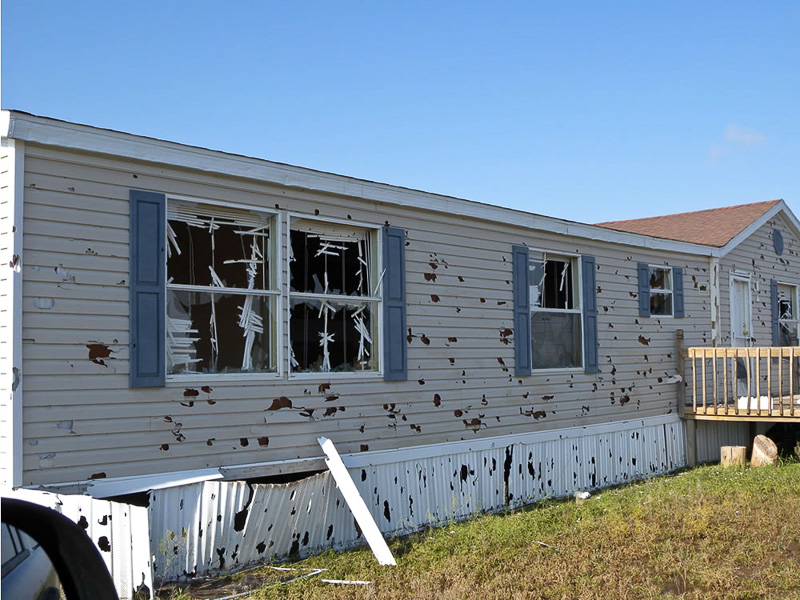
Use neutral labels. "West downspout dent after May 21 storm" is better than "hail destroyed west roof slope." "Hallway ceiling stain noticed May 22" is better than "storm caused roof leak" before inspection. The report should help the roofer inspect, not pressure the roofer to adopt your conclusion.
Document Lane
Your document lane should separate insurance, mortgage or servicer, warranty, repair, and prior-roof records.
The NAIC claims-process guidance tells consumers to document losses before removing debris or belongings, take photos or video, make a list of damage and lost items, take reasonable steps to avoid further damage, keep receipts, contact the insurer or agent, and remember that structural damage payments may involve the mortgage lender when there is a mortgage. Use that as process guidance, not a promise that a specific repair, tarp, or receipt will be covered.
The CFPB contractor guidance tells consumers to check with the insurance company and mortgage company or servicer about how insurance funds are distributed before hiring contractors after a disaster. It also recommends researching contractors, comparing bids, checking credentials, keeping written records and receipts, and recording contract details such as materials, permits, start and completion dates, price, payment schedule, and verbal promises.
Add these fields:
| Document type | Why it belongs in the report |
|---|---|
| policy or insurer contact notes | tells the roofer what process questions are already open |
| claim number, if one exists | prevents mixed-up emails and photos |
| mortgage or servicer question | avoids payment assumptions if claim funds are involved |
| prior roof invoice | helps establish roof age and product history |
| warranty registration or product paperwork | separates manufacturer questions from insurance questions |
| emergency repair or qualified-help receipt | records what changed before inspection |
| old inspection report | helps distinguish old conditions from new observations |
Manufacturer paperwork can matter even when the first issue is storm-related. As one manufacturer example, GAF's claims center says a residential warranty claim may require proof of installation date, ownership or transfer proof, photographs of the reported problem, and, in some cases, shingle samples from affected areas. GAF recommends an experienced roofer remove shingles. That does not create a rule for every manufacturer or insurance claim. It shows why roof age, product records, and prior work belong in the packet.
What This Report Cannot Prove
Put this box before any product handoff or contractor call notes:
| The report can show | The report cannot prove |
|---|---|
| what you observed safely | that hail or wind caused the roof condition |
| when you noticed damage | that damage is new |
| where stains, dents, leaks, or debris appear | that the roof surface is damaged |
| what storm context exists | that insurance coverage applies |
| what documents and receipts you have | that a warranty claim will be approved |
| what you want inspected | what repair scope is correct |
This box protects the homeowner and the roofer. It keeps the packet useful without turning it into a claim conclusion.
When A State Or City Storm Report Page Deserves To Exist
A state, city, metro, or county version can belong on RoofPredict when the local storm workflow changes the roofer handoff. It should not be a generic homeowner storm checklist with a place name inserted. The local facts need to affect safety, routing, photo priorities, weather-source selection, contractor questions, directory fit, or the boundary between storm context and roof proof.
Good local reasons include:
- hail, wind, hurricane, tornado, wildfire, monsoon, snow, ice, or lake-effect storm patterns that change the first-visit route priority;
- older housing stock, manufactured housing, multifamily, rural acreage, coastal neighborhoods, mountain roads, tree canopy, or dense urban access that changes what a homeowner can safely photograph;
- local emergency-management, NWS office, state weather, permit, debris, or consumer-protection sources that materially change the report;
- state insurance department, public-adjuster, contractor registration, consumer-protection, or mortgage/servicer guidance that changes the question list without giving legal or coverage advice;
- contractor-directory pages where profiles can show storm-response service area, roof type, language, documentation workflow, emergency temporary-protection capabilities, and safe inspection boundaries.
Before a local page becomes indexable, it should answer:
| Local test | What the page must show |
|---|---|
| Why this place? | The storm type, housing stock, access pattern, safety issue, official source, contractor rule, or directory workflow changes the report |
| What changes for the roofer? | Inspect a different area first, ask a different question, request a different record, route an insurance/warranty question differently, or schedule around access constraints |
| What sources are required? | NOAA/NWS/NCEI, local emergency or storm source, state insurance/consumer source where used, local permit/debris source where used, safety sources, and RoofPredict product boundaries |
| What stays out? | Property-specific damage proof, coverage advice, legal advice, claim-value scoring, roof diagnosis, unsafe roof access, and "best roofer" claims |
| What CTA fits? | The Roofline newsletter for storm-workflow updates, contractor directory for storm-response capability fields, or a state market brief for sourced local context |
Local storm pages can rank because they answer local operational questions. A Gulf Coast hurricane page, a Colorado hail page, a North Texas wind/hail page, a Great Lakes ice/wind page, and a wooded Mid-Atlantic tree-impact page should not read the same. If the local facts do not change the packet, leave the local version unpublished and link back to the national workflow.
Related RoofPredict Workflows
Keep this report's role narrow. Use the asphalt shingle warranty claim packet for manufacturer documentation, the roof insurance claim checklist for homeowners for an insurance-process file, the ground-level hail damage guide for safe visible-observation boundaries, the insurance adjuster roof inspection guide for adjuster-preparation questions, and the homeowner roof damage report template for a copyable post-storm template. This page owns the pre-first-visit briefing and route-priority workflow.
Questions For The First Roofer Visit
Use the report to ask better questions. The best first visit should separate observed damage, likely cause, roof age, installation issues, maintenance, and unknowns.
Ask the roofer:
- Can you inspect without me accessing the roof?
- Which roof areas will you inspect first based on this report?
- Will your photos be labeled by slope, elevation, room, or roof area?
- Will you separate storm-related observations from age, wear, installation, maintenance, and unknown conditions?
- What is urgent enough for temporary protection?
- What can wait for insurance, warranty, or second-opinion review?
- What should I ask my insurer before signing repair work?
- If product warranty may be involved, what records or manufacturer instructions should I preserve?
- Will the written summary include photos, date, roof areas inspected, and limits of the inspection?
The FTC weather-emergency guidance supports checking license and insurance, asking for ID and references, getting written contracts, and being wary of pressure, upfront payment demands, and payment methods that are hard to recover. That is not a reason to treat every roofer as suspicious. It is a reason to keep the first visit evidence-based and written.
Where RoofPredict Fits
RoofPredict should be the packet organizer, not the decision maker. A useful RoofPredict pre-visit report can hold:
- roof age and prior work notes;
- storm date and weather-context link;
- safety status;
- four orientation photos;
- exterior observations by side of house;
- interior leak or stain notes by room;
- collateral evidence;
- safe temporary-protection records or qualified-help receipts;
- warranty or product-paperwork fields;
- insurer, mortgage, and roofer questions;
- unknowns that need inspection.
RoofPredict does not diagnose hail damage, certify wind damage, decide insurance coverage, approve a warranty claim, estimate repair cost, or tell you a building is safe. Its value is structure: fewer lost photos, cleaner labels, and fewer unsupported conclusions.
Checklist Before You Send The Report
Use this Checklist before emailing the packet or handing it to the roofer.
- Confirm the severe-weather threat has ended.
- Do not climb onto the roof or use a ladder for photos.
- Note any safety concern before listing damage.
- Add the storm date, approximate time, and what you observed.
- Add weather context only as context.
- Include four wide exterior orientation photos.
- Label close-ups by side of house or room.
- Keep original photo files and save annotated copies separately.
- Keep interior leak photos separate from exterior photos.
- Include roof age, prior work, and warranty paperwork if you have it.
- Keep receipts and safe temporary-protection records or qualified-help receipts.
- Write neutral observations instead of damage conclusions.
- List specific areas you want inspected.
- Ask for labeled roofer photos and a written summary.
- Keep insurance, warranty, and repair-contract questions in separate sections.
- Use RoofPredict to organize the packet, not to diagnose the roof.
Source Limits
| Source | What it supports | What it does not support |
|---|---|---|
| NWS after-storm guidance | waiting until the threat ends, downed power lines, damaged buildings, scam awareness | roof diagnosis or insurance coverage |
| NWS severe thunderstorm safety | general hail, wind, and thunderstorm context | property-specific roof proof |
| Ready.gov, CDC, CPSC, and OSHA | reentry, gas, electrical, structural, generator, roof-work, and cleanup safety | homeowner roof work, roof inspection, or claim strategy |
| FEMA damage documentation | photos, videos, receipts, serial numbers, samples, repair-service caution | roof causation or private-insurance payment |
| NOAA/NCEI, NCEI FAQ, and NWS storm records | storm-date and area context, report timing, database update lag, certified-copy boundaries | proof that one roof was damaged |
| NAIC claims-process guidance | documenting losses, photos/video, damaged-item lists, mitigation, receipts, insurer contact, mortgage-lender caveat | coverage promises or state-specific legal deadlines |
| CFPB contractor guidance | bids, credentials, insurance/mortgage process, records, receipts, contract details | legal advice or coverage decisions |
| FTC weather-emergency guidance | contractor scam warning signs, license/insurance checks, written contracts, payment caution | claim that every post-storm contractor is a scam |
| GAF claims center | manufacturer example for installation proof, ownership proof, photographs, and roofer-removed samples | rules for every manufacturer or insurance claim |
| RoofPredict | packet structure, roof age, storm context, photos, notes, and workflow | diagnosis, coverage, warranty approval, safety clearance |
| Route-priority matrix | editorial ordering of the first roofer handoff using the safety, documentation, weather, consumer, and RoofPredict boundaries above | official damage standard, emergency-response protocol, severity score, coverage advice, claim value, or proof of storm damage |
FAQ
Is this the same as filing an insurance claim?
No. A pre-visit storm damage report is a documentation packet. It can help you speak with a roofer, insurer, adjuster, or contractor, but it does not open a claim by itself or decide coverage.
Should I climb onto the roof for better photos?
No. The homeowner report should use safe ground-level and interior observations. Roof-surface photos should come from a qualified inspection.
Does NOAA storm data prove roof damage?
No. NOAA and NWS records can support storm-date and area context. They do not prove that one roof was damaged, that the damage is new, or that insurance covers it.
What should I send to the roofer before the first visit?
Send the one-page report, four orientation photos, the best labeled close-ups, interior leak notes if any, safety warnings, roof age if known, and the questions you want answered. Keep the full backup folder ready if the roofer asks for more.
Should warranty papers be included?
Yes, if you have them. Warranty or product papers can help identify roof age, manufacturer, product line, installer, and prior work. Keep them separate from insurance documents because warranty and insurance questions are decided by different processes.
The Roofline by RoofPredict
Stay Ahead of Roofing Market Changes
Join The Roofline by RoofPredict for weekly roofing intelligence: material price signals, storm demand, insurance and regulatory updates, sales tactics, and local contractor opportunities.
Sources
- What to Do After Severe Weather — weather.gov
- Severe Thunderstorm Safety — weather.gov
- Storm Events Database — ncei.noaa.gov
- Storm Events Database - FAQ — ncei.noaa.gov
- Storm Report Records — weather.gov
- How to Document Damages After Severe Weather Events — fema.gov
- Recovering from Disaster — ready.gov
- Guidelines for Cleaning Safely After a Disaster — cdc.gov
- Roof Inspection, Tarping, and Repair — osha.gov
- Generators and Engine-Driven Tools — cpsc.gov
- Navigating the Claims Process: Recover & rebuild — content.naic.org
- How can I find and work with contractors to rebuild after a disaster? — consumerfinance.gov
- How To Prepare for a Weather Emergency While Avoiding Scams — consumer.ftc.gov
- GAF Roofing Claims Center — gaf.com
- RoofPredict — roofpredict.com
Related Articles
Should You File A Roof Insurance Claim After Hail? Evidence Checklist
There is no safe universal answer to "should I file a roof insurance claim after hail?" The better first step is to build a pre-filing evidence file: safety status, visible property evidence, storm-date context, roof age, receipts, policy questions,...
How To Tell If Hail Damaged Your Roof From The Ground
You cannot confirm hail damage to a roof from the ground. You can collect clues that make the next conversation safer: storm date, safe photos, collateral dents, spatter, visible missing or lifted material, granules near downspouts, interior stains, and...
What To Ask A Roofer Before Signing A Storm Damage Contract
Before signing a storm damage roofing contract, ask questions that force the important answers into writing: who the contractor is, what work is included, what is excluded, what changes the price, what payments are due, what storm date and photos support...