
Emergency Roof Tarping: What Homeowners Should Document First
On this page
Document emergency roof tarping in this order: safety first, visible damage second, temporary protection third, paperwork fourth. If there are downed wires, gas odor, floodwater, structural movement, ceiling sagging, active lightning, high wind, or an unsafe building, stop documenting and get to safety. Roof photos are not worth a fall, shock, collapse, or exposure to contaminated water. If a detail requires height or unsafe access, write that it was not visible safely and ask the contractor for photos.
Quick Answer
Before emergency roof tarping, document only what you can capture safely: the date and time, rooms with water entry, ceiling or wall stains, belongings affected, exterior roof damage visible from the ground, debris impact, and the area where temporary protection is needed. After the tarp is installed, save the invoice, payment receipt, contractor photos, work area, arrival time, temporary-protection note, insurer instructions, and follow-up repair questions.
Use safe records, not roof access. Do not climb onto a storm-damaged roof, stand on a ladder for a better angle, walk on a tarp, enter unsafe rooms, crawl through a damaged attic, move heavy debris, touch electrical equipment, or approach downed lines.
National Weather Service hurricane recovery guidance supports returning only when officials say it is safe and watching for downed wires, weakened structures, gas leaks, floodwater, and damaged buildings. OSHA's roof tarping fact sheet describes fall, electrical, roof-stability, ladder, wet-tarp, and storm-condition hazards for workers who access roofs. FEMA severe-weather documentation guidance supports safety-first reentry, photos, videos, receipts, material samples, and insurer or adjuster consultation before signing certain repair agreements.
Source review date: June 9, 2026.
Decision Checklist: What Comes First?
Use this decision checklist before taking any photo or calling emergency tarp work complete.
- Emergency lane: Downed power line, gas smell, fire, flooding, wet electrical area, active storm, ceiling sag, structural movement, unsafe building, or injured person. Leave the area and route to emergency services, utilities, or local authorities before documentation.
- Safe ground documentation lane: The home is safe to approach from outside and safe rooms can be entered. Take wide and close photos from stable ground, doorways, hallways, and other safe locations.
- Professional roof-record lane: Roof-level photos are needed. Ask the tarp contractor, mitigation company, roofer, or qualified professional for photos and written observations.
- Insurance packet lane: Save photos, videos, receipts, damaged-property lists, insurer instructions, claim number if assigned, and any emergency repair authorization separately from permanent repair quotes.
- Permanent repair lane: Keep the emergency tarp record separate from the later roof repair or replacement estimate, warranty documents, payment terms, and change orders.
If you cannot safely document something, write that down. "Not visible from safe ground" is better than creating a dangerous record.
Comparison Table: Before, During, And After The Tarp
| Moment | What to document | Safe way to document it | What it does not prove |
|---|---|---|---|
| Before tarp | Date, time, active weather, leak location, visible opening, missing roof material, debris impact, interior water path. | Ground photos, room photos, short videos, phone notes, weather alert screenshots. | Cause, coverage, full repair scope, or replacement need. |
| During tarp work | Company name, crew contact, arrival time, work area, weather conditions, whether roof photos were taken. | Ask the crew for photos and a written work order. | That the contractor is approved by the insurer or that the tarp was installed perfectly. |
| After tarp | Finished tarp area, invoice, receipt, temporary-protection note, follow-up recommendation, any safety restriction. | Contractor photos, ground photos, invoice, email, text, payment record. | Permanent repair scope, warranty eligibility, or claim payment. |
| Insurance contact | Claim number if assigned, insurer or agent instructions, adjuster appointment, emergency repair guidance. | Save emails, portal screenshots, call notes, letters, and estimates. | Coverage approval or supplement approval. |
| Repair planning | Separate repair estimate, materials, permits, warranty documents, payment schedule, exclusions. | Written quote and follow-up questions. | That the emergency tarp document is a full roof contract. |
The useful tarp file makes a timeline visible. It does not need dramatic roof photos or unsafe angles.
Safety Gate Before Any Tarp Record
Do not climb on a storm-damaged roof to get a better photo. Do not stand on a ladder to inspect a damaged roof. Do not walk on a tarp. Do not enter an attic or room that shows sagging, shifting, electrical exposure, standing water near electrical outlets, mold-like growth, loose insulation, or damaged framing.
NWS high-wind recovery guidance tells people to avoid downed power lines and report them. NWS tornado recovery guidance says damage assessment should happen after the threat has ended, with protective clothing, local-authority contact for downed power lines, avoidance of damaged buildings, and scam awareness. NWS severe-weather recovery guidance gives the same broad boundary: stay informed, assess damage only after the severe-weather threat has ended, contact authorities for downed lines, and stay out of damaged buildings.
Tarping itself is roof work. OSHA describes roof tarping around electrical hazards, roof stability, fall protection, steep roofs, wet tarps, covered openings, ladders, debris, and storm conditions. That is worker-safety guidance, not homeowner instruction. For a homeowner documentation packet, the practical rule is: use safe vantage points and request professional photos instead of creating your own roof-level record.
CDC/NIOSH ladder safety guidance notes that ladder-related injuries happen at work and at home, and using a ladder creates fall risk. That supports a strict no-ladder boundary for homeowners trying to document emergency roof tarping.
What To Document Before The Tarp Goes On
If it is safe, take a short documentation pass before the tarp changes what can be seen. Keep it factual. The point is to preserve what was visible before temporary protection covered the area.
Start inside. Photograph each affected room from the doorway, then take closer photos of stains, wet flooring, buckets, wall streaks, ceiling cracks, ceiling bulges, window leaks, water around light fixtures, or belongings that were wet. If an attic can be viewed safely from a stable access point, take only an overview from that access point. Do not crawl across attic framing or step into areas that may be wet, damaged, or unsupported.
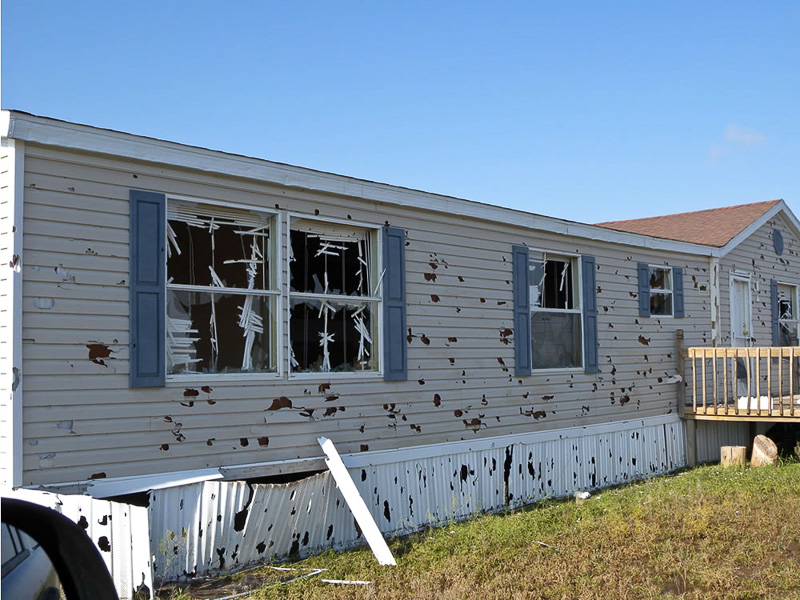
Then document outside from the ground. Take wide photos of each side of the home, the visible roof plane, the tree or branch if there was an impact, fallen shingles, displaced metal, gutter or downspout damage, damaged siding, dented vents, broken skylight glass, and debris paths. If hail or wind affected other property, take context photos of gutters, screens, vents, fences, vehicles, patio furniture, or yard debris. Do not use those photos to diagnose the cause; use them to preserve the scene.
FloodSmart documentation guidance gives a useful recordkeeping pattern for water-damage situations: document before cleanup, take clear photos and videos, capture wide and close shots, save receipts, and keep samples where relevant. Use that pattern for the tarp packet while keeping flood-policy issues separate from a roof claim.
GAF storm damage guidance supports homeowner documentation from safe vantage points and professional help after storm damage. Use manufacturer guidance only as storm-damage context; it is not a safety authority, insurance decision, contractor endorsement, or warranty approval.
What To Save From The Tarp Contractor
If a contractor, mitigation company, emergency crew, or roofer installs the tarp, ask for the record while the details are fresh. You are not asking them to write an insurance argument. You are asking them to document what they did.
Save:
- company name, crew contact, date, arrival time, and departure time;
- invoice or work order;
- the roof area covered;
- reason for temporary protection in plain language;
- before, during, and after photos supplied by the crew;
- tarp material description if provided;
- attachment method if listed without asking for DIY instructions;
- debris removed to make temporary protection possible;
- weather conditions that affected the work;
- whether the tarp is temporary and what follow-up is recommended;
- payment amount, payment method, receipt, and financing or assignment paperwork if any;
- who requested the work and who was present.
CFPB contractor guidance after a disaster supports written estimates, credential questions, permit and insurance questions, written records, receipts, and payment caution. FTC home improvement guidance supports multiple estimates where practical, written contracts, license and insurance checks, payment caution, and avoiding pressure. In an emergency tarp situation, water entry may make a normal bid process unrealistic, but you can still preserve the basics: who came, what they did, what it cost, what was temporary, and what documents you signed.
Do not let the tarp record become a permanent repair contract by accident. If one document combines emergency tarping, full roof replacement, insurance representation, financing, assignment language, and authorization to negotiate, slow down and ask what each section does before signing. Keep the temporary protection record separate from the permanent repair quote.
Insurance, Blue Roof, Warranty, And Weather Boundaries
Keep three records separate:
- the emergency tarp record;
- the insurance claim or adjuster record;
- the permanent roof repair or replacement quote.
They may refer to the same damage, but they do different jobs. The tarp record shows temporary protection and related cost. The insurance record handles claim communication, deductible, documentation, and policy review. The permanent repair quote describes proposed work, materials, schedule, payment terms, exclusions, permits, and warranty language.
NAIC homeowner claim guidance supports damaged-property lists, photos, videos, deductible awareness, and contacting the insurer or agent. A tarp invoice supports the record of temporary protection and cost. It does not prove coverage, reimbursement, causation, repair scope, deductible treatment, or supplement approval.
In some federally declared disasters, homeowners may hear about Operation Blue Roof. The U.S. Army Corps of Engineers describes it as a FEMA-assigned mission that can provide temporary roof covering in eligible disaster areas. Do not assume it is active after every storm. Check the official page, FEMA/local announcements, and program instructions for the affected disaster area. If an active mission exists, keep the right-of-entry record, application confirmation, official communications, and crew notes in the packet. Do not pay someone who claims to sell the federal service.
Warranty records belong in the packet, but they do not decide the emergency. If a later permanent repair quote references manufacturer warranties, keep the manufacturer document, installer promise, registration or transfer note, and exclusions separate. GAF warranty resources and GAF warranty registration are manufacturer-specific examples; they do not create universal warranty rules for every roof.
Weather screenshots and storm reports can help explain timing, but they do not prove address-level roof damage. SPC storm reports, the NOAA/NCEI Storm Events Database, and the NCEI FAQ can support storm-date and area context. Use weather context as a timeline note, not as coverage proof, warranty proof, causation proof, or repair-scope proof.
Where RoofPredict Fits
RoofPredict is built for roofing teams, not as a homeowner tarp installer or claim reviewer. The RoofPredict homepage describes territory scans, ranked routes, homeowner reports with roof age and storm context, CRM lead flow, reports, and team dashboards. It also says the product is a sales system, not an inspection.
For emergency tarping, that boundary matters. A RoofPredict-powered roofer may bring roof-age or storm-context reporting into a follow-up conversation. RoofPredict does not install tarps, inspect roof safety, document a homeowner's private claim file, verify contractor credentials, approve temporary protection, approve warranty eligibility, decide insurance coverage, or replace a qualified roof inspection.
How Local Markets Change Emergency Tarp Documentation
A city or state emergency-tarping page should never become a tarp-installation tutorial. The local value is not telling homeowners how to work on a roof. The local value is explaining what changes the documentation packet, the dispatch path, the contractor record, and the follow-up handoff in that market.
In hurricane, coastal, and wind-driven-rain markets, the local packet often needs stronger safety and access fields. Homeowners may be dealing with evacuation return rules, downed lines, floodwater, weakened structures, salt exposure, wind-driven rain, widespread contractor demand, and temporary protection delays. A useful local page should ask for safe reentry notes, official local guidance, water-entry rooms, ground photos, contractor arrival time, tarp area, invoice, payment record, and whether a qualified crew supplied roof-level photos. It should not tell the homeowner to inspect or secure the tarp.
In hail, tornado, and severe-thunderstorm corridors, the local packet often needs storm-timing and route-priority fields. A roofing company may be triaging hundreds of calls after one event. The local version should preserve discovery time, safe interior photos, exterior ground photos, branch or debris impact, contractor tarp photos, service-area notes, and whether more weather is forecast. Weather records can help route and timestamp the file, but they still do not prove address-level damage, coverage, warranty eligibility, or repair scope.
In older cities, rowhome blocks, dense neighborhoods, and rental-heavy areas, access and responsibility can be the main issue. The local packet may need alley access, locked gate, tenant contact, property manager, shared wall, shared roof, porch roof, fire escape, chimney, narrow-lot staging, parking, and neighbor-facing roof notes. It should also capture who authorized emergency protection and who receives the permanent repair quote, because the person living with the leak may not be the person signing the work order.
In HOA communities, condo associations, historic districts, and high-cost metros, emergency tarp documentation may need board, property manager, historic-review, lender, buyer, or insurer communication fields. The local version should keep temporary protection separate from permanent repair approval and from quote comparison. It should not promise that documentation will speed approval, lower cost, or change coverage.
Market timing matters too. Blue-tarp demand, labor availability, fuel costs, tarp material availability, distributor hours, storm-season capacity, interest rates, emergency service fees, and travel distance can affect response time and paperwork pressure. Treat those facts as operational context, not price advice or financial advice. The safe recommendation remains the same: preserve written records, avoid roof access, and separate emergency protection from permanent repair, insurance, and warranty decisions.
For RoofPredict and the contractor directory, local emergency-tarping content should surface real operational capabilities: emergency response availability, roof type, service radius, after-hours intake, temporary protection, documentation support, contractor photos, adjuster-meeting support, warranty-document handling, production handoff, and follow-up ownership. For a state market brief, the page should use verified state-level facts about severe-weather pattern, coastal or inland exposure, contractor licensing, insurance process, roof stock, housing age, material availability, labor capacity, and emergency-response bottlenecks. That is how the page stays local, useful, and non-templated.
Related RoofPredict Workflows
Use this page for emergency tarp documentation. Use related workflows for adjacent decisions:
- Homeowner roof damage report template after a storm owns the broader storm-damage packet.
- How much roof damage is enough to call a roofer owns the call-threshold decision.
- Roof leak after a storm: what to do in the first 24 hours owns first-day leak triage.
- How to prepare for an insurance adjuster roof inspection owns adjuster-visit preparation.
- How to compare roofing quotes without getting burned owns side-by-side quote comparison after emergency work is documented.
Checklist Before You Close The Tarp File
Use this Checklist before you move from emergency tarping to permanent repair decisions:
- Everyone is safe, and unsafe areas are blocked off.
- Downed wires, gas odor, floodwater, active storm conditions, wet electrical areas, or structural concerns have been routed to emergency services, utilities, or local authorities.
- No homeowner climbed onto the roof or used a ladder for documentation.
- Interior photos show affected rooms, ceilings, walls, floors, belongings, and leak path.
- Exterior photos show visible damage from the ground.
- Contractor roof photos are saved if roof-level photos were needed.
- Tarp invoice or work order is saved.
- Payment receipt is saved.
- Contractor name, contact information, arrival time, and work area are recorded.
- Tarp work is labeled as temporary protection, not permanent repair.
- Insurance communications, claim number, and adjuster instructions are saved separately.
- Permanent repair quote is separate from the emergency tarp record.
- Receipts, damaged material samples, product labels, and warranty details are saved where safe and relevant.
- Unanswered questions are written down for the insurer, contractor, roofer, or reviewer.
Examples
The active leak: Water is dripping through a bedroom ceiling after a storm. The safe packet starts with room photos from the doorway, a short video of the leak path, a bucket photo, the time discovered, ground photos of visible exterior damage, and the tarp contractor invoice. It does not require climbing onto the roof.
The tree impact: A branch hit the roof and the crew tarped one slope. Save wide photos of the tree location, debris path, affected room, contractor before-and-after photos, debris notes, tarp area, invoice, payment receipt, and follow-up recommendation. Do not move heavy debris for a better photo.
The Blue Roof question: A neighbor says a federal blue-roof program is available. Check the official USACE/FEMA/local mission information for the disaster area. If it is active, keep official application and right-of-entry records. If it is not active, treat private tarping as a separate contractor record.
The permanent repair quote: A contractor provides one form that includes emergency tarp work, a full roof replacement, financing, insurance communication, and warranty promises. Separate the emergency tarp record from the permanent repair quote and ask what each section authorizes.
Source Limits
| Source | Use it for | Do not use it for |
|---|---|---|
| NWS recovery pages | Downed wires, damaged-building caution, return-home caution, storm updates, protective clothing, scam awareness. | Roof repair instructions, insurance decisions, or tarp installation methods. |
| OSHA roof tarping and CDC/NIOSH ladder safety | Fall, electrical, damaged-roof, wet-tarp, covered-opening, ladder, and worker-safety boundaries. | Homeowner tarp installation steps, contractor approval, or DIY roof access. |
| FEMA and FloodSmart | Safety-first documentation, photos, videos, receipts, samples, damaged-property records, and insurer-contact boundaries. | Coverage guarantee, reimbursement promise, claim strategy, or roof scope decision. |
| NAIC | Deductible awareness, damaged-property lists, photos/videos, insurer or agent contact. | Coverage interpretation, payment prediction, supplement approval, or claim strategy. |
| EPA flooded homes | Temporary weather barrier context before cleanup. | Homeowner roof-work instruction, safety approval, or insurance decision. |
| USACE Operation Blue Roof | Federal temporary roof covering context, mission limits, right-of-entry records, eligibility boundaries. | Assuming active availability, universal eligibility, private contractor pricing, or insurance approval. |
| GAF storm and warranty resources | Manufacturer-specific storm and warranty-document context. | Independent safety authority, warranty approval, product endorsement, or universal warranty rule. |
| CFPB and FTC | Emergency contractor records, written estimates where practical, credentials, receipts, payment caution, and avoiding pressure. | Legal advice, contractor selection, tarp-price approval, or insurance negotiation. |
| RoofPredict | Contractor-facing roof-age, storm-context, report, CRM, route, and team-workflow context. | Tarp installation, homeowner claim-file storage, safety approval, contractor verification, coverage decision, warranty approval, or inspection replacement. |
FAQ
What should I document before emergency roof tarping?
Document the date and time, safe interior water path, visible exterior damage from the ground, debris impact, belongings affected, and the area where temporary protection is needed. Skip any photo that requires roof or ladder access.
Should I take roof photos before the tarp goes on?
Only from safe ground or another safe location. If roof-level photos are needed, ask the tarp contractor or roofer to provide them.
Should I climb up to check whether the tarp was installed correctly?
No. Tarped roofs can be slippery, damaged roofs can be unstable, and openings may be hidden. Ask for contractor photos and a written work record.
Does a tarp invoice prove insurance coverage?
No. A tarp invoice documents temporary protection and cost. Coverage depends on the policy, facts, deductible, documentation, and claim review.
Is Operation Blue Roof always available?
No. It depends on a FEMA-assigned USACE mission and eligibility rules for the affected disaster area and home.
Does the tarp record replace a permanent roof repair quote?
No. Keep the emergency tarp record separate from the permanent repair quote, warranty documents, permits, payment terms, and exclusions.
Can RoofPredict tell me if the tarp is correct?
No. RoofPredict is not an inspection or tarp-approval tool. It can support contractor-facing roof-age and storm-context workflows, but a qualified professional must evaluate roof conditions and temporary protection.
The Roofline by RoofPredict
Stay Ahead of Roofing Market Changes
Join The Roofline by RoofPredict for weekly roofing intelligence: material price signals, storm demand, insurance and regulatory updates, sales tactics, and local contractor opportunities.
Sources
- After a Hurricane — weather.gov
- After a High Wind Event — weather.gov
- What to do After a Tornado — weather.gov
- What to Do After Severe Weather — weather.gov
- Roof Tarping (Blue Roof) Safety — osha.gov
- Ladder Safety — cdc.gov
- How to Document Damages After Severe Weather Events — fema.gov
- How to document flood damage — floodsmart.gov
- What You Need to Know When Filing a Homeowners Claim — content.naic.org
- Operation Blue Roof — usace.army.mil
- Storm Damage Roof Repairs: Resources Guide — gaf.com
- GAF Warranty and Guarantee Resources — gaf.com
- Register your GAF Roofing Warranty — gaf.com
- Storm Prediction Center Today's Storm Reports — spc.noaa.gov
- Storm Events Database — ncei.noaa.gov
- Storm Events Database FAQ — ncei.noaa.gov
- How can I find and work with contractors to rebuild after a disaster? — consumerfinance.gov
- How To Avoid a Home Improvement Scam — consumer.ftc.gov
- RoofPredict — roofpredict.com
Related Articles
How To Build A Homeowner Storm Damage Report Before The First Visit
A homeowner storm damage report is a safe pre-visit handoff for the roofer. It should tell the roofer what happened, what you observed, what photos and documents you have, and what still needs inspection.
Should You File A Roof Insurance Claim After Hail? Evidence Checklist
There is no safe universal answer to "should I file a roof insurance claim after hail?" The better first step is to build a pre-filing evidence file: safety status, visible property evidence, storm-date context, roof age, receipts, policy questions,...
How To Tell If Hail Damaged Your Roof From The Ground
You cannot confirm hail damage to a roof from the ground. You can collect clues that make the next conversation safer: storm date, safe photos, collateral dents, spatter, visible missing or lifted material, granules near downspouts, interior stains, and...